Alcohol and diabetes have a complex relationship that directly affects blood sugar control, medication response, and long-term metabolic health. While moderate alcohol consumption may not immediately harm every person with diabetes, drinking patterns, beverage type, medications, and underlying health conditions all influence risk.
For people with type 1 diabetes, type 2 diabetes, or prediabetes, alcohol can trigger delayed hypoglycemia, worsen glucose instability, and interfere with diabetes medications. Excessive alcohol consumption is also linked with insulin resistance, liver dysfunction, cardiovascular disease, and worsening glycemic control.
Understanding how alcohol affects diabetes is essential for making informed lifestyle decisions and reducing long-term complications.
Diabetes and the Risks of Drinking Alcohol
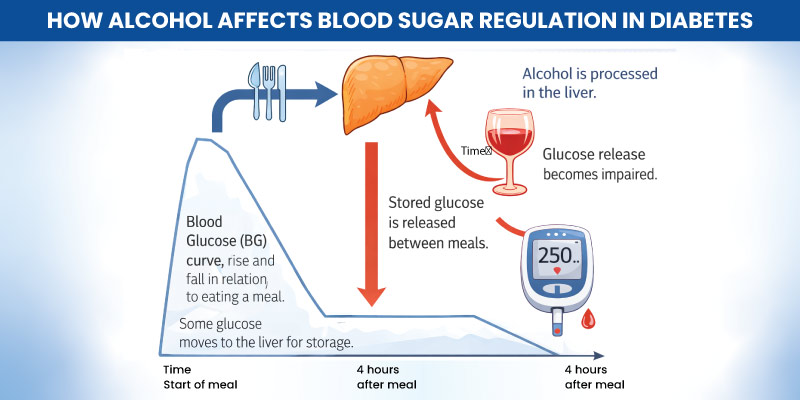
Alcohol metabolism significantly affects glucose regulation because the liver plays a central role in both alcohol breakdown and blood sugar maintenance. When the liver prioritizes alcohol metabolism, its ability to release stored glucose into the bloodstream becomes impaired. This creates several important risks for people with diabetes.
Low Blood Sugar (Hypoglycemia)
One of the most serious concerns involving alcohol with diabetes is hypoglycemia.
Alcohol suppresses hepatic gluconeogenesis, reducing the liver’s ability to release glucose into circulation.
The Risk Increases When:
- Alcohol is consumed without food
- Drinking occurs late at night
- Physical activity accompanies alcohol intake
- Insulin or sulfonylureas are used
Read also on Diabetes management by Insulin and CGM
Why Delayed Hypoglycemia Is Dangerous
Blood sugar may continue dropping for several hours after drinking.
Symptoms include:
- Dizziness
- Sweating
- Slurred speech
- Confusion
- Tremors
- Loss of consciousness
These symptoms can resemble intoxication, delaying appropriate treatment.
Overnight Hypoglycemia Risk
Evening alcohol intake increases the risk of overnight blood sugar drops.
This can be particularly dangerous in people with:
- Type 1 diabetes
- Intensive insulin therapy
- Hypoglycemia unawareness
Hypoglycemia Unawareness: Why Alcohol Is Especially Dangerous
Hypoglycemia unawareness occurs when a person no longer recognizes early symptoms of low blood sugar.
Alcohol may worsen this problem by:
- Reducing awareness of symptoms
- Impairing judgment
- Delaying corrective action
This significantly increases the risk of severe hypoglycemia.
People at risk are often advised to:
- Monitor glucose more frequently after drinking
- Avoid binge drinking
- Inform companions about diabetes symptoms
- Wear medical identification
Read about management journey of people Living with Diabetes
Alcohol and Diabetes Medicines
Alcohol can interact with multiple diabetes medications.
- Alcohol and Metformin: People frequently search for alcohol and metformin interactions. Heavy alcohol use combined with metformin may increase the risk of Lactic acidosis, Gastrointestinal distress, Liver stress. Although rare, lactic acidosis is a serious medical emergency.
- Alcohol and Sulfonylureas: Alcohol may intensify glucose-lowering effects of medications such as Glipizide, Glyburide, Glimepiride. This can prolong hypoglycemia episodes.
- Alcohol and GLP-1 Medications: Growing interest exists around alcohol and GLP-1 medications such as Ozempic, Wegovy, Semaglutide. Combining alcohol with GLP-1 agonists may worsen Nausea, Vomiting, Dehydration, Delayed gastric emptying. Patients should discuss alcohol intake with healthcare professionals while using these therapies.
Read also on Ertugliflozin for Diabetes
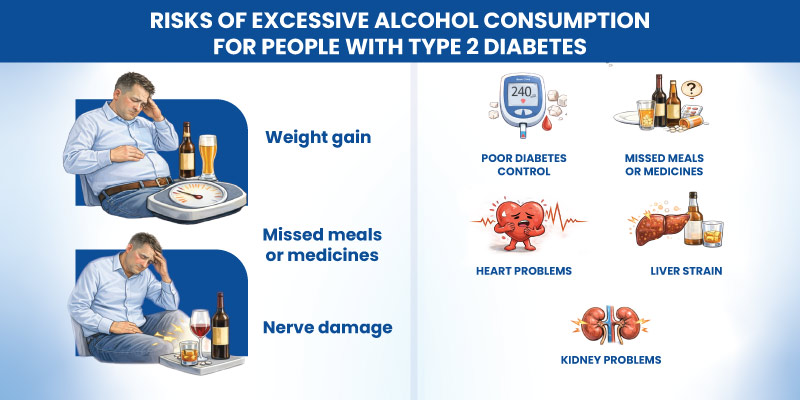
Other Risks for People With Diabetes
Additional complications associated with alcohol and diabetes include:
- Weight gain
- Elevated triglycerides
- High blood pressure
- Poor medication adherence
- Increased calorie intake
- Liver dysfunction
These effects contribute to worsening long-term metabolic outcomes. Read also on Salt and Diabetes
Alcohol’s Effects on Blood Sugar Levels of Diabetics
Alcohol and blood sugar levels have a bidirectional relationship.
Depending on the beverage type, timing, and quantity consumed, alcohol may cause either hyperglycemia or hypoglycemia.
Short-Term Effects
- Delayed hypoglycemia after drinking
- Rapid blood sugar spikes from sugary beverages
- Unpredictable glucose fluctuations
Long-Term Effects
Heavy alcohol consumption is associated with:
- Higher HbA1c levels
- Increased insulin resistance
- Greater glucose variability
- Poor diabetes control
Does Alcohol Cause High Blood Sugar?
Certain alcoholic drinks can temporarily increase blood sugar levels.
Examples include:
- Sweet cocktails
- Sugary mixers
- Dessert wines
- High-carbohydrate beers
However, this spike may later be followed by hypoglycemia.
Alcohol and Type 2 Diabetes
Alcohol and type 2 diabetes have been extensively studied.
Some observational studies suggest light to moderate drinking may be associated with improved insulin sensitivity in selected populations.
However:
- These findings do not establish causation
- Heavy drinking consistently worsens outcomes
- Alcohol should never be recommended as diabetes prevention
Excessive Alcohol and Diabetes
Heavy drinking contributes to:
- Central obesity
- Fatty liver disease
- Insulin resistance
- Elevated triglycerides
All of these factors increase type 2 diabetes risk.
Read also on GLP-1 Therapy for Obesity Care
Alcohol and Type 1 Diabetes
Alcohol and type 1 diabetes present unique safety concerns.
Because insulin continues working even while liver glucose release is suppressed, delayed hypoglycemia risk becomes particularly high.
Safety Recommendations
People with type 1 diabetes are generally advised to:
- Never drink on an empty stomach
- Monitor glucose before sleeping
- Carry glucose tablets
- Avoid binge drinking
There is no universally “safe” alcohol type without precautions.
Alcohol and Prediabetes
Alcohol and prediabetes are increasingly discussed in preventive medicine.
Prediabetes reflects impaired glucose regulation and elevated future diabetes risk.
Heavy Drinking May:
- Increase insulin resistance
- Promote weight gain
- Worsen metabolic dysfunction
Moderation, exercise, and nutrition remain central to reducing diabetes progression risk. Read How Cocoa Reduces Diabetes Risk?
Best and Worst Alcoholic Drinks for Diabetics
One of the most searched questions is: can diabetics drink alcohol safely?
The answer depends heavily on beverage choice and quantity.
Alcoholic Drinks Comparison Table
| Beverage | Approximate Carbs | Relative Impact |
| Dry wine | 3 to 4g | Lower carbohydrate option |
| Spirits (vodka, gin, whiskey) | 0g | Lower carb without sugary mixers |
| Light beer | 3 to 6g | Moderate impact |
| Regular beer | 10 to 15g | Higher carbohydrate load |
| Sweet wine | 10 to 14g | Can raise blood sugar quickly |
| Cocktails with mixers | Highly variable | Often high sugar content |
Better Beverage Practices
- Avoid sugary mixers
- Drink slowly
- Alternate with water
- Eat protein or complex carbohydrates alongside alcohol
Alcohol’s Effects on Complications of Diabetes
Alcohol may worsen existing diabetes complications.
- Neuropathy: Alcohol has neurotoxic effects that may accelerate nerve damage.
- Retinopathy: Poor glycemic control associated with heavy drinking may worsen retinal injury.
- Cardiovascular Disease: Alcohol contributes to Hypertension,Dyslipidemia, Increased cardiovascular strain
- Liver Disease: Fatty liver disease is more common in individuals with diabetes and excessive alcohol intake.
Alcoholic Ketoacidosis and Diabetes
Alcoholic ketoacidosis is a potentially serious metabolic condition.
It can occur after:
- Heavy alcohol consumption
- Vomiting
- Poor food intake
- Dehydration
Symptoms Include:
- Abdominal pain
- Vomiting
- Rapid breathing
- Weakness
- Confusion
This condition requires urgent medical evaluation.
Alcohol and Diabetes: Dos and Don’ts
| Do | Don’t |
|---|---|
| Eat before drinking | Drink excessively |
| Monitor blood sugar regularly | Skip meals |
| Carry fast-acting glucose | Ignore hypoglycemia symptoms |
| Stay hydrated | Mix alcohol with high-sugar beverages excessively |
| Inform others about diabetes status | Assume alcohol lowers blood sugar safely |
Things to Keep in Mind If You Choose to Drink
If people with diabetes choose to drink alcohol, several precautions can reduce risk.
Important Safety Measures
- Set personal intake limits
- Avoid binge drinking
- Wear medical identification
- Check glucose before bed
- Carry snacks or glucose tablets
Blood sugar monitoring should continue for several hours after drinking.
Alcohol and Diabetes Risk
Alcohol and diabetes risk increase with quantity and frequency of alcohol consumption.
Heavy Drinking Is Associated With:
- Type 2 diabetes risk
- Liver disease
- Cardiovascular complications
- Metabolic dysfunction
Although some studies report lower diabetes incidence among moderate drinkers, current evidence does not support alcohol as a preventive strategy.
ADA and WHO Guidance
Guidelines from:
- American Diabetes Association (ADA)
- World Health Organization (WHO)
- US Dietary Guidelines
all emphasize moderation and individualized risk assessment.
Conclusion
Alcohol and diabetes are closely linked through metabolic, hormonal, and behavioral pathways. While occasional moderate alcohol intake may not cause immediate harm in all individuals, excessive drinking significantly increases the risk of hypoglycemia, poor glycemic control, cardiovascular complications, and worsening metabolic health. People with diabetes or prediabetes should approach alcohol cautiously, prioritize blood glucose monitoring, and discuss individualized recommendations with healthcare professionals. Safe diabetes management always takes priority over social drinking habits.
Are you a Diabetes Patient, join this Diabetes Patient Community and Take Part in Surveys
Frequently Asked Questions
Are there benefits to drinking alcohol with diabetes?
There is no clinical recommendation supporting alcohol use as a diabetes prevention or treatment strategy.
How many carbs are in alcohol?
Carbohydrate content varies significantly by beverage type and mixers.
How much alcohol is safe to drink daily?
General guidance suggests moderation, but individualized recommendations depend on medications, glucose control, and overall health.
What are the symptoms of alcohol-induced diabetes complications?
Symptoms may include hypoglycemia, glucose instability, worsening neuropathy, dehydration, and poor metabolic control.
Can I drink alcohol while taking metformin?
Heavy drinking while taking metformin may increase the risk of lactic acidosis and other complications.
Can alcohol cause type 2 diabetes?
Heavy long-term alcohol consumption contributes to insulin resistance and increases type 2 diabetes risk.
Can I drink beer if I have diabetes?
Beer can raise blood sugar due to carbohydrate content. Moderation and monitoring are important.
How long does alcohol affect blood sugar?
Alcohol may affect blood glucose for several hours after drinking, particularly overnight.
Is red wine good for diabetics?
Some studies suggest moderate wine consumption may influence insulin sensitivity, but evidence is insufficient to recommend alcohol for diabetes management.
What should I eat before drinking with diabetes?
Protein, fiber, and complex carbohydrates may help reduce hypoglycemia risk.

MDForLives is a global healthcare intelligence platform where real-world perspectives are transformed into validated insights. We bring together diverse healthcare experiences to discover, share, and shape the future of healthcare through data-backed understanding.