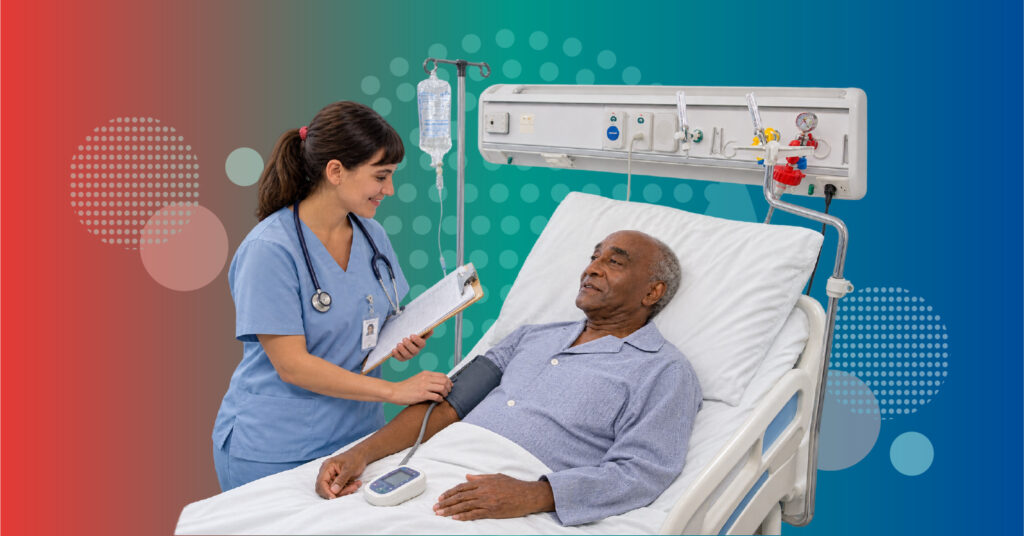
A medication is prepared correctly. A patient’s condition changes. A nurse recognizes the warning sign. A handoff includes the right information.
On paper, patient safety can look straightforward. The challenge is whether safe steps remain reliable when staffing is stretched, and several patients need attention at once.
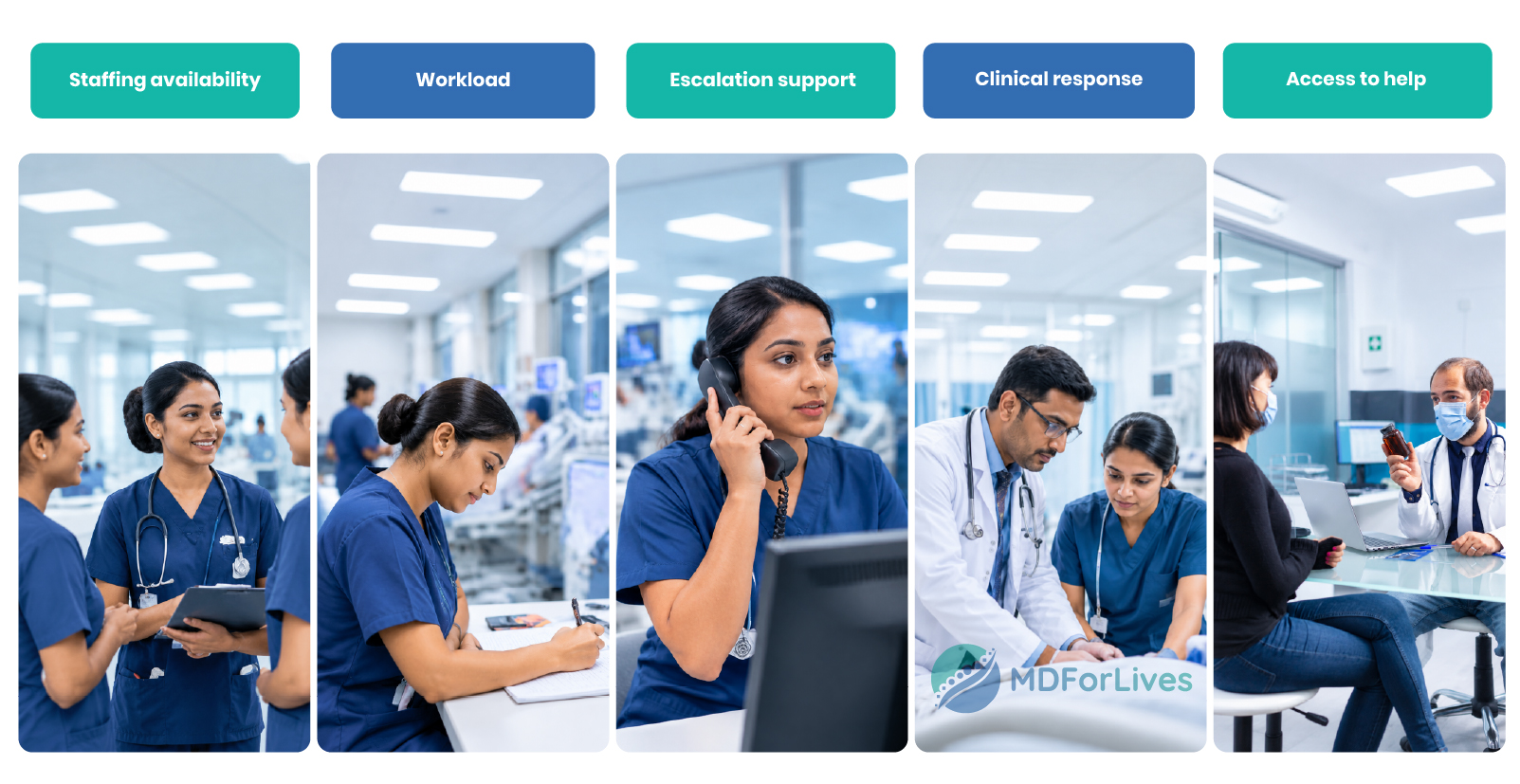
Frontline safety is shaped by staffing, workload, workflow design, technology, communication, and access to help.
To understand where those pressures concentrate, MDForLives surveyed nurses across six countries. The detailed findings and methodology are available in the MDForLives Nursing Patient Safety: Staffing, Medication Errors, and Escalation Insight Report.
Patient safety depends on workable systems
Nurses know the fundamentals: verify the medication, watch for deterioration, communicate clearly, escalate concern, and complete an effective handoff.
The difficulty appears when those responsibilities compete for limited attention. A protocol may describe the correct action, but safe care still depends on whether the nurse has enough time and support to carry it out.
This changes patient safety risk management. Instead of examining only the final error, hospitals also need to examine the conditions around it. Was the assignment unusually complex? Was help available? Could the nurse stay with a deteriorating patient while other responsibilities were covered?
‘The system must make the right action realistically achievable.’
Hospital medication safety is a workflow issue
Medication administration compresses patient identification, order review, dose and route verification, administration, documentation and monitoring into a short period.
In the MDForLives survey, 39.3% of nurses identified medication administration as the clinical situation presenting the greatest patient-safety risk. Medication safety does not begin at the bedside. Orders need to be clear, medicines available, devices functional and higher-risk drugs supported by appropriate safeguards.
The survey also found that 51.3% selected barcode medication administration as the intervention that best reduces medication administration errors. If scanners fail, medicines do not scan correctly or workflows encourage workarounds, the safeguard becomes less reliable.
For hospital medication safety, bedside verification is the final step in a wider system. Technology helps only when the workflow supports consistent use.
Staffing pressure creates competing priorities
A nurse may know exactly what needs to happen and still face several safety-critical demands at once.
One patient needs medication. Another needs reassessment. A third is deteriorating. A new admission is arriving. In the MDForLives research, 84.7% of nurses selected adequate nurse staffing as one of the measures most likely to improve frontline nursing practice.
Protocols, escalation systems, handoffs and technology all matter, but each depends on someone having the capacity to use it. Effective hospital safety measures therefore need to connect staffing with patient acuity, skill mix, workload and changing demand.
When nursing workloads exceed available capacity, essential care activities can become difficult to complete consistently. Discover how night-shift nursing pressures can contribute to missed care.
The practical issue is whether the available team can safely absorb the work that arrives.
Recognition must lead to action
Early recognition is central to safe care, but recognition alone does not protect the patient.
A nurse who identifies deterioration may still need time to reassess, remain at the bedside, and contact another clinician.
In the MDForLives survey, 53.1% of nurses identified staffing shortages as the single biggest factor limiting their ability to act on safety concerns.
The deeper issue is rescue capacity. When a patient deteriorates, can someone cover competing responsibilities? Is the escalation pathway clear? Can help be activated without delay?
Hospitals may have early-warning scores and escalation policies, but those tools still depend on people being able to respond.
Recognizing a complication is only the beginning; timely escalation and coordinated clinical action are equally important. Explore why postoperative complication management depends on more than clinical skill.
For hospital patient safety risks, recognizing danger and mobilizing help are separate safety functions. Both need to work.
Safe handoffs transfer responsibility
Patient safety becomes vulnerable whenever responsibility changes hands. A shift ends. A patient moves to another unit. Another leaves intensive care for a ward.
At each point, information must move, but so does accountability.
A useful handoff should answer: What changed? What remains unresolved? Which patient needs closer observation? What should trigger escalation?
The receiving clinician needs to understand current risk, unfinished work, and what they now own. For hospital safety, structured communication should reduce uncertainty rather than add another documentation exercise.
Accurate clinical documentation helps preserve essential information when responsibility moves between healthcare professionals. Explore how documentation protects patient care and supports patient safety.
Technology should make risk visible
Hospitals increasingly use deterioration alerts, automated checks, predictive tools, and operational dashboards to identify emerging risks.
Yet the MDForLives findings point toward a practical priority: 35.9% of nurses selected real-time workload dashboards as the emerging capability most likely to improve nursing safety.
If workload and staffing affect safe care, making workload imbalance visible earlier may help leaders redistribute assignments or escalate support before risk becomes an incident.
But visibility only matters when someone can act on it. A workload dashboard needs leadership ownership. A deterioration alert needs a response pathway.
Technology is most useful when information leads to action, not when it becomes another screen competing for attention.
Patient safety risk management starts upstream
When an adverse event occurs, it is natural to ask what happened at the bedside. A stronger review also asks what happened before that moment.
Was staffing aligned with patient acuity? Did the workload make verification harder? Were escalation channels accessible? Was responsibility clear during handoff? These questions move patient safety risk management upstream.
The aim is not to remove professional accountability. It is to understand why a known safe action became difficult to perform.
If the same medication workaround, workload spike, handoff gap or escalation delay appears repeatedly, the organization is looking at a system condition rather than a single event.
Safety improvement then becomes about changing the conditions that made the problem possible.
Closing perspective: make safe action workable
The frontline of patient safety is built from ordinary actions repeated throughout every shift: give the medication safely, notice the change, escalate quickly and hand over clearly. The harder question is whether the system allows those actions to happen reliably when several priorities arrive at once.
The MDForLives findings reinforce that point. Nurses identify medication administration as an immediate risk, while staffing repeatedly appears in what affects preventable error and the ability to act on concerns.
Technology, protocols and structured handoffs can strengthen those systems. But the central test for hospital safety remains practical: Can the frontline team still carry out the safe action when the shift is under its greatest pressure?
That is where patient safety moves beyond policy and becomes part of how the hospital actually operates.