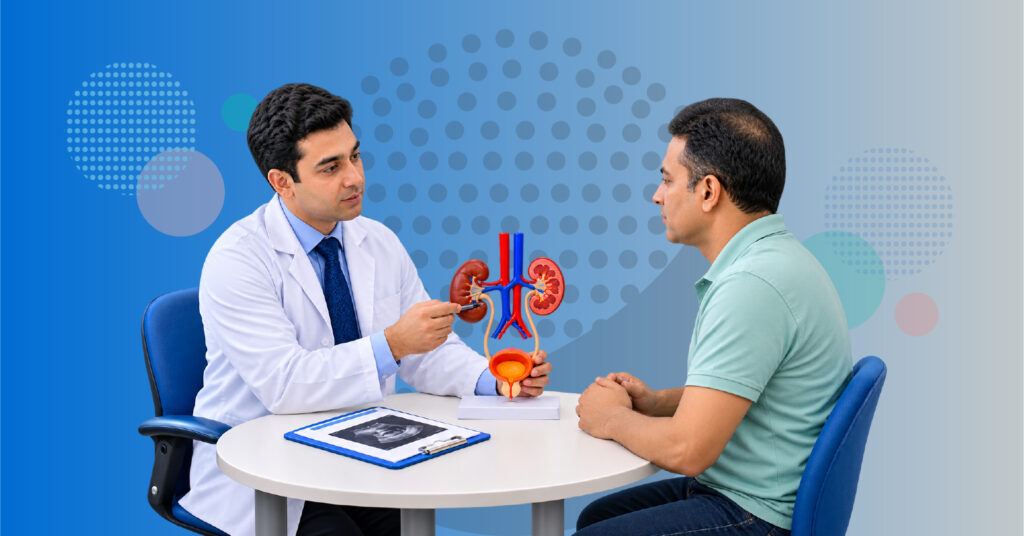
Having a kidney stone is painful enough. But once the pain is over, many patients are left with an even bigger question: what can be done to prevent the next stone from forming?
That matters because recurrent kidney stones are common. Without preventive treatment, an estimated 30% to 50% people may experience another episode within five years.
Modern kidney stone prevention is becoming more targeted. Stone composition, urine volume, urinary calcium, oxalate, citrate, uric acid, sodium intake, medications and metabolic conditions can all influence recurrence.
So the practical question is not simply how to prevent kidney stones, but what is making this patient more likely to form another stone, and is the prevention plan changing that risk?
If kidney stones keep returning, the first question is why
Patients often ask, “Why do kidney stones keep coming back?”
Low urine volume can concentrate stone-forming substances. Hypercalciuria means too much calcium is being excreted in the urine. High urinary oxalate, low citrate, increased uric acid excretion or abnormal urine pH can each create conditions that favor stone formation.
Diet, bowel disease, obesity, metabolic disorders, medications, and genetic conditions may also contribute. Current guidance therefore supports stone analysis and metabolic evaluation for appropriate recurrent or high-risk stone formers.
Kidney health involves more than preventing stones. Understanding chronic kidney disease, its stages and risk factors can help readers see the broader picture of kidney health. Explore the stages and risk factors of chronic kidney disease.
A 24-hour urine test can shift the conversation from “Try to avoid kidney stones” to “This is the urinary abnormality we are trying to change.” Prevention becomes more useful when there is a clear target.
Drinking more water works, but urine volume is what matters
Current European urolithiasis guidance recommends enough fluid, preferably water, to achieve a 24-hour urine volume above 2.5 liters.
A five-year randomized study of increased water intake found stone recurrence in 12.1% of patients assigned to higher fluid intake compared with 27% receiving usual care.
More recent research adds an important qualification. The 2026 PUSH randomized trial found that a behavioral hydration programme modestly increased urine volume but did not significantly reduce symptomatic recurrence compared with guideline-based care.
So how much water to prevent kidney stones is not simply a fixed number of glasses. The important target is whether urine volume rises enough to dilute stone-forming substances.
Kidney stone prevention diet should correct risk, not create restriction
One persistent misconception is that people with calcium stones should automatically reduce calcium intake. For many patients with calcium oxalate stones, that can be counterproductive.
Normal dietary calcium binds oxalate in the gastrointestinal tract, reducing the amount available for absorption and urinary excretion.
European guidance supports approximately 1,000 to 1,200 mg of dietary calcium per day for most stone formers rather than routine calcium restriction.
A landmark five-year randomized dietary prevention trial found fewer recurrences with a normal-calcium diet combined with reduced sodium and animal protein than with a low-calcium diet in men with recurrent calcium oxalate stones and hypercalciuria.
The useful kidney stone prevention diet is therefore rarely a universal low-calcium plan. It is a balanced pattern that maintains normal calcium intake, limits excess sodium, and targets other dietary risks when needed.
“Foods to prevent kidney stones” depends on the stone profile
Patients often want a simple list of foods to prevent kidney stones, but prevention is rarely that simple. Vegetables and fruit can support a balanced diet and may help increase urinary citrate. Excess sodium can increase urinary calcium, while high animal-protein intake may worsen several urinary risk factors.
Patients with high urinary oxalate may benefit from reducing excessive intake of high-oxalate foods. But broad restriction can make the diet unnecessarily difficult to sustain.
For patients asking how to prevent kidney stones naturally, hydration and diet can be important, but prevention should still be evidence-based. A sustainable diet matched to the patient’s stone profile is more useful than a long list of forbidden foods.
Prevention should not stop with advice alone. The next question is whether that advice is actually changing the factors that make stones more likely to form.
The 2026 URINE randomized trial compared standard prevention advice with a more personalized approach based on abnormalities found in 24-hour urine testing among people at high risk of another stone.
After eight weeks, the personalized approach did not significantly improve urinary risk measures compared with standard prevention.
The finding is important because personalized prevention should not automatically be assumed to work better. What matters is whether it produces a measurable change in the patient’s risk factors.
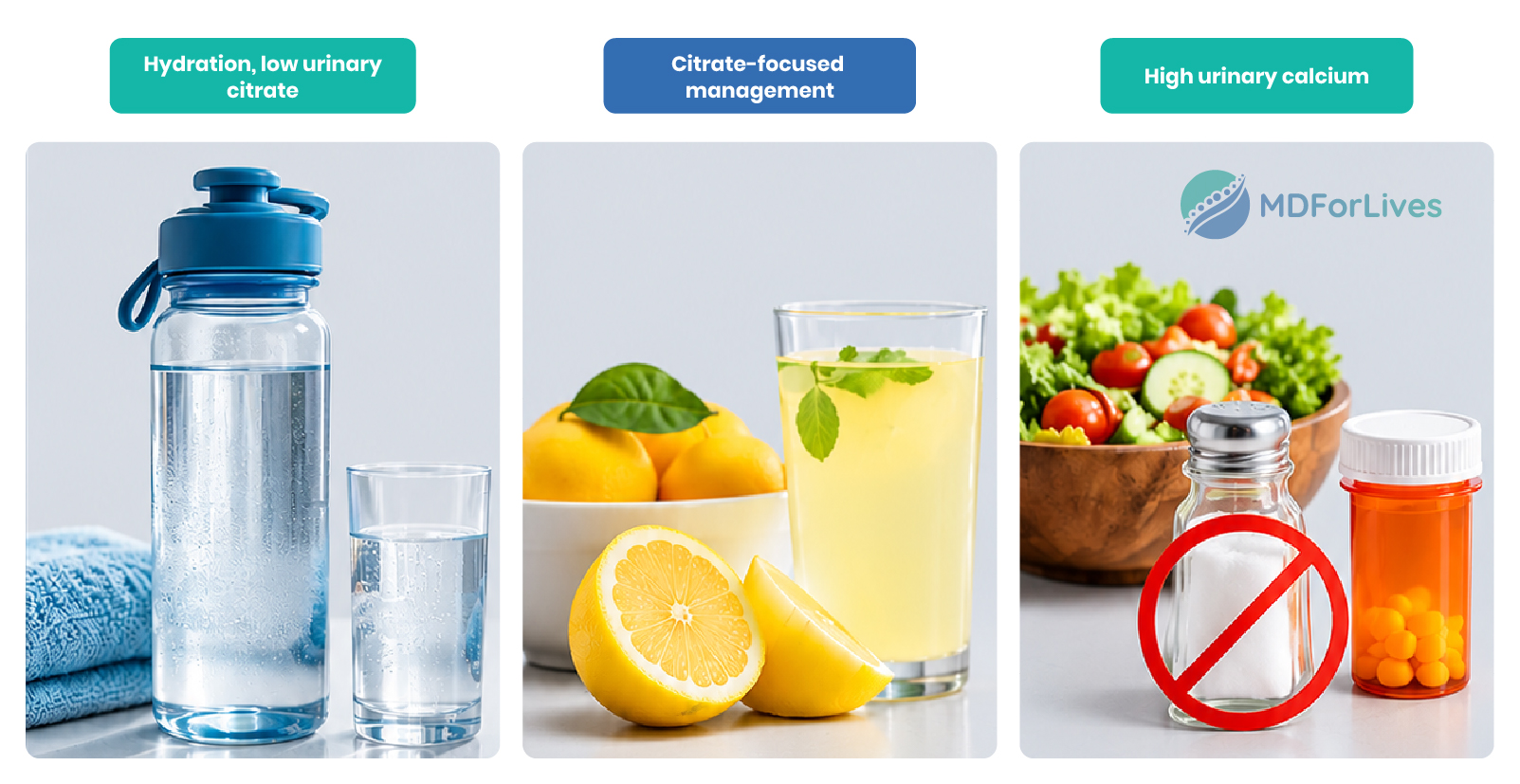
For example, low urine volume may need more hydration. Low urinary citrate may require a strategy to increase citrate. High urinary calcium may call for attention to sodium intake or selected medication. For uric acid stones, urine pH may become an important target.
Prevention becomes more useful when each recommendation is linked to a specific risk factor that can be checked over time.
Kidney stone prevention medication works best when the target is clear
Some patients continue to form kidney stones even after making appropriate changes to fluid intake and diet. In these cases, medication may be considered depending on the type of stone and the abnormality contributing to its formation.
Different treatments may be used to correct specific problems, such as low urinary citrate, high urinary calcium, excess uric acid, or an abnormal urine pH.
Recent research has also shown that medication does not automatically prevent recurrence in every patient. The 2023 NOSTONE randomized trial found that one commonly used treatment for recurrent calcium stones did not clearly reduce overall recurrence compared with placebo, while some adverse effects were more common.
The important question is therefore not simply whether medication is prescribed, but what risk factor it is intended to correct and whether that risk actually improves.
Medication works best as part of a targeted prevention plan, rather than being used simply because someone has had kidney stones before.
Closing perspective: preventing the next stone requires measurable prevention
The major shift in kidney stone prevention is not a new food, supplement, or medication. It is the move from generic advice toward measurable prevention.
Hydration remains fundamental, but urine volume should rise enough to matter. Dietary calcium usually should remain normal rather than automatically restricted. Sodium, animal protein, oxalate, and purines should be considered in the context of the patient’s risk profile. Medication should have a defined preventive purpose.
When stones continue to recur, repeating the same advice may not be enough.
The more useful question is: what is still making this patient’s urine favorable for stone formation, and has the prevention strategy changed that risk?
Preventing the next stone is about identifying, correcting and monitoring the factors that continue to make stones possible.