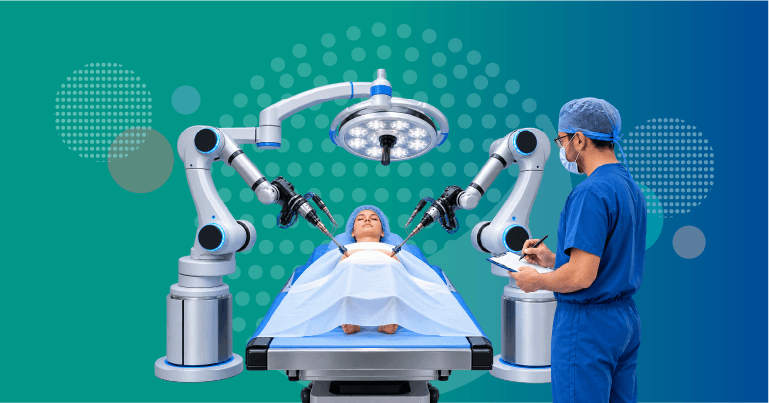
A robot in the operating room can signal progress.
It can also raise a difficult question: is this technology improving care, or is it becoming the new default because it is available, expected, and heavily invested in?
That is the real tension behind robotic surgery adoption today.
Robotic systems can offer improved dexterity, visualization, ergonomics, and precision in selected procedures. For complex anatomy, confined spaces, reconstruction, or technically demanding suturing, many surgeons see genuine value. But the same technology can feel harder to justify when outcomes are likely similar to conventional or laparoscopic approaches, costs are higher, cases take longer, or use is shaped by institutional momentum.
MDForLives survey data shows a balanced picture. Surgeons are not rejecting robotics. They are asking where it is truly necessary, where it is selectively useful, and where robotic surgery adoption may be moving faster than evidence, training, or cost-value clarity.
Robotics Is Valued, but Selectively
The strongest finding is that surgeons do not see robotic surgery as universally transformational.
In the MDForLives survey data, 42.6% said robotic surgery is valuable in selected procedures but not broadly necessary. Another 30.9% described it as a decisive tool that improves outcomes in many cases. Only 7.4% said it is comparable to conventional approaches in most cases, while 10.3% said it is often used due to availability rather than clear benefit.
This suggests that robotic surgery adoption is not a simple yes-or-no issue. The value depends on procedure type, anatomy, surgeon expertise, team readiness, patient needs, and whether the platform adds enough benefit to justify its cost and complexity.
The core question is not whether robotics works. It is where robotics adds value that matters.
The Boundary Between Use and Overuse Is Blurring
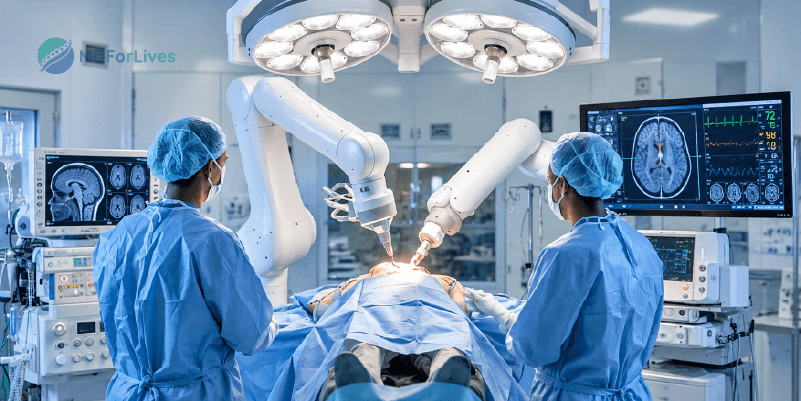
The survey data shows that 27.3% feel robotic surgery is clearly justified for complex or precision-dependent cases. But 30.3% said it is valuable in selected cases while increasingly extending into routine procedures. Another 18.2% said it is often used where the clinical advantage over conventional surgery is limited.
That is a critical pattern.
Robotic surgery adoption appears strongest when the procedure is complex or technically demanding. But once the platform is available, the boundary can shift. What begins as selective use for high-value cases may gradually expand into routine procedures, sometimes before the benefit is equally clear.
This is how technology can move from tool to habit.
The concern is not innovation itself. It is whether use remains tied to case selection or begins to follow availability.
Surgeons Sometimes Use It Even When It Is Not Necessary
One of the most revealing findings is how often robotic surgery is used even when the surgeon believes it is not necessary.
In the survey data, 42.6% said this happens occasionally. Another 14.7% said frequently, and 11.8% said almost always when available. Only 22.1% said they avoid robotic surgery unless it is clearly beneficial.
That means robotic surgery adoption is shaped by more than pure clinical necessity in some settings.
This does not imply poor decision-making. It reflects the reality of modern surgical systems. Once a hospital invests in a platform, there may be scheduling norms, training expectations, patient perceptions, service-line goals, and institutional pressure to use it. In that environment, the line between clinical choice and system momentum can become harder to separate.
When Outcomes Are Similar, Familiarity Drives Use
When outcomes are likely similar, the leading driver of robotic use is surgeon comfort and familiarity, selected by 49.2%. Perceived innovation or standard of care followed at 18.5%, while institutional expectations or access were selected by 12.3%.
This finding is important because it points to the human side of technology adoption.
Surgeons may choose the platform they know best, especially if they believe it offers ergonomic, technical, or workflow advantages. Familiarity can support safety and efficiency. But it can also reinforce robotic surgery adoption even when the clinical advantage over other approaches is modest.
The question becomes: when is surgeon comfort a valid quality factor, and when does it become a reason to use a more expensive tool without enough patient-level benefit?
Benefits Are Real, but Not Universal
The MDForLives survey data shows that 37.5% believe the perceived benefits of robotic surgery are supported mainly in selected procedures or patient groups. Another 28.1% said benefits are strongly supported, with clear value in many cases.
At the same time, 15.6% said benefits are only modestly different from conventional approaches in most cases, while 9.4% said benefits are often less meaningful than expected, and another 9.4% said real-world experience has not clearly justified the perceived advantage.
This is the maturity point for robotic surgery adoption.
The technology has crossed into mainstream surgical practice, but the value argument still varies by procedure, surgeon, and setting. It cannot be evaluated as a single category. It must be judged by case type, outcomes, cost, learning curve, and long-term patient benefit.
Surgical outcomes depend on more than the technique used in the operating room. Preoperative preparation can also influence recovery and long-term results. Explore how prehabilitation before surgery uses exercise, nutrition, and optimization to support recovery.
Institutional and Patient Expectations Matter
Robotic surgery decisions are not made in isolation. The survey data shows that institutional investment or pressure has at least moderate influence for 50.0% of respondents, including 14.1% reporting strong influence and 7.8% calling it a major driver of utilization.
Patient expectation also plays a role. About 31.3% said patient perception occasionally influences their choice to use robotic surgery, while 14.1% said frequently and 1.6% said very frequently.
This reflects a broader reality: robotic surgery is not only a surgical technique. It is also a brand signal in many healthcare markets. Patients may associate robotics with modernity, precision, or better care, even when evidence is procedure-specific. Hospitals may view robotics as a marker of advanced capability.
That makes communication essential. Surgeons need to explain when robotics is useful, when it is not necessary, and when conventional surgery may be equally appropriate.
The Uncomfortable Realities Are Cost, Evidence, and Training
When asked about the most uncomfortable reality of robotic surgery adoption, 26.6% selected costs being difficult to justify consistently. Adoption ahead of strong clinical evidence and increasing overuse in low-value procedures were each selected by 21.9%. Learning curves and training gaps were close behind at 20.3%.
Open-ended responses reinforced the same themes: cost, marketing, industry influence, overuse in simple cases, lack of outcomes-level data, training burden, longer operating time, and the concern that robotic systems may benefit surgeon ergonomics more clearly than patient outcomes in some procedures.
This is where the debate becomes serious.
If robotic surgery adoption is to remain clinically credible, it needs transparent case selection, better outcomes data, clear training standards, cost-value evaluation, and honest discussion about where robotics does not add enough value.
As robotic surgery becomes more established, questions of evidence, ethics, appropriate use, and patient benefit become increasingly important. Explore robotic surgery in clinical practice, including the evidence and ethical questions shaping adoption.
What Limits Optimal Use?
The leading limitation was access to equipment or infrastructure at 28.1%, followed by cost and reimbursement constraints at 25.0%, training and experience gaps at 21.9%, and case selection clarity at 12.5%.
These findings show that adoption is uneven in two directions.
Some settings may overuse robotics because the platform is available and expected. Other settings may underuse it or use it suboptimally because access, infrastructure, or training are limited.
Both are problems. The goal should not be more robotic surgery in every case. It should be better robotic surgery adoption: appropriate cases, trained teams, measurable value, and patient-centered decision-making.
Closing Perspective
Robotic surgery is not the problem.
Unexamined robotic surgery adoption is.
MDForLives survey data shows that surgeons recognize the value of robotics, especially in selected procedures and complex cases. But they also see the pressures: cost, institutional investment, marketing, patient expectations, training gaps, and use in procedures where the benefit may be limited.
The next phase should not be defined by whether robotic surgery is “better” in general.
It should be defined by where it is better, for whom, at what cost, and with what level of training and evidence.
Because surgical innovation earns trust not by becoming the default.
It earns trust by proving where it improves care.