

Rapid weight loss can look like success from the outside.
The number drops. Clothes fit differently. Health risks may improve. Energy may return. People around the patient may assume the difficult part is over.
But for many patients, the story after rapid weight loss is more complicated.
The body changes. Food feels different. Confidence may improve, but insecurity may not fully disappear. There may be fear of weight regain, pressure to maintain the new body, loose skin, nutritional concerns, and the realization that weight loss is not the same as long-term recovery.
MDForLives survey data shows that patients do experience meaningful improvement after rapid weight loss. But the findings also show a second story: the journey after weight loss can bring new physical, emotional, and social challenges that patients are not always prepared for.
The Motivation Was Health, Not Just Appearance
The clearest motivation in the MDFL survey data was reducing health risks or medical complications, selected by 71.4% of respondents. Improving physical mobility or energy and improving emotional well-being followed at 14.3% each.
This matters because it challenges the assumption that weight loss is primarily appearance-driven.
For these respondents, rapid weight loss was connected to health protection, risk reduction, and daily function. That makes post-weight-loss care more important, not less. When people pursue treatment because they want to reduce health risks, the goal should not stop at the scale. It should include strength, nutrition, mental health, metabolic monitoring, and sustainable routines.
The first phase may be weight reduction. The second phase is health maintenance.
GLP-1 Medications Were the Leading Route
In the survey data, 71.4% said GLP-1 or other weight loss medications contributed most to their weight loss, while 28.6% selected diet and lifestyle changes.
This reflects the current moment in obesity care. Rapid weight loss is increasingly being shaped by medications, including GLP-1-based therapies, alongside lifestyle support and other treatment approaches. These treatments can be meaningful, but they also raise new questions around maintenance, discontinuation, nutrition, muscle health, affordability, and long-term follow-up.
For patients using newer obesity medications, achieving weight loss is only part of the treatment journey. Long-term benefit also depends on what happens after treatment begins. Explore why staying on obesity treatment is the real test.
That is why rapid weight loss should be treated as a care pathway, not a short-term event.
Patients may need help understanding what progress means, what must be monitored, and what support is needed once the most visible weight change has already happened.
What Changed Most Was Not Only the Body
After significant weight loss, two changes stood out equally. Physical health improved faster than expected for 28.6%, and the relationship with food changed significantly for another 28.6%. Smaller groups reported stronger-than-expected emotional changes, unexpected body changes, and shifts in daily routines or social interactions.
This is a useful insight because it shows that rapid weight loss affects more than weight.
Food may become less emotionally important for some, but more complicated for others. In the survey data, 33.3% said they feel more in control around food, while another 33.3% said their relationship with food remains complicated.
That split is important.
The same outcome, weight loss, can create different internal experiences. One patient may feel freedom. Another may feel restriction, vigilance, fear, or uncertainty. A care plan that focuses only on weight reduction may miss the emotional and behavioral adjustment that follows.
Fear of Regain Becomes the New Burden
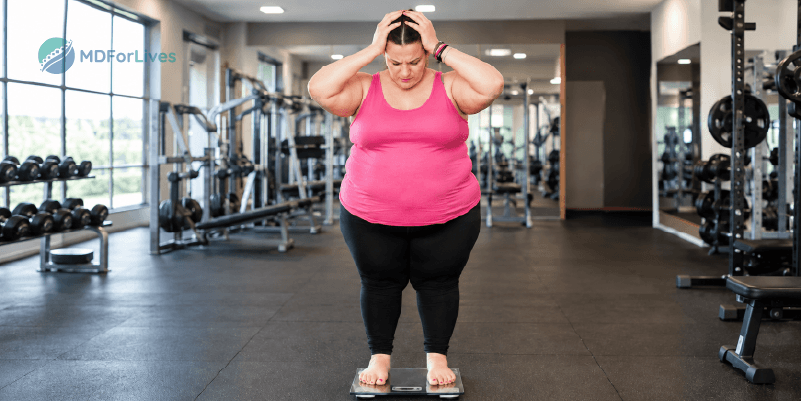
The most difficult post-weight-loss challenge was fear of regaining weight, selected by 42.9%. Maintaining long-term lifestyle changes followed at 28.6%. Loose skin or physical appearance changes and fatigue, weakness, or nutritional issues were each selected by 14.3%.
This is the central patient experience insight.
Rapid weight loss can reduce one burden while creating another: the pressure to keep the progress. Patients may feel proud of what changed, but also anxious that the change could disappear. This is especially important when treatment involves medication, major dietary shifts, or other approaches that may be difficult to sustain without support.
Weight maintenance is not simply a matter of willpower. It is a long-term clinical, behavioral, emotional, and environmental challenge.
Emotional Health Improves, But Not Always Simply
The emotional experience after weight loss was mixed. About 33.3% said they feel more confident and emotionally healthier. But others reported slight improvement, expecting to feel happier than they actually do, new emotional challenges, or an unpredictable emotional experience.
This pattern is clinically important.
Weight loss can improve confidence and quality of life, but it may not automatically resolve body image, anxiety, self-esteem, food stress, or social pressure. Some patients may discover that their body has changed faster than their identity. Others may feel pressure to maintain a “new look,” manage comments from others, or adjust to being treated differently.
The open-ended responses reinforced this. Patients mentioned body dysmorphia, identity being tied to weight, loose skin, new insecurities, pressure around physical changes, and social challenges around food.
These are not side issues. They are part of post-weight-loss health.
Maintenance Is Not a Finish Line
When asked how difficult maintaining progress has been compared with losing weight itself, 33.3% said it was about what they expected. But 33.4% described maintenance as more difficult or significantly more difficult than expected.
That finding should change how rapid weight loss is discussed.
Patients may be highly motivated during the active weight-loss phase, especially when results are visible. But maintenance requires repetition without the same external reward. It often involves continued nutrition planning, physical activity, medication decisions, follow-up care, body image adjustment, and relapse prevention.
Weight loss is only one stage of obesity care. Long-term support becomes important when patients move from achieving weight loss to living with and maintaining it. Explore why living with obesity means planning for what comes next.
In the survey data, 83.3% said healthcare providers should prepare patients more realistically for long-term lifestyle adjustments. That is one of the strongest findings in the report.
Patients are not saying, “Do not help us lose weight.”
They are saying, “Prepare us for what comes after.”
What Is Discussed Least Openly?
Half of respondents said mental and emotional health changes are discussed least openly after weight loss. Nutritional deficiencies or physical weakness, social pressure and expectations, and body image concerns were each selected by 16.7%.
This is the gap in care.
Post-weight-loss follow-up often focuses on weight trend, medication, glucose, blood pressure, or other clinical markers. Those are essential. But patients may also need support for fear of regain, identity changes, food relationship changes, loose skin, body image, fatigue, and emotional adjustment.
Rapid weight loss should not be framed only as a physical transformation. It is also a psychological and social transition.
Success Should Be Measured Beyond the Scale
The final perspective question captures the balance. About 33.3% said weight loss improved their overall quality of life. Another 33.3% said the journey after weight loss was more complex than expected. Smaller groups said maintaining health feels harder than achieving weight loss, and emotional recovery deserves more attention in obesity care.
This is not a negative view of weight loss. It is a more complete one.
Patients can feel better and still need help. They can value the progress and still feel uncertain. They can experience better health and still struggle with maintenance, identity, or body changes.
The scale may show the result. It does not show the adjustment.
Closing Perspective
Rapid weight loss can be meaningful. For many patients, it can support health-risk reduction, better mobility, more energy, and improved quality of life.
But MDForLives survey data shows that the period after weight loss needs more attention. Patients report fear of regain, complicated food relationships, emotional shifts, loose skin, physical changes, and a need for more realistic preparation around long-term lifestyle adjustments.
The next phase of obesity care should not treat weight loss as the final outcome.
It should treat it as one stage in a longer recovery and maintenance journey.
Because the real question is not only, “How much weight was lost?”
It is also: “Can the person feel well, nourished, supported, confident, and prepared to sustain the progress?”
That is where post-weight-loss care becomes just as important as the weight loss itself.