
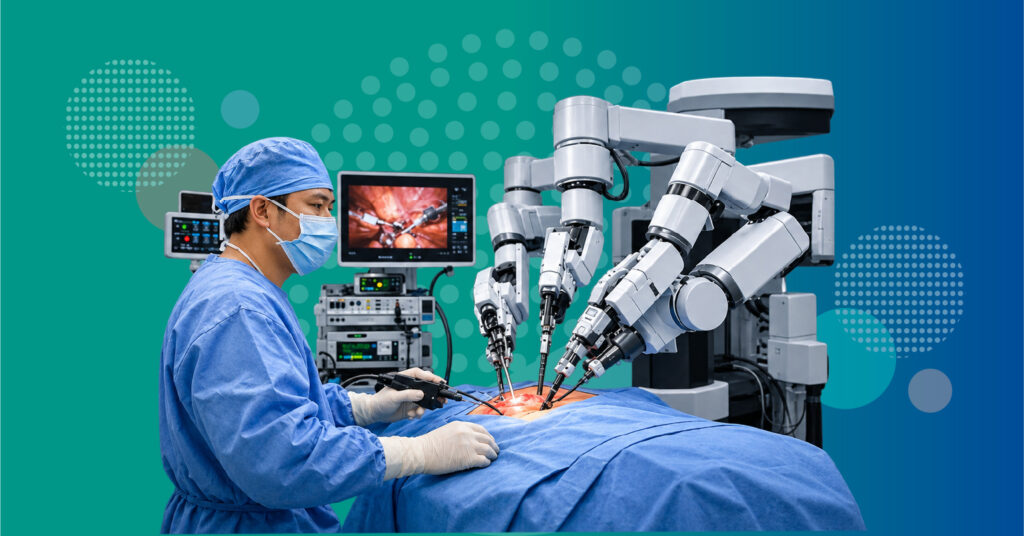
Robotic surgery is often associated with greater precision. Three-dimensional visualization and articulated instruments can help surgeons perform complex movements through smaller incisions and with greater technical control.
But patients do not recover from precision alone.
For anyone considering robotic surgery recovery, the more important question is whether those technical advantages translate into outcomes patients actually feel: less pain, fewer complications, shorter hospitalization, earlier mobility and better function.
Randomized evidence suggests that the answer depends heavily on the procedure and what robotic surgery is being compared with.
Minimally invasive robotic surgery can offer meaningful short-term advantages over open surgery in some settings. When robotics is compared with another established minimally invasive approach, however, the difference in recovery may be much smaller.
The real question is when greater precision produces a recovery advantage that matters to the patient.
Greater surgical precision does not automatically mean better recovery
Orthopedic surgery shows why technical accuracy and patient benefits are not always the same outcome.
The 2026 RACER-Knee randomized trial involving 339 patients found that robotic-arm-assisted total knee replacement did not produce a clinically meaningful improvement in the Forgotten Joint Score at 12 months compared with conventional surgery. Serious adverse events were similar, while robotic surgery was more costly.
A separate 2026 RASKAL randomized trial similarly found no significant improvement in knee-specific outcomes, pain, satisfaction or quality of life with robotic assistance compared with computer-assisted surgery.
That distinction matters. A surgeon may achieve greater technical accuracy without the patient experiencing a meaningful improvement in pain, mobility, or day-to-day function.
Technical precision and patient-perceived recovery are different outcomes. Precision becomes clinically valuable when it translates into better function, greater independence, improved comfort, or fewer important complications.
Robotic technology is changing how surgeons approach complex procedures, but its clinical value depends on more than technical precision. Explore the role of robotic surgery in modern clinical practice.
Recovery advantages become clearer when the alternative is open surgery
The picture changes when robotic surgery replaces an open procedure.
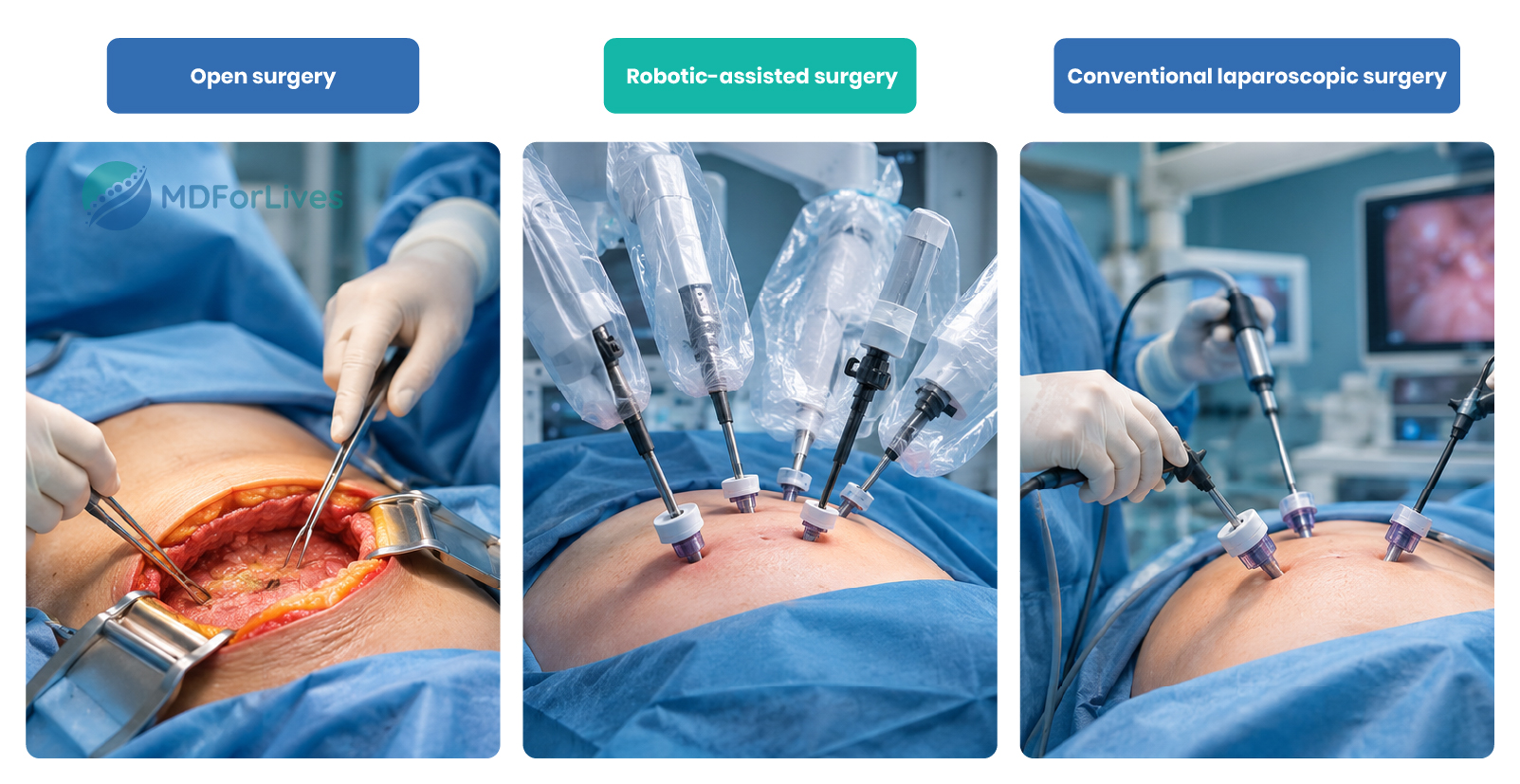
Open surgery generally involves larger incisions and greater tissue disruption. In that setting, part of the benefit associated with robotics may come from enabling a minimally invasive approach rather than from robotic technology alone.
In a randomized trial of robot-assisted versus open radical cystectomy, patients undergoing robotic surgery spent slightly more days alive and outside hospital during the first 90 days. They also experienced fewer wound and thromboembolic complications and better early quality-of-life and disability measures, although some differences became smaller over time.
The 2024 randomized study of robotic versus open prostatectomy also reported lower blood loss and shorter hospitalization with robotic surgery. Urinary and sexual recovery favored the robotic approach at several follow-up points, while overall quality of life and oncological outcomes remained similar.
For people comparing robotic surgery vs open surgery, the benefit is therefore not simply that the robot makes recovery faster. Rather, minimally invasive access may reduce the immediate burden of surgery, while the size and duration of that advantage depend on the operation and outcomes being measured.
A shorter hospital stay is only one part of robotic surgery recovery
Leaving hospital sooner can be an important sign of early recovery, but discharge is not the same as complete recovery.
A 2026 secondary analysis of the randomized RACC trial comparing robot-assisted and open radical hysterectomy found lower blood loss, fewer mainly low-grade intraoperative complications and a shorter median hospital stay with robotic surgery: three days versus five.
Yet postoperative complications, readmission, and reoperation were similar. At one month, differences in physical function, role function and pain were small, and most patient-reported outcomes did not reach clinically important thresholds.
This matters when discussing robotic surgery recovery time.
A patient may leave hospital sooner but still needs time to regain strength, mobility, independence and normal function.
Recovery therefore includes more than discharge. It also includes pain, complications, physical function, quality of life, and return to normal activities.
The recovery gap narrows when laparoscopy is already minimally invasive
The question “is robotic surgery better than traditional surgery?” becomes more complicated when the alternative is laparoscopy rather than open surgery.
In rectal cancer surgery, the REAL randomized trial found several short-term advantages with robotics over laparoscopy, including fewer conversions to open surgery, lower blood loss, fewer postoperative complications and a one-day shorter median hospital stay.
However, a 2026 meta-analysis of seven randomized trials involving 2,540 patients found fewer conversion with robotic rectal surgery but no clear differences in major complications, disease-free survival or overall survival. Robotic procedures also took longer.
That explains why the comparator matters.
When robotics replaces open surgery, recovery differences may be more visible. When it replaces another effective minimally invasive approach, the additional advantage may be smaller.
Broad statements that robotic surgery is simply “better” therefore miss an important part of the evidence.
Robotic surgery complications remain part of a wider recovery pathway
Robotic assistance does not remove surgical risk.
Potential robotic surgery complications include bleeding, infection, organ injury, thromboembolic events, anesthetic complications, and problems specific to the operation being performed.
Surgical success does not end when the procedure is complete. Early recognition and timely management of postoperative complications remain essential to patient recovery. Explore why postoperative complication management depends on more than surgical skill.
Recovery is also shaped by factors outside the robotic platform, including age, frailty, comorbidities, procedural complexity, surgeon and team experience, anesthesia, pain management, nutrition, mobilization and enhanced recovery protocols.
Recovery begins before a patient enters the operating room. Exercise, nutrition and preoperative optimization can help prepare patients for surgery and support recovery. Discover how prehabilitation supports better surgical preparation.
A 2026 review of enhanced recovery pathways in robot-assisted renal surgery found that enhanced recovery after surgery, or ERAS, protocols shortened hospitalization without increasing postoperative complications or readmissions.
The broader point is clear: The robot influences how surgery is performed, while the wider perioperative pathway helps determine how the patient recovers.
Robotic technology is therefore one part of recovery, not the recovery pathway itself.
Robotic surgery advantages and disadvantages depend on the procedure
The potential robotic surgery advantages and disadvantages are not the same for every operation.
Possible advantages include enhanced visualization, greater instrument articulation, lower blood loss, minimally invasive access and reduced conversion to open surgery in selected procedures.
Potential disadvantages include higher costs, longer operating times in some operations, infrastructure requirements, training and learning curves, and uncertain additional benefit when another minimally invasive technique already performs well.
The evidence therefore does not support a simple conclusion that robotic surgery is universally better.
A more useful question is: For this patient, this procedure and this surgical team, does robotic assistance provide enough additional benefit to improve safety, recovery, function or long-term outcome?
That moves the discussion away from the technology itself and toward the value it creates for the patient.
Closing perspective: precision matters when patients can feel the difference
Robotic systems can improve precision, reduce blood loss, enable minimally invasive access and shorten hospitalization in selected procedures.
But robotic surgery recovery should be judged by more than what happens in the operating room.
Randomized evidence shows both sides of the story. Some procedures demonstrate meaningful early recovery advantages when robotics replaces open surgery. Others show improved technical precision without better patient-reported function. When robotics is compared with an established laparoscopic approach, the benefit may narrow further.
The key distinction is between technical superiority and clinically meaningful superiority.
For surgeons and patients, greater precision matters most when it translates into fewer meaningful complications, less pain, earlier independence, better function, or durable benefit.
As robotic technology advances, its value should be judged not only by whether it can perform an operation more precisely, but by whether that precision changes recovery in a way the patient can actually experience.