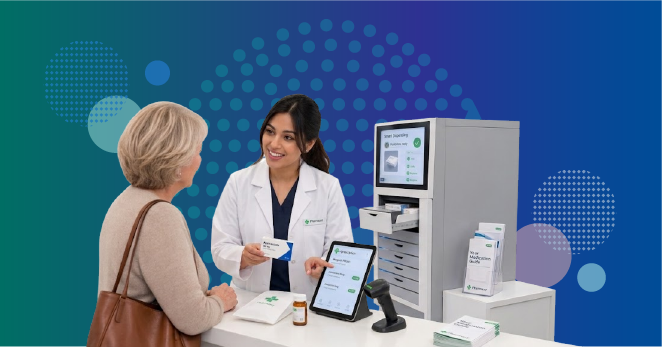
The future of pharmacy is shifting from a dispensing-focused model to an integrated healthcare role driven by technology, data, and patient-centered care. This transformation is not incremental. It is structural. Digital systems, automation, and clinical expansion are redefining how pharmacists operate within healthcare ecosystems.
What is the Future of Pharmacy?
Digital and Traditional Pharmacies – Evolution from Dispensing to Clinical Care
Pharmacy has historically been centered on medication dispensing. That role is now expanding into clinical decision support, therapy management, and patient counseling.
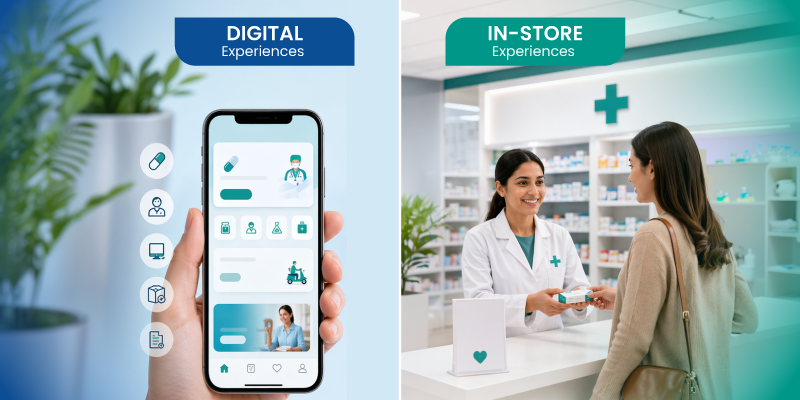
Digital pharmacies have introduced convenience, scalability, and data integration. Traditional settings continue to provide human interaction and real-time judgment. The future is not a replacement model. It is a layered system where both formats operate within a shared care framework.
Why Pharmacy is Transforming Rapidly
Several factors are accelerating change:
- Rising demand for chronic disease management
- Increased pressure on healthcare systems
- Growth of digital health infrastructure
- Patient expectations for faster and accessible care
Pharmacy is positioned at the intersection of these shifts, making transformation unavoidable.
Key Trends in Pharmacy
Current developments are shaping how pharmacy will function in the next decade.
| Trend | Impact |
| Digital dispensing platforms | Faster access and improved convenience |
| Telepharmacy | Remote consultation and medication review |
| Data integration | Better tracking of patient outcomes |
| Automation | Reduced manual workload |
These trends are not isolated. They are interconnected, forming a new operational model.

Expanded Roles of the Modern Pharmacist
The pharmacist’s role is expanding beyond medication supply.
Today, pharmacists contribute to:
- Medication therapy management
- Chronic disease monitoring
- Preventive care interventions
- Patient education and adherence support
This shift aligns pharmacy more closely with clinical care rather than retail function.
Impact of AI on Pharmacy Jobs
Artificial intelligence is changing how pharmacy tasks are performed.
AI-driven systems can:
- Automate prescription validation
- Identify drug interactions
- Predict patient adherence risks
This does not eliminate the need for pharmacists. It changes the nature of their work. Routine tasks decrease, while clinical and decision-making responsibilities increase.

Future Pharmacy Models
Pharmacy models are evolving into hybrid systems that combine physical and digital elements.
Common structures include:
- Integrated hospital-pharmacy networks
- Digital-first platforms with physical support points
- Community pharmacies offering clinical services
These models aim to balance accessibility with clinical depth.
Benefits of the Future Pharmacy System
The transformation delivers measurable advantages.
- Faster access to medications
- Improved patient engagement
- Better tracking of treatment outcomes
- Reduced operational inefficiencies
These benefits contribute to a more responsive healthcare system.
Risks & Challenges in Pharmaceutical Industry
The transition also introduces challenges that must be addressed.
- Data privacy concerns in digital systems
- Uneven access to technology across regions
- Regulatory gaps in emerging models
- Resistance to change within traditional systems
These issues affect scalability and consistency of implementation.
Future Innovations in Pharmacy
Innovation is moving toward precision and integration.
Emerging developments include:
- Personalized medication plans based on genetic data
- Smart dispensing systems with real-time tracking
- Integration with wearable health devices
- Advanced analytics for population health management
These innovations are shifting pharmacy from reactive to predictive care.

Conclusion
The future of pharmacy is defined by integration rather than replacement. Digital systems, clinical expansion, and data-driven decision-making are reshaping the profession. The pharmacist’s role is becoming more central to patient care, supported by technology but not replaced by it. Long-term success will depend on balancing innovation with accessibility and maintaining clinical relevance in an increasingly automated environment.
Explore more evidence-led healthcare insights: MDForLives