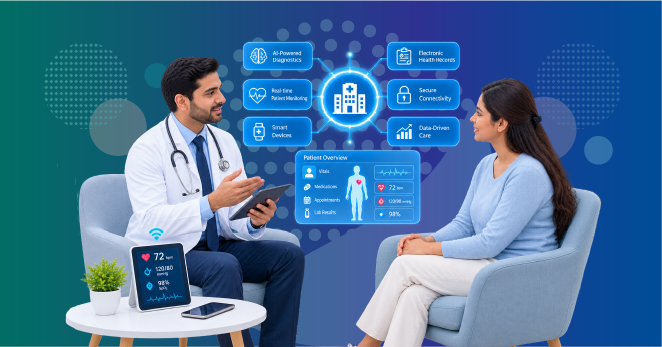
A smart hospital is redefining healthcare delivery by integrating digital technologies, data systems, and automation into clinical and operational workflows. It moves beyond infrastructure upgrades and focuses on connected, intelligent systems that improve patient care, efficiency, and decision-making. As healthcare systems face increasing demand, smart hospital models are emerging as a structured response to complexity and scale.
What is a Smart Hospital?
A smart hospital is a healthcare facility that uses interconnected technologies such as artificial intelligence, IoT devices, and digital platforms to manage clinical and administrative processes.
Instead of operating in isolated systems, a smart hospital functions through a unified network where data flows across departments. This enables real-time monitoring, faster decision-making, and coordinated care delivery.
Read also about Networking in Healthcare.
Examples of Smart Hospitals
Smart hospital implementations vary by scale and geography.
Some hospitals integrate advanced monitoring systems that track patient vitals continuously. Others use automated medication systems or AI-supported diagnostics. Large healthcare networks are also adopting centralized command centers to manage operations across multiple facilities.
These examples show that a smart hospital is not defined by a single tool but by how multiple systems work together.
Core Technologies or Characteristics of the Emerging Smart Hospital
The foundation of a smart hospital lies in its technology stack.
| Technology | Function |
| Artificial Intelligence | Supports diagnostics and decision-making |
| Internet of Things (IoT) | Enables connected medical devices |
| Electronic Health Records | Centralized patient data management |
| Automation Systems | Streamline workflows and reduce manual tasks |
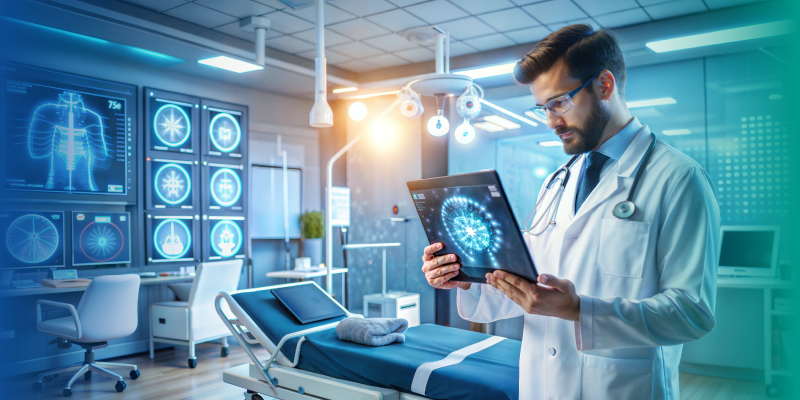
Artificial intelligence plays a central role in enabling predictive analytics, clinical decision support, and operational efficiency. Many healthcare systems are now collaborating with specialized providers offering advanced AI Development Services to build scalable and compliant healthcare solutions tailored to hospital environments.
These technologies operate within a connected ecosystem rather than as standalone tools.
How Smart Hospital Technology Works
Smart hospital systems rely on continuous data exchange.
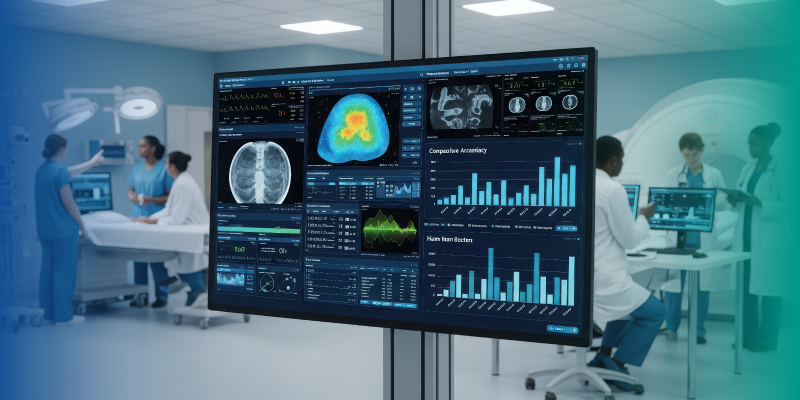
Patient data is collected through connected devices and stored in centralized systems. AI algorithms analyze this data to identify patterns, risks, or treatment needs. Healthcare professionals access these insights through digital dashboards, enabling faster and more informed decisions.
This reduces delays and improves coordination between departments.
Benefits of Smart Hospitals
The adoption of smart hospital technology leads to measurable improvements.
- Enhanced patient monitoring and early risk detection
- Reduced administrative workload through automation
- Improved accuracy in diagnosis and treatment planning
- Better resource utilization across departments
These benefits impact both patient outcomes and operational efficiency.
Smart Hospital Technology Use Cases & Real-World Applications
Applications are already visible across healthcare systems.
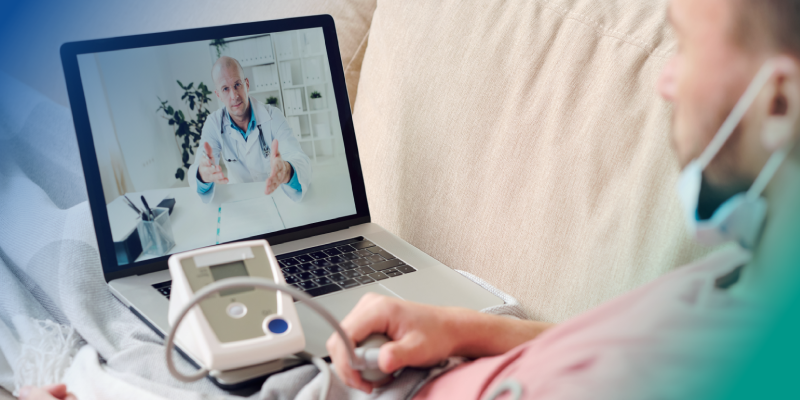
Remote monitoring devices track patient vitals in real time. Automated systems manage inventory and medication dispensing. AI tools assist in imaging analysis, reducing diagnostic turnaround time.
In critical care settings, integrated systems allow coordinated responses, improving treatment speed and accuracy.
Smart Hospital vs Traditional Hospital
| Aspect | Smart Hospital | Traditional Hospital |
| Data management | Real-time, integrated | Fragmented, manual |
| Decision-making | Data-driven | Experience-based |
| Workflow | Automated and optimized | Manual and time-consuming |
| Patient monitoring | Continuous | Periodic |
The difference lies in efficiency, integration, and responsiveness.
Challenges of Smart Hospitals
Despite the advantages, implementation comes with constraints.
- High initial investment in infrastructure
- Data privacy and cybersecurity concerns
- Integration challenges with existing systems
- Need for workforce training and adaptation
These factors influence adoption timelines and scalability.
Role of Medical Professionals
Allied Health Professionals (AHP)
AHPs use smart systems for monitoring, diagnostics, and therapy support. Their role expands to include interpreting data and working alongside automated tools.
Healthcare Professionals (HCP)
Doctors and specialists rely on smart systems for insights, but clinical judgment remains central. Technology supports decisions, it does not replace them.
Smart Hospital Implementation Strategy
A structured approach is essential for successful implementation.
- Assess infrastructure readiness
- Integrate systems in phases
- Train staff for digital workflows
- Ensure compliance with regulatory standards
Gradual adoption reduces disruption and improves long-term outcomes.
Future Trends in Smart Hospitals
Smart hospital development is moving toward predictive and connected care models.
Key trends include:
- AI-driven predictive analytics for early intervention
- Expansion of remote monitoring beyond hospital settings
- Robotics supporting clinical workflows
- Interoperable systems connecting multiple healthcare providers
These trends aim to improve efficiency and reduce reactive care.
Read also about Ethical Issues in Healthcare
Conclusion
A smart hospital represents a shift from isolated systems to integrated healthcare environments. By combining data, automation, and clinical expertise, these systems improve patient outcomes and operational efficiency. While challenges remain, continued innovation and structured implementation will define how widely smart hospital models are adopted.
Explore more evidence-led healthcare insights: MDForLives