






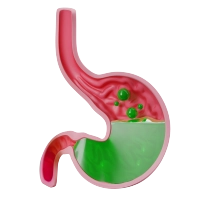















F2 indicates moderate or clinically significant fibrosis. Current MASLD pathways treat F2 or higher as an important risk threshold because liver-related risk rises as fibrosis advances and treatment decisions increasingly depend on accurate staging.
MASLD Screening: Why Earlier Fibrosis Detection Still Breaks Down
A peer-level look at how gastroenterology and hepatology clinicians identify MASLD fibrosis risk, where screening and referral pathways lose time, how FIB-4 and elastography are used, and what may help patients reach specialist care earlier.
Audience: Gastroenterologists & Hepatologists
Countries: 5
Completion Rate: 68.9%
SGID: 8935001
-Hero findings
– Quick Read — Key Findings
38.7%
Use transient elastography first
Transient elastography narrowly leads simple serum scores as the first fibrosis assessment used in suspected MASLD.
35.5%
Start with FIB-4 or a simple score
A nearly equal share begin with simple serum-based calculations, showing two common entry routes into fibrosis risk assessment.
41.9%
Are only moderately confident
Confidence in current NIT algorithms is concentrated in the middle rather than at the highest level.
54.8%
Call collaboration good but informal
Most describe cross-specialty working as collaborative, while explicitly noting that formal clinical protocols are still missing.
38.7%
Expect approved therapies to lead change
Disease-modifying pharmacological therapy is the most selected future driver of MASLD management over the next three to five years.
29.0%
Put AI-driven prediction second
AI using routinely collected clinical and laboratory data ranks ahead of novel liquid biopsy or plasma biomarkers.
If high-risk patients are already in the system, why are so many reaching GI care at F2?
MASLD case-finding depends on what happens before referral
Current guidance increasingly focuses MASLD fibrosis assessment on high-risk metabolic groups and stepwise non-invasive testing, making primary-care recognition and referral thresholds central to earlier detection.
The 2026 American Gastroenterological Association clinical care pathway prioritizes three high-risk groups for fibrosis risk stratification, adults with type 2 diabetes, people with overweight or obesity plus another metabolic risk factor, and patients with incidental steatosis or elevated liver enzymes, using a two-tier approach that begins with a simple score such as FIB-4 and moves higher-risk patients to liver-stiffness measurement or another validated second-tier test.
The MDForLives survey sits directly inside that handoff, asking gastroenterology and hepatology clinicians who fills their screening workload, what prevents earlier identification, which NIT they use first, how much they trust current algorithms, where referrals originate, and at what fibrosis stage patients typically arrive. The pattern is less about whether tools exist than whether the pathway consistently brings the right patient to the right test at the right time.
Screening concentrates where metabolic risk is most visible
68.8% say patients with obesity or metabolic syndrome make up the highest-volume cohort in their routine MASLD screening efforts.
Obesity and metabolic syndrome dominate the screening workload, accounting for 22 of 32 responses, with incidental liver-enzyme elevation a distant second at 18.8% and type 2 diabetes alone at 12.5%, consistent with the shift toward finding fibrosis inside metabolic care rather than waiting for liver-specific symptoms. Read against Finding 4, the same metabolic-risk patients who make up most of the volume are largely managed in primary care, which generates 80.6% of referrals, yet the modal patient still reaches specialist care at F2. A cohort being clinically obvious does not guarantee early staging: a patient can be recognizably high risk for years while fibrosis assessment is deferred or triggered only after another abnormality brings the liver into focus.
The biggest barrier is that early MASLD is easy to miss
54.8% identify the asymptomatic nature of early-stage liver disease as the single greatest barrier to earlier MASLD detection.
Silent disease leads by a wide margin, with under-recognition and lack of routine primary-care screening at 16.1%, absent standardized pathways at 12.9%, the perception that fatty liver is benign at 9.7%, and limited NIT availability or cost last at 6.5%. That order is instructive: the tools largely exist and the process barriers are each individually small, which leaves silent disease as the obstacle awareness alone cannot solve. An asymptomatic disease cannot rely on symptoms to create urgency, so the pathway has to build the trigger itself, using risk factors, routine labs, or incidental findings to prompt fibrosis assessment before deterioration makes the problem obvious.
Clinicians are split between elastography-first and score-first
Transient elastography leads at 38.7%, only narrowly ahead of simple serum-based calculations such as FIB-4 at 35.5%.
First-line NIT choice is not dominated by one workflow: 12 of 31 respondents most often start with transient elastography (38.7%) and 11 with a simple serum score (35.5%), while blood biomarker panels and sequential FIB-4 then elastography are each 9.7% and MRE/MRI-PDFF is 6.5%. That near-tie matters because confidence is measured rather than absolute, 41.9% are moderately confident in current NIT algorithms, 35.5% very confident, 16.1% slightly, and only 6.5% extremely, so the absence of a shared first step likely feeds the uncertainty, and the gain lies in standardizing the sequence rather than adding another test.
Primary care sends most referrals, but patients arrive at F2
80.6% say primary care or general practice generates most MASLD referrals, while 58.1% say patients most commonly present to their gastroenterology/hepatology practice with moderate/significant fibrosis (F2).
Primary care is the dominant referral source, named by 25 of 31 clinicians, far ahead of endocrinology, cardiology, bariatric clinics, or self-referral, yet F2 is the most common stage at presentation for 58.1%, with only 22.6% most often seeing early steatosis, 16.1% F3, and 3.2% no typical pattern. The survey was not designed to prove causation, but it exposes the handoff worth attention: the dominant source of referral is also where high-risk metabolic patients are already being managed, while the specialist endpoint of that pathway is frequently F2 disease.
Collaboration exists, but the pathway needs to be operational
54.8% describe multidisciplinary collaboration as good but lacking formalized clinical protocols; another 32.3% say communication occurs while referral silos persist.
Only 3.2% describe collaboration as excellent and 9.7% call it poor and fragmented, leaving 87.1% in the informal or siloed middle, so the shortfall is structural rather than a lack of willingness. That is why the most-wanted fixes are operational: 35.5% choose wider availability and reimbursement for transient elastography, 25.8% standardized inter-specialty referral guidelines, and 19.4% automated FIB-4 inside primary-care EHRs, with education and awareness at 9.7% each. Looking further out, respondents expect both treatment and detection to advance, disease-modifying therapies lead at 38.7%, AI-driven prediction at 29.0%, and liquid biopsy or plasma biomarkers at 25.8%, but the near-term pathway still depends on access, staging, and referral rules.
MASLD: visible risk, invisible progression
The clinicians here are not describing a field without screening tools. Metabolic risk is obvious, non-invasive testing is already part of practice, and primary care generates most specialist referrals. The problem is that early disease can stay silent, first-line testing is not yet uniform, confidence in current algorithms is often moderate rather than absolute, and formal referral protocols lag day-to-day collaboration.
That makes the F2 finding important: for 58.1% of respondents, moderate or significant fibrosis is the most common stage at presentation. As fibrosis stage increasingly shapes management and therapeutic eligibility, the value of earlier detection becomes more concrete. The next improvement may depend less on another awareness message and more on making case-finding executable, identifying high-risk patients consistently, sequencing NITs clearly, expanding access to second-tier testing, and defining when a result should trigger specialist evaluation.
Endocrinology, Diabetes & Metabolism
7Oncology & Hematology
7Hospital Administration
6Primary Care & Family Medicine
6Dermatology
6Ophthalmology
6Gastroenterology & Hepatology
6Dentistry & Oral Health
5Surgery & Procedural Care
5Pharmacy
5Pediatrics
5Neurology
5Nurses, NPs & Physician Assistants
4
Cardiology
4Radiology & Imaging
3Laboratory & Diagnostics
3Optometry & Optical Care
3Diabetes, Weight & Metabolic Health
3Cancer Care
1Skin & Aesthetic Care
1Social Work & Patient Support
1
You have read the summary
The findings go deeper.
So can your participation.
Frequently asked questions
Direct answers to common questions around this topic.
What is MASLD and how is it different from MASH?
MASLD is metabolic dysfunction-associated steatotic liver disease, a broad diagnosis that includes hepatic steatosis in people with cardiometabolic risk factors. MASH is the inflammatory, potentially progressive form in which steatosis is accompanied by hepatocellular injury and can progress through fibrosis to cirrhosis.
Who should be assessed for fibrosis risk in MASLD?
Current pathways emphasize case-finding in higher-risk groups rather than indiscriminate population screening. These groups include adults with type 2 diabetes, people with overweight or obesity plus additional metabolic risk, and patients with incidental steatosis or unexplained liver-enzyme elevation.
What is FIB-4 and how is it used in MASLD?
FIB-4 is a simple blood-based fibrosis risk score calculated from age, AST, ALT, and platelet count. It is commonly used as a first-tier test to identify people who can remain in lower-risk follow-up and those who need a second non-invasive assessment.
When is transient elastography or FibroScan used in MASLD?
Transient elastography is commonly used as a second-tier test when first-line fibrosis assessment suggests increased risk, or when clinical context warrants more direct liver-stiffness measurement. It helps refine who may need hepatology evaluation, monitoring, or treatment planning.
What does F2 fibrosis mean in MASLD?
Are there approved medicines for MASH with moderate to advanced fibrosis?
Yes. Regulatory options have expanded. In the United States, resmetirom was approved in 2024 for noncirrhotic MASH/NASH with F2–F3 fibrosis, and semaglutide received an FDA MASH indication in 2025 for adults with moderate-to-advanced fibrosis. Local approvals, eligibility, and prescribing information should always be checked.
Direct answers to the questions healthcare professionals are most likely to ask about these findings.
Related Reports


Hospital Patient Experience: Where the Care Journey Still Breaks Down