













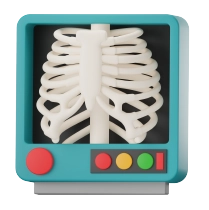






RADS frameworks use standardized terminology, assessment categories, and reporting structures to improve consistency and communication. Examples include BI-RADS for breast imaging, LI-RADS for liver imaging, PI-RADS for prostate imaging, and Lung-RADS for lung cancer screening.
Structured Reporting in Radiology: Why Radiologists Prefer a Hybrid Workflow
A radiologist-focused view of how structured templates affect report speed, communication, complex-case flexibility, visual attention, standardized terminology, and AI-ready data, and why most respondents still want free-text freedom inside a consistent reporting framework.
Audience: Radiologists
Countries: 5
Completion Rate: 77.8%
SGID: 8954718
-Hero findings
– Quick Read — Key Findings
40.0%
Report more than 80% of volume structurally
Structured reporting is already the dominant format for the largest respondent group.
73.3%
Put breast imaging first
BI-RADS-led breast imaging is the clear choice for where standardized reporting delivers the highest clinical value.
42.9%
Notice slight eye-gaze drift
The most common distraction is minor movement between images and the reporting interface rather than major workflow disruption.
71.4%
Need manual workarounds
Templates usually cover the core case, but incidental findings and nuance often push radiologists back toward free text.
64.3%
Call standardized data important
Most see structured data as useful for registries and research, but still secondary to clinical workflow.
21.4%
Expect AI to interpret free text directly
A minority believe current AI should extract meaning from narrative reports without requiring additional structured input.
How much freedom should a structured report keep?
Radiology reporting must serve both human readers and reusable software data
Structured reporting has moved far beyond a formatting preference. In many imaging pathways, the report now carries standardized terminology, assessment categories, management recommendations, quality data, and information that may later feed registries, decision support, or AI-enabled workflows.
RSNA’s RadReport library frames standardized reports as improving communication while producing reports readable by both humans and machines, and ACR Reporting and Data Systems such as BI-RADS, LI-RADS, PI-RADS, and Lung-RADS show what that looks like when terminology, assessment categories, and recommendations become part of the workflow. But structure also changes the mechanics of interpretation, since every field, menu, or mandatory prompt competes with visual attention and complex or incidental findings rarely arrive in the order a form anticipates, so the MDForLives survey focuses not only on adoption but on where standardization supports the reading room or starts to work against it.
Radiologists prefer structure around the report, not inside every sentence
78.6% choose standardized headings with full free-text freedom under each section as their ideal routine reporting workflow.
Only 7.1% prefer a fully structured model with mandatory lists and drop-downs, and 14.3% want structure concentrated in the impression, so the hybrid is not a marginal compromise but the dominant choice. It fits the rest of the data: radiologists value templates yet still report workarounds for complex findings, small shifts in visual attention, and inconsistent lexicon use, and a hybrid keeps the report predictable for the reader without forcing every observation through a rigid interface.
The clearest payoff is downstream: fewer calls, more actionable reports
60.0% say structured reporting has substantially improved communication with referring clinicians by reducing calls or addendum requests for clarification.
A further 20.0% report slight improvement because standardized impressions make recommendations clearer, while 20.0% see no noticeable change, and no category describes communication as worse. That fits the purpose of standardized frameworks, making the message easier to find, interpret, and act on, which matters most when a report carries a follow-up recommendation, where completion still depends on closing the loop after sign-off.
Templates help throughput, but their friction shows up as small interruptions
57.1% say pre-populated templates and drop-downs significantly speed dictation, while 42.9% describe slight eye-gaze drift between images and the reporting monitor.
The efficiency question shows 21.4% neutral, 14.3% a moderate delay, and 7.1% a severe delay from rigid interfaces; the visual-focus question is graded too, with 35.7% reporting no interruption, 42.9% slight, 14.3% moderate, and 7.1% significant distraction. The combination is the point: a template can make the report faster overall while still pulling the radiologist’s eyes off the images more often, and in a high-volume room those micro-interruptions matter because the workflow is built around sustained image review, not form completion.
Templates handle the expected case better than the unexpected one
71.4% say templates handle core findings adequately but require manual workaround for complex incidental notes.
Another 21.4% say templates work exceptionally well with enough room for free-text customization, and only 7.1% call them poor, so the dominant experience is usable structure with an escape route. Incidental findings expose the tension: the radiologist may need to describe something outside the template’s organ list, qualify uncertainty, or integrate context from elsewhere, while still keeping the report clear enough for the referrer to know what needs follow-up and when.
The data layer is still inconsistent, even as radiologists value it for AI
50.0% report minimal standardized-lexicon integration, while 64.3% say structured standardized data is important for registries and research but secondary to clinical workflow.
Only 14.3% report standardized terminology fully integrated across subspecialty templates and 28.6% partially, usually in oncologic or RADS workflows; on the AI question, 7.1% call standardized data essential while 21.4% think current AI should extract meaning straight from free text. RadLex and common data elements exist to reduce ambiguity, yet many real-world environments still lean on local macros, and that gap matters because AI readiness depends not just on the model but on whether the data entering and leaving it is consistent enough to trust, compare, and reuse.
The future is less about forcing radiologists into templates than making templates understand them
The survey shows structured reporting already creates value, communication improves, reporting can be faster, and standardized systems are especially compelling in subspecialties like breast imaging, yet the preferred endpoint is not a more rigid form: nearly eight in ten choose a hybrid that keeps standardized headings but preserves free-text freedom.
The friction is practical and recognizable, clicking through fields, shifting gaze from images to prompts, working around a template when an incidental finding does not fit, and relying on local macros when standardized terminology is not embedded. These are not arguments against structure but signals that it should become more adaptive.
The open-ended responses make the next step clear: radiologists want context-aware speech recognition and AI that understands natural dictation, places findings in the right section, carries measurements from other systems, and preserves templates across platforms, so standardization happens behind the scenes while the radiologist keeps interpreting and dictating naturally.
Endocrinology, Diabetes & Metabolism
7Oncology & Hematology
7Hospital Administration
6Dermatology
6Ophthalmology
6Gastroenterology & Hepatology
6Pharmacy
6Primary Care & Family Medicine
6Surgery & Procedural Care
5Diabetes, Weight & Metabolic Health
5Neurology
5Dentistry & Oral Health
5Nurses, NPs & Physician Assistants
5Pediatrics
5
Cardiology
4Laboratory & Diagnostics
4Radiology & Imaging
3Optometry & Optical Care
3Skin & Aesthetic Care
2Cancer Care
1Social Work & Patient Support
1Brain, Nerves & Mental Health
1
You have read the summary
The findings go deeper.
So can your participation.
Frequently asked questions
Direct answers to common questions around this topic.
What is structured reporting in radiology?
Structured reporting organizes radiology findings into a consistent format using predefined headings, fields, terminology, or templates. The degree of structure can range from standardized section headings to fully itemized data entry.
What are the benefits of structured radiology reports?
Structured reports can improve consistency, make key findings easier to locate, support clearer communication with referring clinicians, and create more standardized data for quality improvement, registries, research, and selected AI workflows.
Does structured reporting make radiologists faster?
It can improve efficiency when templates are well designed, pre-populated, and matched to the examination. Poorly designed templates can add clicks, mandatory fields, navigation, or visual interruption, so the workflow design matters as much as the template itself.
What is RadLex in radiology reporting?
RadLex is an RSNA-developed standardized radiology terminology used in reporting, decision support, data mining, registries, education, and research. It can also be incorporated into structured reporting templates and common data elements.
Why are BI-RADS and other RADS systems useful in radiology?
Can AI use structured radiology reports?
Structured terminology and standardized data can make information easier for software to identify, compare, and reuse. AI can also help populate or summarize reports, but clinical accuracy, workflow integration, and radiologist oversight remain essential.
Direct answers to the questions healthcare professionals are most likely to ask about these findings.