
The word “reversal” sounds final.
It suggests a door closing. A diagnosis disappearing. A future where diabetes no longer needs daily attention.
But for many people living with Type 2 Diabetes, the real story is more complicated. Blood sugar can improve. Medications may sometimes be reduced. Weight loss, lifestyle changes, newer treatments, and structured support can make a meaningful difference. Yet the condition does not simply vanish from life.
That is the tension behind Type 2 diabetes remission.
MDForLives survey data shows that people are highly aware of the idea of “reversing” Type 2 Diabetes. But the findings also reveal an important gap: many understand improvement as possible, while the meaning of “reversal” remains mixed, sometimes hopeful, sometimes confusing, and often tied to the misconception that diabetes can be permanently cured.
People Know the Word “Reversal,” but Not Always What It Means
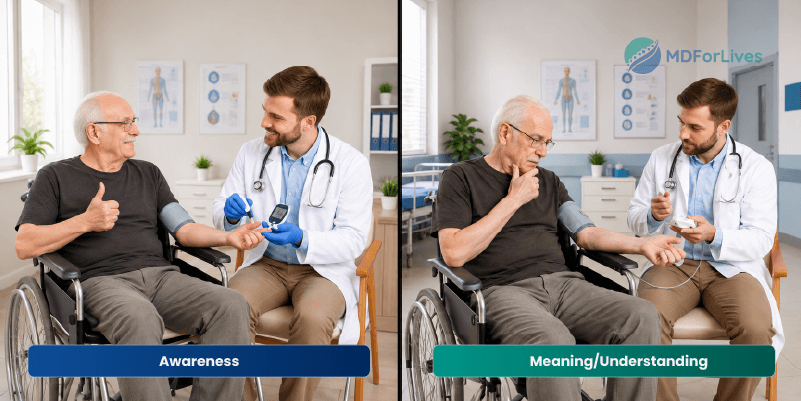
Awareness is already high. In the MDFL survey data, 30.8% said they were very familiar with the idea of reversing Type 2 Diabetes, and 39.2% said they were somewhat familiar. Only 3.1% had never heard about it.
This shows how widely the idea has entered public conversation.
But familiarity does not mean clarity. When asked what “reversing diabetes” personally means, 56.2% said controlling blood sugar without medication. Another 26.2% said completely curing diabetes, while 10.0% connected it with reducing future complications.
That 26.2% is important. It shows that a meaningful share of people interpret reversal as cure. This is where Type 2 diabetes remission becomes a safer and more accurate way to frame the conversation.
Remission does not erase the history of diabetes. It describes a state where blood sugar is controlled to a non-diabetes level without glucose-lowering medication for a defined period. It also means ongoing monitoring and healthy habits still matter.
Lifestyle Is Seen as the Main Driver, but It Is Also the Hardest Part
When asked which approach has the biggest impact on improving Type 2 Diabetes, 56.3% selected diet and lifestyle changes. Weight loss medications followed at 24.2%, while exercise and physical activity and diabetes medications were each selected by 9.4%.
This suggests people understand that improvement is not only medication-led.
But the challenge appears in the next finding. The most difficult part of long-term diabetes management was maintaining diet changes, selected by 36.7%, followed by weight management at 30.5% and staying physically active at 19.5%.
This is the real-life gap.
People believe lifestyle changes matter. But they also identify the same lifestyle changes as the hardest to sustain. That makes Type 2 diabetes remission less about a single breakthrough and more about maintaining a difficult routine over time.
The open-ended responses echoed this. Many respondents described the misconception that once diabetes is “reversed,” the work is finished. Others pointed to the difficulty of consistency, food habits, motivation, and the belief that medication alone can solve the condition.
Long-term metabolic improvement often depends on more than starting treatment. Explore why staying on obesity therapy is the real test and why continued support matters.
Confidence Is High, but the Burden Is Continuous
The survey data shows strong confidence in improvement. About 39.1% said they were very confident that Type 2 Diabetes can improve significantly with long-term lifestyle changes, while 47.7% said they were somewhat confident.
Together, that is a strong signal of belief in possibility.
But confidence does not remove the effort. When asked what makes long-term diabetes management hardest in everyday life, 35.9% selected food cravings or eating habits. Motivation and consistency followed at 25.8%, and busy lifestyle or routine at 23.4%.
This shows that the biggest barriers are not only medical. They are behavioral, emotional, environmental, and practical.
A person may know what helps, believe improvement is possible, and still struggle with meals, routines, stress, motivation, social eating, work schedules, affordability, or fatigue. That is why Type 2 diabetes remission needs support, not just instruction.
The Goal Is Bigger Than Reducing Medication
When people imagine meaningful blood sugar improvement, reducing medication is not the top priority. The leading answer was feeling healthier and more energetic at 38.3%, followed by preventing future complications at 33.6%. Reducing medications was selected by 14.8%.
This is an important patient-centered insight.
For many people, diabetes improvement is not only about lab values or medication count. It is about energy, confidence, future risk, and feeling less restricted by the condition.
This finding also challenges a narrow view of diabetes reversal. If the conversation focuses only on whether medication can be stopped, it may miss what people actually value: living better now and reducing fear about what may happen later.
Living with diabetes involves more than medication decisions; monitoring and daily management can also shape how people experience the condition. Explore whether newer diabetes tools are reducing the daily burden.
Online Content Influences Some Expectations, but Not Everyone
Online content and social media had no real influence on expectations for 43.8% of respondents. But 27.3% said they were moderately influenced, 18.0% slightly influenced, and 10.9% strongly influenced.
That means more than half reported at least some influence.
This matters because diabetes reversal is a topic where simple claims can travel faster than careful explanations. People may see stories about rapid weight loss, miracle foods, supplements, injections, low-carb diets, or “natural cures.” Some stories may be helpful. Others may create unrealistic expectations.
The open-ended responses showed both sides of the misunderstanding. Some said people believe reversal is impossible. Others said people believe it is a complete cure. Several pointed to “magic bullet” thinking, medication-only expectations, or returning to old habits after blood sugar improves.
The confusion is not only about whether improvement can happen. It is about what must continue after improvement happens.
The Biggest Fear Is Still Future Complications
When asked which concern affects them most when thinking about diabetes management, 48.4% selected long-term complications. Difficulty maintaining healthy habits followed at 21.9%, and dependence on medication at 16.4%.
This reveals the emotional weight behind Type 2 Diabetes.
People are not only thinking about today’s blood sugar. They are thinking about eyes, kidneys, nerves, heart health, future independence, and whether they can keep the condition controlled long enough to avoid harm.
That makes the language of “reversal” sensitive. If it sounds like a cure, it may reduce the perceived need for long-term monitoring. But if it is framed as remission, it can protect hope while still making room for responsibility.
The More Accurate Pattern: Improvement Is Possible, Maintenance Is Essential
The final perspective question brings the article together. About 52.0% said significant improvement is possible, but requires ongoing effort. Another 19.7% said Type 2 Diabetes can often be reversed, while 17.3% said diabetes can be controlled but not truly reversed.
The majority view is balanced: improvement is possible, but not effortless or final.
That is exactly the distinction patients need. Type 2 diabetes remission is not a one-time finish line. It is a maintained state. Blood sugar may improve, medications may reduce, and health may feel better, but the underlying risk can return if supportive habits and monitoring disappear.
Long-term improvement depends not only on starting treatment, but also on whether patients can sustain the changes and therapies that support it. Explore why GLP-1 medication adherence starts before the first dose.
The strongest theme from open-ended responses was cure versus remission. Many respondents said the biggest misconception is believing diabetes is permanently cured, believing the work is done, believing medication alone can fix it, or believing healthy habits are no longer needed once numbers improve.
That is the patient education opportunity.
Closing Perspective
“Reversing Type 2 Diabetes” is a powerful phrase because it gives people hope. But it can also create misunderstanding if it sounds like diabetes disappears permanently.
MDForLives survey data shows that people living with Type 2 Diabetes believe improvement is possible. They also recognize that lifestyle changes, weight management, food choices, motivation, and consistency are difficult to sustain in everyday life.
The most useful conversation is not whether reversal is real or false.
It is how to explain Type 2 diabetes remission honestly.
Yes, significant improvement can happen. Yes, some people may reach blood sugar levels that allow medication reduction. Yes, lifestyle changes, weight loss, and newer therapies may help. But remission is not the same as cure. It requires ongoing support, continued monitoring, and habits that can survive real life.
Because the goal is not only better blood sugar today.
It is confidence that the progress can last.