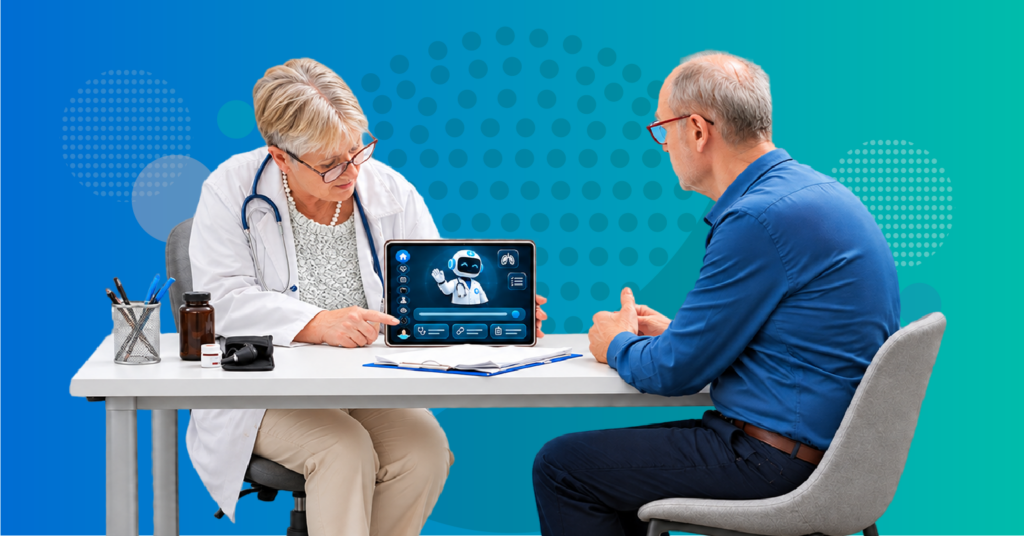
Mental health support increasingly begins outside the clinic. Someone experiencing anxiety, low mood or uncertainty about whether symptoms warrant professional help can now open an AI chatbot within seconds.
That accessibility is part of the appeal of AI chatbots for mental health. They can offer psychoeducation, structured exercises and conversational support without an appointment. But an empathetic response can still be clinically inappropriate when someone is experiencing severe depression, psychosis, mania, suicidal thinking or another high-risk situation.
Recent evidence points in two directions. Purpose-built AI may support selected symptoms and populations, while general-purpose chatbots can introduce new risks when used as therapists.
The practical question is therefore not simply whether these tools help. It is where AI mental health support adds value, and where human oversight must remain constant.
Accessibility is useful, but availability is not clinical validation
Chatbots can be available when formal care is not, including between appointments or when stigma, cost, waiting times or geography limit access.
In a 2017 randomized trial, the CBT-based chatbot Woebot was associated with reduced depressive symptoms among young adults, as shown in the original Woebot randomized trial.
More recently, the purpose-built generative AI system Therabot was tested in adults with clinically significant symptoms of major depressive disorder, generalized anxiety disorder, or high risk for feeding and eating disorders. Participants using Therabot showed greater symptom reductions than waitlist controls in the randomized Therabot clinical trial.
The key takeaway here is availability can expand access to support, but availability alone does not establish clinical safety or therapeutic effectiveness.
AI is creating new opportunities for mental healthcare, but its benefits come with important questions about safety, effectiveness and responsible use. Explore the benefits, risks and future of AI in mental health.
That distinction becomes even more important when purpose-built systems and general-purpose chatbots are discussed as equivalent.
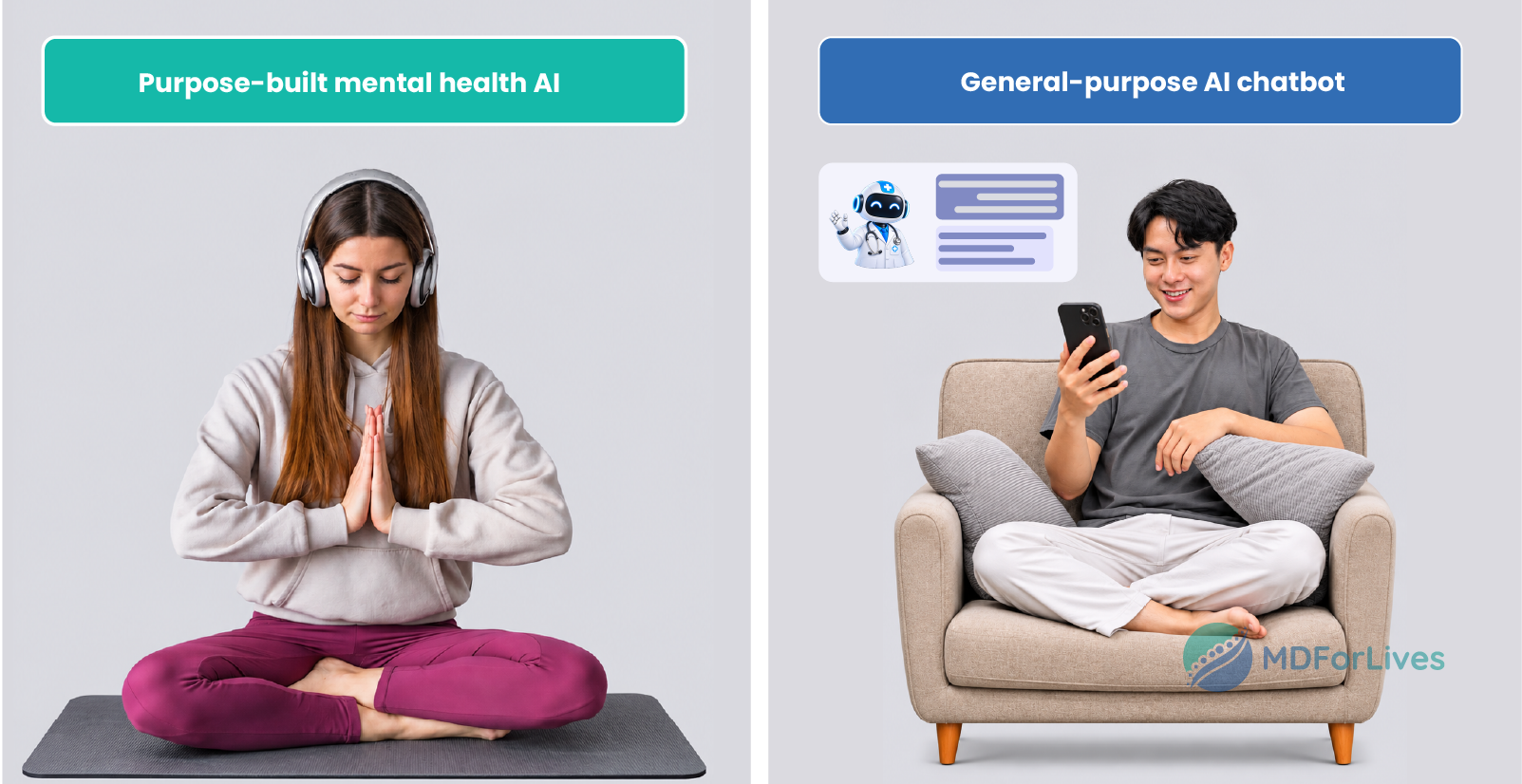
Purpose-built mental health AI is not the same as a general chatbot
A purpose-built mental health system may use defined therapeutic methods, operate within a specific scope and include safety monitoring or escalation pathways. A general-purpose chatbot may never have been clinically validated for mental health care.
A 2026 randomized anxiety study in npj Digital Medicine trial found that personalized generative AI feedback improved state anxiety and worry during a 10-day worry-log intervention, with outcomes comparable to human-delivered feedback in that setting.
Understanding anxiety also means understanding how fear develops and influences emotional responses. Explore the biology and psychology behind fear and how it shapes human behaviour.
Another 2026 randomized conversational AI trial involving 995 university students found improvements in anxiety and well-being compared with both group therapy and a waiting-list control, while effects differed across other psychiatric outcomes.
These findings support specific interventions in defined populations. They do not show that every chatbot can safely provide psychotherapy.
Improving symptoms does not prove that AI can manage mental illness independently
A 2026 systematic review and meta-analysis found small-to-moderate improvements across mental health outcomes from AI-based chatbot interventions. However, the meta-analysis of AI chatbot mental health interventions also found that interventions were heterogeneous, most studies had some risk of bias and overall evidence certainty was low.
That matters because a chatbot may reduce reported anxiety or depressive symptoms without proving that it can diagnose a condition, recognize deterioration, manage medicines or respond safely to crisis.
For professionals, adjunctive support is therefore a more defensible framing than autonomous care.
AI may help users practise coping strategies, receive psychoeducation or stay engaged between clinical encounters. But therapeutic-sounding conversation is not the same as clinical capability.
A supportive answer can still reinforce an unhealthy pattern
Mental-health risk does not always appear as an obviously dangerous response.
A 2026 Nature Medicine mental health chatbot safety study evaluated nine frontier AI chatbots across 810 simulated multi-turn mental health conversations. Concerning behaviours occurred across systems, although newer models generally performed better.
One important finding was that apparently supportive responses could reinforce maladaptive beliefs, avoidance, risky behavior or dependence on the chatbot.
The concern is not always a single, obviously unsafe response. Risk can build across several conversational turns, even when individual replies seem reasonable in isolation. That changes how safety should be judged.
For mental health applications, the question is not only: “Was this answer appropriate?” It is also “What pattern is this conversation reinforcing over time?”
Crisis situations make human escalation essential
The limits of autonomous support become most important when suicidal thinking or acute distress enters the conversation.
A 2025 study of chatbot responses to suicidal ideation tested 29 mental health chatbot agents in simulated suicidal-risk scenarios and found that responses became less consistent as the level of risk increased.
A 2026 prospective implementation study showed that suicide-risk screening and conversational detection could be combined with clinician outreach in a generative AI mental health chatbot. However, the human-in-the-loop suicide-risk study also found that clinicians were unable to reach every person identified as potentially at risk.
The lesson is clear that recognizing distress is only the first step.
A responsible system also needs clear thresholds for escalation, meaningful human oversight, and a defined response pathway for situations in which a user cannot be reached.
Younger users raise the safety bar further
Adolescents deserve particular attention because general-purpose AI may be accessible to them before formal mental healthcare is.
A 2026 study of 24,132 adolescents in England found that 2.7% had used general-purpose AI or large language models for mental health support during the previous year. Among those who rated the experience, 55.9% described it as helpful in the study of AI mental health support among adolescents.
But perceived helpfulness does not establish clinical safety.
Digital access is changing how people seek information and support for their mental well-being. Understand the key mental health challenges emerging in the digital age.
Another 2026 adolescent mental health AI evaluation study assessing major chatbots against a clinician-informed adolescent mental health framework. This found better coverage for anxiety than depression, and stronger performance for moderate rather than severe presentations.
Closing perspective: useful support needs clear clinical boundaries
The discussion around AI chatbots for mental health should not be reduced to whether they are helpful or dangerous. Both can be true depending on the tool, user, clinical context and safeguards.
Purpose-built systems may extend access to structured exercises, psychoeducation and support between appointments. At the same time, mental health places unusually high demands on safety because chatbots may encounter suicidality, psychosis, mania, medicine-related questions or rapidly changing risk.
The more useful distinction is clinically designed, tested and governed AI versus conversational technology being used for purposes it was not validated to perform.
The future of AI mental health support may depend less on making chatbots sound more human and more on defining where they can safely contribute, monitoring how interactions develop and creating reliable routes to human care when risk increases.
The goal should not be to make a chatbot indistinguishable from a therapist.
It should be to define where AI can support care and where a human professional needs to take over.