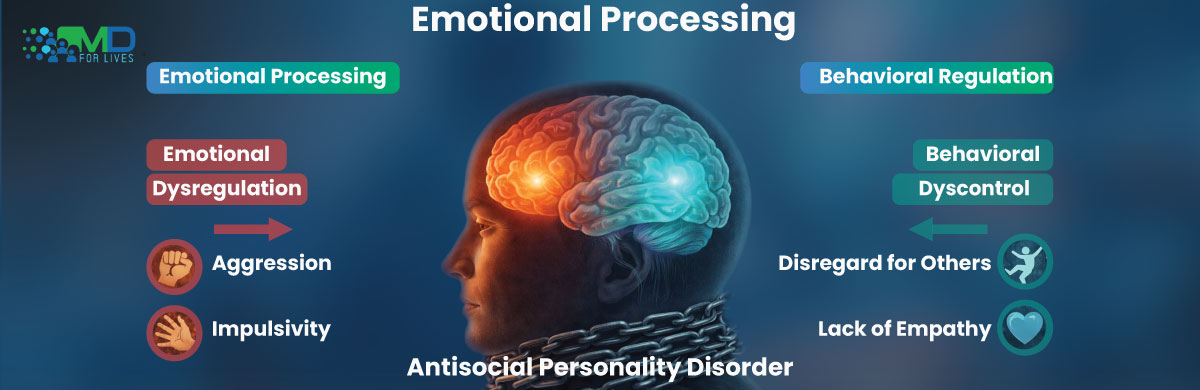
Antisocial personality disorder is a mental health condition characterized by persistent patterns of disregard for social norms, the rights of others, and lawful behavior. People with this disorder often display impulsive actions, lack of empathy, and difficulty maintaining stable relationships.
Understanding symptoms, causes, and treatments is essential for recognizing the condition and supporting individuals who may be affected.
Although the disorder is commonly associated with criminal or manipulative behavior, modern psychological research focuses on identifying underlying factors and developing effective treatment strategies such as psychotherapy and cognitive therapy for antisocial personality disorder.
What Is Antisocial Personality Disorder?
Antisocial personality disorder (ASPD) is a psychiatric condition defined by long-term patterns of behavior that disregard the rights and safety of others.
People with this disorder may repeatedly violate social rules or laws without experiencing guilt or remorse.
psychologists describe it as a personality disorder marked by:
- Persistent disregard for others
- Impulsive behavior
- Manipulation or deceit
- Lack of empathy or remorse
This condition is classified as a personality disorder, meaning the behavior patterns are deeply ingrained and usually develop in adolescence or early adulthood.
Antisocial Personality Disorder Symptoms
Recognizing symptoms is important for early diagnosis and treatment.
Common symptoms include:
- Chronic lying or deception
- Impulsive decision-making
- Aggressive or violent behavior
- Disregard for personal or public safety
- Lack of remorse after harming others
- Difficulty maintaining employment or relationships
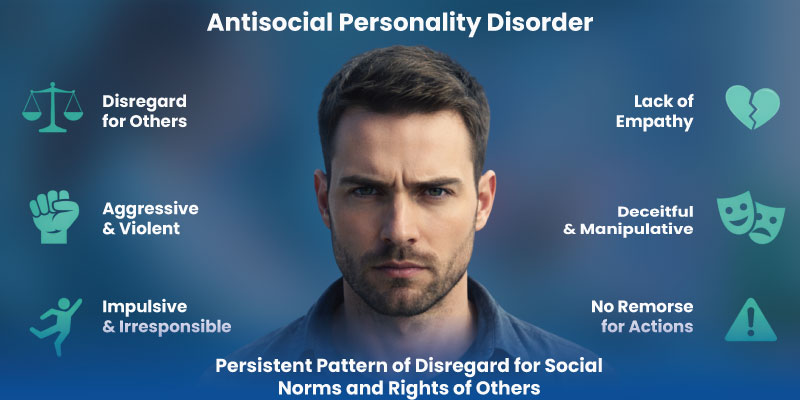
The signs often appear during adolescence and continue into adulthood.
Antisocial Personality Disorder Traits
People with this disorder may display specific behavioral characteristics.
Common traits include:
Manipulative Behavior
Individuals may manipulate others for personal gain.
Lack of Empathy
Difficulty understanding or caring about the feelings of others is common.
Risk Taking
Impulsive behavior may lead to dangerous decisions.
Irresponsibility
People with ASPD often struggle with responsibilities such as work, finances, or relationships.
These characteristics can affect social functioning and long-term stability.
Antisocial Personality Disorder Criteria
Mental health professionals diagnose ASPD using clinical guidelines.
The criteria often include patterns of behavior such as:
- Repeated unlawful behavior
- Deceitfulness or manipulation
- Impulsivity
- Aggression or irritability
- Lack of remorse
Diagnosis typically requires a comprehensive psychological evaluation conducted by a mental health professional.
What Causes Antisocial Personality Disorder?
Researchers believe that several factors contribute to the development of ASPD.
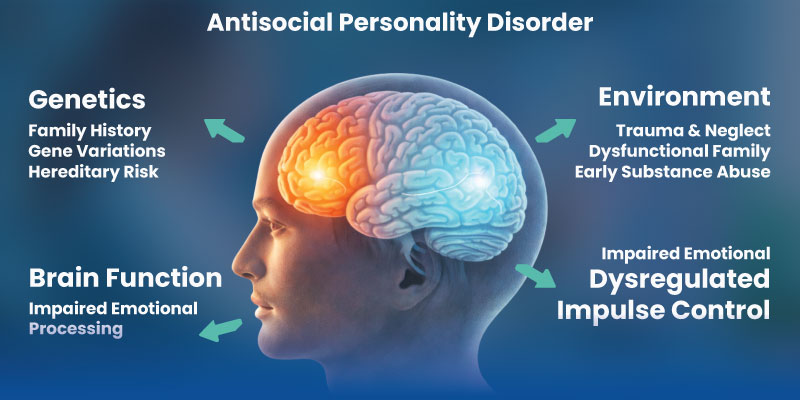
Genetic Factors
Some studies suggest that genetic predisposition may increase the likelihood of developing ASPD.
Childhood Environment
Early life experiences can influence personality development.
Risk factors may include:
- Childhood trauma or neglect
- Exposure to violence
- Unstable family environments
Brain Structure and Function
Some research suggests differences in brain regions responsible for impulse control and emotional regulation.
Because of these factors, causes are usually a combination of biological and environmental influences.
Antisocial Personality Disorder in Women
Although ASPD is diagnosed more frequently in men,in women also occurs.
Women with ASPD may present slightly different patterns of behavior.
For example:
- Greater emotional manipulation
- Higher association with trauma history
- Differences in aggression patterns
Research on gender differences in personality disorders continues to expand.
Antisocial Personality Disorder as a Mental Illness
ASPD is recognized as a mental illness within psychiatric diagnostic systems.
The condition affects emotional regulation, impulse control, and interpersonal behavior.
Because of these characteristics, ASPD mental illness can have significant social, legal, and psychological consequences.
However, individuals with ASPD vary widely in behavior and functioning.
Antisocial Personality Disorder Treatments
Managing ASPD can be challenging, but several treatments may help improve functioning.
Treatment typically focuses on behavior management and psychological support.

Psychotherapy for Antisocial Personality Disorder
Psychotherapy is often the primary treatment approach.
Therapy may focus on:
- Understanding behavior patterns
- Improving impulse control
- Developing empathy and emotional awareness
Long-term therapy may help individuals recognize consequences and develop healthier social behaviors.
Cognitive Therapy for Antisocial Personality Disorder
One approach receiving increasing attention is cognitive therapy.
Cognitive therapy focuses on identifying and modifying harmful thinking patterns that contribute to impulsive or antisocial behavior.
Goals of therapy may include:
- Improving decision-making
- Recognizing distorted beliefs
- Developing healthier coping strategies
Antisocial Personality Disorder Medication
There is no single medication designed specifically for ASPD.
However, medication may be prescribed to manage related symptoms such as:
- Aggression
- Anxiety
- Depression
Medications are usually combined with psychotherapy.
Famous People with Antisocial Personality Disorder
Diagnosing public figures without professional evaluation is not reliable.
Mental health diagnoses require careful clinical assessment.
Media speculation about famous people antisocial personality disorder should therefore be interpreted cautiously.
Living with Antisocial Personality Disorder
People may face challenges in relationships, employment, and legal situations.
However, structured therapy and supportive environments may help improve behavioral outcomes.
Early intervention, consistent therapy, and social support can contribute to better long-term functioning.
Key Takeaways
- ASPD is a mental health condition characterized by disregard for social norms and the rights of others.
- Common symptoms include impulsive behavior, deception, and lack of empathy.
- Causes involve genetic, environmental, and neurological factors.
- Psychotherapy and cognitive therapy are common treatment approaches.
- Early recognition of symptoms can support better outcomes.
Read also about Science of fear
Frequently Asked Questions
What is ASPD?
It is a mental health condition involving persistent patterns of disregard for others, impulsive behavior, and lack of remorse.
What are the symptoms of ASPD?
Symptoms may include deception, aggression, impulsivity, manipulation, and lack of empathy.
What causes ASPD?
Causes may involve a combination of genetic factors, childhood experiences, and neurological differences.
Can ASPD be treated?
Although there is no single cure, psychotherapy and cognitive therapy may help individuals develop healthier behavior patterns.

MDForLives is a global healthcare intelligence platform where real-world perspectives are transformed into validated insights. We bring together diverse healthcare experiences to discover, share, and shape the future of healthcare through data-backed understanding.