
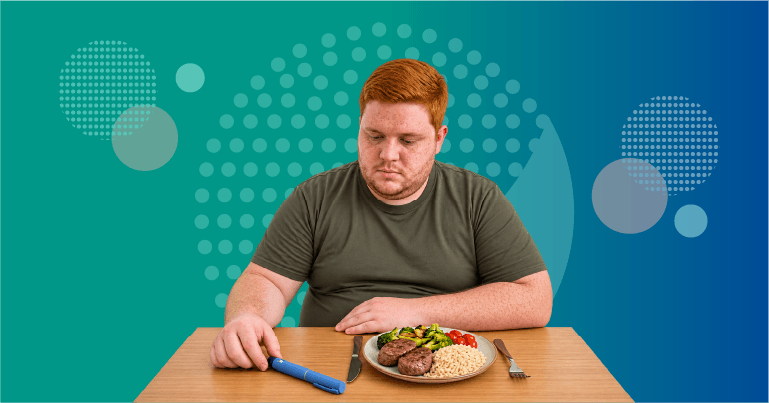
The scale gives a number.
But it does not show the extra thought before choosing what to wear. It does not show the hesitation before accepting an invitation. It does not show the self-consciousness in public spaces, the guilt around food choices, the discomfort in clothing, or the anxiety of being judged before being understood.
That is the hidden burden of obesity.
Obesity is often discussed through body weight, BMI, metabolic risk, or treatment goals. These measures matter clinically, but they do not fully capture what people carry in everyday life. For many, the experience is not only physical. It is emotional, social, practical, and deeply personal.
MDForLives survey data shows that people living with overweight or obesity describe a continuous daily burden that goes beyond the scale. Every respondent said weight affects daily life either moderately or significantly. The strongest impact was not physical comfort alone. It was emotional well-being and self-image.
Obesity Is a Health Condition, but It Is Also Lived Every Day
Obesity is increasingly understood as a complex chronic disease influenced by biological, behavioral, social, environmental, and healthcare factors. It is associated with higher risk of several chronic conditions, but the experience of obesity is not limited to future health risk.
For patients, the burden often appears in ordinary moments: getting through the day, choosing clothes, sitting comfortably, entering healthcare settings, deciding what to eat around others, making social plans, or worrying about how people respond.
That is why patient-centered obesity care must look beyond weight reduction alone. The goal is not only to change a number. It is to improve health, quality of life, confidence, function, and dignity.
Obesity care increasingly needs to look beyond the initial change in weight and consider what ongoing support looks like. Explore why living with obesity means planning for what comes next.
The MDForLives survey data reinforces this broader view. When asked how much weight affects daily life overall, 42.9% said significantly and 57.1% said moderately. No respondent selected “slightly” or “not at all.”
This makes the pattern clear: for these patients, weight is not an occasional concern. It is part of daily life.
Emotional Well-Being Is the Most Affected Area

When respondents were asked which area of life is most affected by weight, 57.1% selected emotional well-being and self-image. Physical comfort or mobility followed at 28.6%, while social confidence or interactions were selected by 14.3%.
This finding is important because obesity conversations often begin with physical health: blood sugar, joints, cardiovascular risk, mobility, or medication options. Those are essential. But patients may be carrying a more immediate emotional burden.
The hidden burden of obesity often starts with how people feel about themselves before they even enter a clinic. Self-image can shape confidence, motivation, relationships, social presence, and willingness to seek care.
This does not mean the emotional impact is separate from health. It means emotional well-being should be treated as part of the health picture.
Judgment Is Not Occasional for Many Patients
A major theme in the survey data is the feeling of being seen through weight first.
About 28.6% said they feel self-conscious or judged because of their weight very often, while 42.9% said often. Another 28.6% said occasionally. This means every respondent reported feeling judged at least occasionally.
That finding points to one of the most damaging parts of obesity stigma: it can make daily life feel monitored.
Patients may not only think about their health. They may think about how others interpret their food choices, clothing, body, movement, or effort. In open-ended responses, one person described a continual feeling of shame and said their weight feels like it defines them when others speak to them. Another described making food choices in front of others carefully to avoid appearing judged.
These comments reveal a burden that is not captured by BMI. It is the burden of being evaluated.
The Mental Load Is Constant
The survey data shows that mental energy around weight is especially high. About 28.6% said they constantly spend mental energy thinking about weight, including food choices, appearance, and health concerns. Another 71.4% said they do so frequently.
That means all respondents reported constant or frequent mental load.
This is one of the strongest signals in the survey. The hidden burden of obesity is not only what weight does physically. It is how much attention it consumes.
Thinking about food, appearance, health risk, social judgment, clothing, movement, and future consequences can become a continuous background task. Over time, that mental load may affect confidence, mood, motivation, and daily decision-making.
A patient may be trying to lose weight and still feel that the effort is not visible to others. One open-ended response captured this clearly: trying to lose weight is not always easy, and the process can hurt self-esteem.
Social Decisions Are Shaped by Weight
Weight also influences social behavior. In the survey data, 28.6% said weight very often affects decisions about social activities or interactions, 28.6% said often, and another 28.6% said occasionally.
Avoidance was also common. About 14.3% said they frequently avoid situations such as events, travel, or healthcare visits because of weight, while 42.9% said they do so occasionally and 28.6% said rarely.
This suggests that the social burden is not always visible. People may decline plans, avoid travel, delay care, or limit social exposure without explaining why.
The issue is not simply discomfort. It is anticipation: Will the space fit me? Will people stare? Will I be judged? Will I feel embarrassed? Will the healthcare visit focus only on weight?
These questions can quietly narrow life.
Physical Comfort Still Matters
The emotional and social burden does not erase physical burden. In the survey data, 28.6% said weight affects physical comfort or ability to perform daily tasks very often, 28.6% said often, and 28.6% said occasionally.
This means most respondents experienced at least occasional physical impact.
But the more telling finding is how people summarized day-to-day life. About 85.7% said they manage day to day, but with some limitations. Only 14.3% said they usually feel physically and emotionally unrestricted.
That phrase, “manage day to day,” is important. It suggests adaptation, not freedom. People may function, work, care for family, and move through life, but with adjustments others may not see.
Healthcare Experiences Matter Too
The survey data also suggests that weight can shape how people feel they are treated by others, including healthcare providers. About 28.6% said this happens very often, another 28.6% said often, and 14.3% said occasionally.
For healthcare teams, this is especially important.
People living with obesity may already arrive with fear of being judged or reduced to weight alone. If the clinical conversation feels blaming, rushed, or narrowly focused on the scale, it can reinforce avoidance rather than support care.
Patient-centered obesity care needs to recognize effort, complexity, and lived experience. It should help patients discuss health without shame and pursue realistic goals without feeling reduced to a number.
Effective obesity treatment also depends on care that supports patients beyond the decision to start therapy. Explore why staying on obesity treatment is an important part of long-term care.
Closing Perspective
The hidden burden of obesity is not hidden because it is small. It is hidden because it is often not asked about.
MDForLives survey data shows that weight affects daily life in emotional, social, physical, and practical ways. Patients describe self-consciousness, shame, discomfort, decision fatigue, social caution, health concerns, and the feeling that others may not understand how much effort is already being made.
This is why obesity care must go beyond measurement.
The scale can help track one part of health. But it cannot measure dignity, confidence, social freedom, emotional energy, or how safe a person feels in a healthcare conversation.
A better approach begins by asking not only, “How much weight has changed?”
But also, “How much of your life has weight been shaping?”
That is where the hidden burden of obesity becomes visible, and where more meaningful care can begin.