Phage therapy is an innovative medical treatment that uses viruses called bacteriophages to destroy harmful bacteria. As antibiotic resistance becomes a growing global health challenge, scientists are exploring bacteriophage therapy as a targeted approach to treat infections that no longer respond to antibiotics. Research into phage treatment and bacteriophage medicine is expanding rapidly, offering promising new strategies for combating drug-resistant infections.
What Is Phage Therapy?
Phage therapy is a medical treatment that uses bacteriophages, viruses that infect and kill bacteria, to treat bacterial infections.
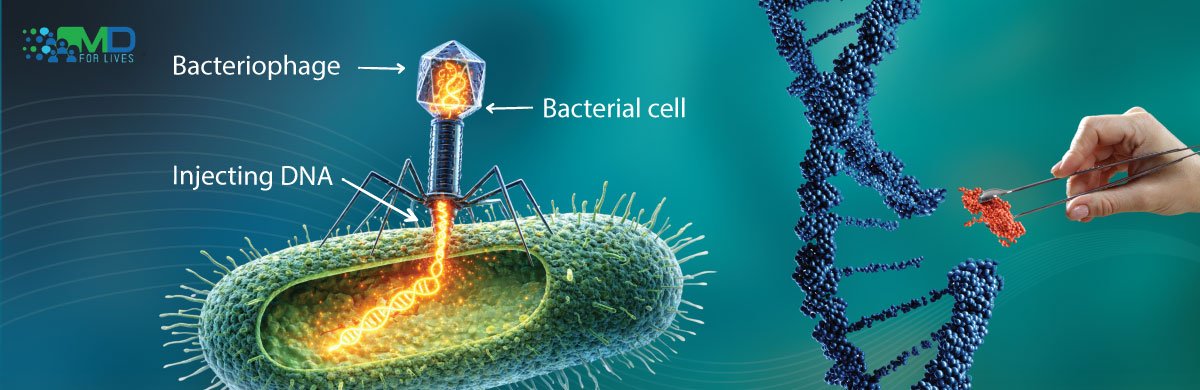
Bacteriophages attach to specific bacteria, inject their genetic material, reproduce inside the bacterial cell, and eventually destroy it. This process eliminates the infection without harming surrounding human cells.
Unlike antibiotics, bacteriophage treatment targets specific bacterial strains rather than affecting a broad range of microorganisms.
Quick Explanation of Phage Therapy
| Feature | Description |
| Treatment type | Biological therapy |
| Target | Specific bacteria |
| Mechanism | Virus infects and destroys bacterial cells |
| Use case | Antibiotic-resistant infections |
| Advantage | High precision targeting |
What Are Bacteriophages?
Bacteriophages are viruses that infect bacteria. They are among the most abundant biological entities on Earth and naturally regulate bacterial populations.
Each bacteriophage typically targets a specific type of bacteria.
This specificity is what makes bacteriophage therapy a promising alternative to traditional antibiotics.
History of Bacteriophage Therapy
The concept of bacteriophage therapy was first introduced in 1917 by microbiologist Félix d’Hérelle.
Before antibiotics were widely available, phage treatment was used to treat infections such as:
- Cholera
- Dysentery
- Skin infections
- Gastrointestinal infections
Interest in bacteriophage medicine declined after antibiotics became widely available in the 1940s. However, rising antibiotic resistance has renewed global interest in phage therapy.
How Phage Therapy Works
The effectiveness of phage therapy depends on the unique life cycle of bacteriophages.
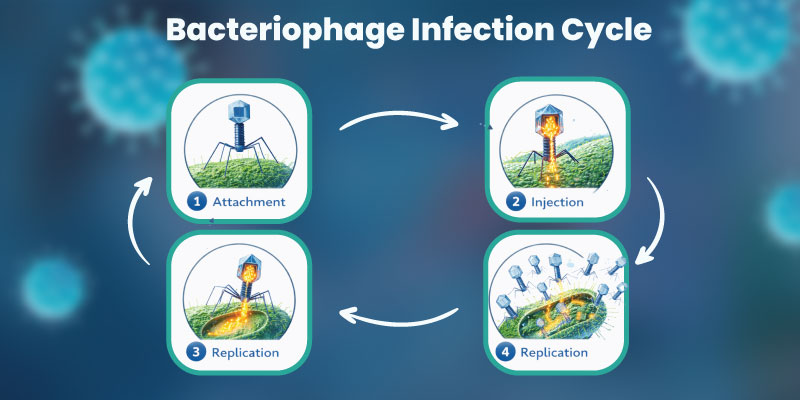
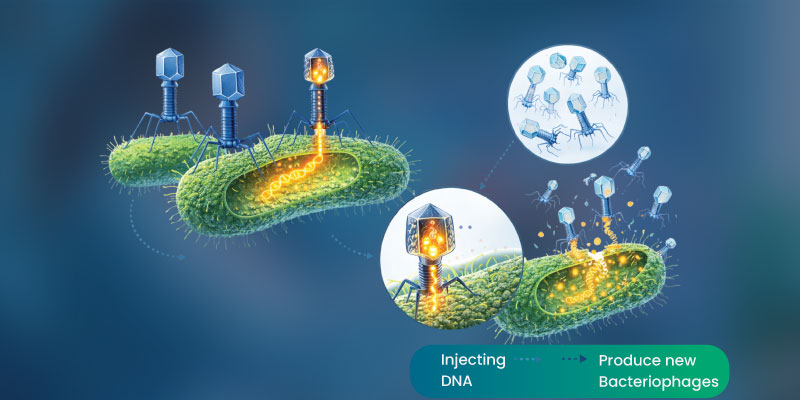
Step 1: Attachment
A bacteriophage identifies and attaches to a specific bacterial cell.
Step 2: Genetic Injection
The phage injects its genetic material into the bacterial cell.
Step 3: Replication
The virus hijacks the bacterial cell’s machinery to produce new phages.
Step 4: Bacterial Destruction
The bacterial cell bursts, releasing new bacteriophages that attack nearby bacteria.
Because phages multiply at the infection site, bacteriophage treatment can become more effective as long as target bacteria remain present.
Phage Therapy vs Antibiotics
One reason phage therapy is gaining attention is its potential role in addressing antibiotic resistance.
| Feature | Phage Therapy | Antibiotics |
| Target specificity | Highly specific | Broad spectrum |
| Impact on microbiome | Minimal | Often disrupts beneficial bacteria |
| Resistance development | Slower due to phage evolution | Increasing resistance worldwide |
| Treatment personalization | Possible | Limited |
Researchers are also exploring bacteriophage and antibiotics used together to enhance infection treatment.
Benefits of Phage Therapy
Several advantages make bacteriophage therapy an attractive alternative to antibiotics.
Targeted Bacterial Elimination
Phages attack only the bacteria causing the infection, leaving beneficial bacteria largely unaffected.
Self-Amplifying Treatment
Once bacteriophages reach their target, they replicate and continue destroying bacteria.
Reduced Impact on Gut Microbiome
Because of their specificity, phage treatment often avoids the widespread microbiome disruption caused by antibiotics.
Potential for Personalized Medicine
Doctors may design customized bacteriophage treatment tailored to a patient’s infection.
Current Medical Applications of Phage Therapy
Although still developing in many healthcare systems, bacteriophage therapy is being studied for several medical conditions.
Examples include:
- Antibiotic-resistant bacterial infections
- Chronic wound infections
- Lung infections such as those affecting cystic fibrosis patients
- Gastrointestinal infections
- Urinary tract infections
Several compassionate-use cases have successfully treated life-threatening infections using phage therapy when antibiotics failed.
Phage Therapy and Antibiotic Resistance
Antibiotic resistance is considered one of the most serious global health threats.
Overuse of antibiotics has allowed bacteria to evolve resistance to many standard treatments.
Because bacteriophages evolve alongside bacteria, bacteriophage and antibiotics may work together in complementary ways.
Some research shows that combining antibiotics with bacteriophage therapy can:
- Reduce bacterial resistance
- Improve treatment effectiveness
- Lower required antibiotic doses
Challenges and Limitations of Phage Therapy
Despite promising research, phage therapy still faces several challenges.
Regulatory Barriers
Many phage treatments remain experimental and require further clinical trials before widespread approval.
Specificity of Phages
Because phages target specific bacteria, doctors must identify the exact bacterial strain causing infection.
Production and Standardization
Manufacturing standardized bacteriophage medicine remains a challenge for large scale clinical use.
Potential Resistance
Bacteria may develop resistance to certain bacteriophages, although new phages can often be identified or engineered.
Future of Bacteriophage Medicine
Advances in biotechnology and genomics are accelerating research into bacteriophage therapy.
Future developments may include:
- Engineered bacteriophages with enhanced targeting ability
- Personalized phage cocktails
- Combination therapies with antibiotics
- AI-assisted phage discovery
As antibiotic resistance increases, phage treatment may become an important component of modern infection control.
Key Takeaways About Phage Therapy
- Phage therapy uses viruses to destroy harmful bacteria
- Bacteriophage therapy may help treat antibiotic-resistant infections
- Phages target specific bacteria without harming beneficial microbes
- Research into bacteriophage medicine is expanding globally
- Future treatments may combine bacteriophage and antibiotics
Read also about Precision Medicine
Frequently Asked Questions
What is phage therapy?
It is a medical treatment that uses bacteriophages, viruses that infect and destroy bacteria, to treat bacterial infections.
Is bacteriophage treatment safe?
Current research suggests bacteriophage therapy can be safe when properly tested and administered under medical supervision.
Can bacteriophage therapy replace antibiotics?
It may complement antibiotics or provide alternatives for infections resistant to conventional treatments.
How is phage treatment given?
It may be administered through topical applications, oral medication, or intravenous treatment depending on the infection.

MDForLives is a global healthcare intelligence platform where real-world perspectives are transformed into validated insights. We bring together diverse healthcare experiences to discover, share, and shape the future of healthcare through data-backed understanding.