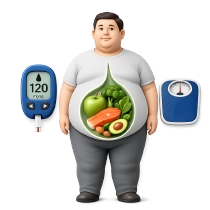
Obesity can increase cardiometabolic complexity and make weight an important treatment outcome alongside glycemia. Current guidance recommends considering therapies that support both glucose and weight goals when clinically appropriate, while using person-centered and nonjudgmental care.
Complex Diabetes Care: When HbA1c Is Only Part of the Decision
A peer-level look at how healthcare professionals balance glycemic control, obesity, kidney function, cardiovascular risk, access, tolerability, and adherence when diabetes management becomes more complex.
Audience: Diabetes-care HCPs
Countries: 6
Completion Rate: 69.6%
SGID: 9001530
-Hero findings
– Quick Read — Key Findings
38.9%
Cost or access most often limits optimization
Affordability and access can constrain a clinically preferred plan before treatment complexity or hypoglycemia does.
33.3%
Metformin and GLP-1 therapy are tied initially
Metformin-based therapy and a GLP-1 receptor agonist each receive one-third of selections as the initial priority.
34.3%
Advanced CKD changes strategy most
Kidney disease leads the subgroup question, ahead of heart failure, established ASCVD, and frailty.
35.3%
Earlier cardiorenal risk detection leads future needs
Respondents most often select earlier cardiorenal risk detection as the development that could transform complex care.
23.7%
Renal markers already influence treatment choice
eGFR and albuminuria are the second-most selected assessment influencing treatment decisions.
29.4%
Combination therapy remains a major opportunity
More effective combination therapies rank just behind earlier cardiorenal risk detection as a future priority.
When HbA1c and cardiorenal priorities diverge, what drives the next treatment decision?
Complex diabetes care is a balancing act, not a linear escalation in diabetes management
When diabetes coexists with obesity, CKD, cardiovascular disease, hypoglycemia risk, treatment burden, or financial constraints, the next clinical decision is rarely driven by one number alone.
The ADA 2026 Standards of Care recommend person-centered treatment selection that weighs cardiovascular and kidney disease, weight, hypoglycemia risk, cost and access, tolerability, and preferences alongside glycemic effectiveness. The MDForLives data reflect the same tension: HbA1c remains the most selected assessment, yet cardiorenal outcomes, obesity, adherence, and access repeatedly change what clinicians prioritize.
HbA1c still anchors diabetes management decisions, but renal risk is already in the frame
55.3% say HbA1c and the glucose profile most influence treatment decisions, while 23.7% select eGFR and albuminuria.
Glycemia remains the most visible signal: HbA1c and glucose patterns lead at 55.3%. But eGFR and albuminuria already rank second at 23.7%, showing kidney markers are shaping decisions, because diabetes care increasingly links therapy choice to organ protection, not only glucose lowering.
Obesity is the comorbidity most often selected as complicating diabetes management
57.9% select obesity, compared with 31.6% for chronic kidney disease and 10.5% for cardiovascular disease.
The ADA 2026 obesity guidance treats weight management as a core therapeutic goal in type 2 diabetes with overweight or obesity, not an adjunct to glucose control. That helps explain why obesity leads this question at 57.9%, ahead of CKD at 31.6%: weight shapes therapy choice, tolerability, insulin needs, cardiovascular risk and long-term burden at once.
Initial treatment is split, but the next step leans toward SGLT2 inhibition in diabetes management
Metformin-based therapy and GLP-1 receptor agonists are tied at 33.3% as the initial priority; after inadequate glycemic control, 44.4% prefer adding an SGLT2 inhibitor.
These results do not establish one universal sequence. Initial therapy is evenly split, but when control stays inadequate, 44.4% add an SGLT2 inhibitor and 33.3% a GLP-1 receptor agonist, favoring agents that address cardiorenal priorities as well as glucose.
Advanced CKD and heart failure are the clearest signals to change diabetes management strategy
34.3% say advanced CKD most changes their treatment strategy, followed by heart failure at 25.7%.
Current ADA CKD guidance and cardiovascular guidance connect glucose-lowering therapy with kidney and cardiovascular outcomes. Here, advanced CKD (34.3%) and heart failure (25.7%) are the subgroups most likely to change strategy, suggesting HCPs treat comorbidity as a reason to re-sequence therapy, not just add another target.
Cardiovascular risk reduction is the leading reason to continue therapy despite suboptimal HbA1c
42.9% select cardiovascular risk reduction, followed by weight reduction at 28.6% and kidney protection at 20.0%.
That cardiovascular risk reduction (42.9%) outranks glucose as a reason to continue therapy is one of the clearest signs the objective is broader than HbA1c. The ADA 2026 Standards recommend SGLT2 inhibitors and/or GLP-1 receptor agonists with demonstrated benefit for appropriate people with ASCVD, heart failure or CKD, irrespective of additional glucose-lowering need.
The hardest barriers sit between the prescription and staying on it in real-world diabetes management
Poor treatment adherence leads the complex-care barrier question at 45.7%; medication affordability follows at 34.3%. Separately, 38.9% say cost or access most limits treatment optimization.
The ADA 2026 systems-of-care guidance emphasizes timely evidence-based decisions, person-centered team care and informed financial discussion. It is directly relevant here: with poor adherence (45.7%) and affordability (34.3%) the leading barriers, the clinically preferred therapy can still fail as a plan if it is unaffordable, hard to tolerate, too complex or not sustained.
Complex diabetes care is moving from a glucose-first sequence toward a risk-informed diabetes management strategy.
The survey shows a tension HCPs will recognize: HbA1c remains central, yet the decision increasingly accounts for obesity, kidney function, cardiovascular risk, weight, tolerability, affordability and whether the patient can sustain the regimen.
That explains why SGLT2 inhibitors and GLP-1 receptor agonists feature prominently, why advanced CKD changes strategy most often, and why cardiovascular risk reduction can justify continuing therapy even when HbA1c is not yet optimal. The target is no longer one outcome delivered by one sequence.
The other side is implementation: poor adherence and affordability lead the barriers, and a clinically sophisticated regimen only helps when the patient can obtain, tolerate, understand and continue it.
The direction the data suggest is more integrated: detect cardiorenal risk earlier, choose therapy around the whole risk profile, define benefit beyond HbA1c, and surface practical barriers before they become treatment failure.

Oncology & Hematology
9Hospital Administration
8Endocrinology, Diabetes & Metabolism
8Diabetes, Weight & Metabolic Health
7Primary Care & Family Medicine
7Dermatology
7Ophthalmology
7Pharmacy
7Gastroenterology & Hepatology
7Dentistry & Oral Health
6Surgery & Procedural Care
6Pediatrics
6Nurses, NPs & Physician Assistants
6Neurology
6Laboratory & Diagnostics
5
Cardiology
4Brain, Nerves & Mental Health
3Optometry & Optical Care
3Skin & Aesthetic Care
3Radiology & Imaging
3Cancer Care
1
You have read the summary
The findings go deeper.
So can your participation.
Discover the complete research behind these insights, or become part of future studies with MDForLives.
Frequently asked questions
Direct answers to common professional questions about cardiorenal risk, obesity, treatment selection, access, and outcomes beyond HbA1c.
How should chronic kidney disease change diabetes treatment choice?
Kidney function and albuminuria can change both medication choice and the value assigned to treatment outcomes. ADA 2026 guidance recommends therapies with demonstrated kidney and cardiovascular benefit for people with type 2 diabetes and CKD, while also accounting for eGFR, hypoglycemia risk, tolerability, and the individual clinical context.
When are SGLT2 inhibitors prioritized in type 2 diabetes?
SGLT2 inhibitors are prioritized when heart failure, chronic kidney disease, or cardiovascular risk makes cardiorenal protection a treatment goal. Their use should reflect kidney function, safety considerations, current therapy, and individual treatment priorities rather than HbA1c alone.
When are GLP-1 receptor agonists considered in complex diabetes care?
GLP-1 receptor agonists may be considered when glucose lowering, weight management, cardiovascular risk reduction, or kidney-related benefit is relevant. Selection should still account for tolerability, contraindications, access, and the person’s broader treatment goals.
Why might a diabetes therapy be continued when HbA1c is still above target?
A treatment can provide clinically meaningful benefits beyond glucose lowering. Depending on the therapy and the individual, cardiovascular risk reduction, kidney protection, weight benefit, lower hypoglycemia risk, or improved tolerability may support continuation while the overall regimen is further optimized.
How does obesity influence diabetes treatment decisions?
What should healthcare professionals consider when cost or adherence limits treatment optimization?
Treatment plans need to be clinically effective and realistically usable. When cost, access, treatment burden, or adherence is limiting care, healthcare professionals may need to simplify regimens, discuss affordability directly, consider lower-cost alternatives where appropriate, and involve the wider care team or support services.
Direct answers to the questions healthcare professionals are most likely to ask about these findings.