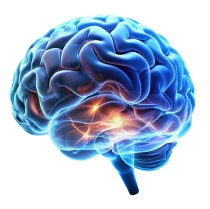
CGRP-Dissociation in Chronic Migraine:Why Pain Relief Still Leaves the Migraine Brain Behind
A neurologist-led view into why reduced monthly headache days can still leave patients disabled by cognitive drag, anticipatory fear, workplace skepticism, and access barriers.
Total responses: 64
Complete responses: 49
Countries: 6
Survey ID: 8876061
-headline finding
– Quick Read — Key Findings
71.4%
34.7%
79.6%
46.9%
55.1%
57.1%
Read the full MDForLives neurology insight report
Includes clinical context, section-wise interpretation, exact survey values, open-response interpretation, and backend-ready chart data.
//Background & Methodology
Why this survey matters for chronic migraine care
CGRP-targeted monoclonal antibodies and gepants have changed preventive and acute migraine care. But this MDForLives survey suggests a more complicated peer reality: a reduction in pain days does not always equal restoration of the patient’s neurological, social, or occupational baseline.
The survey included 64 total responses, with 49 complete and 15 partial responses. Question-level denominators vary from 52 to 49 as the filtered survey progresses.
// Core Finding
Therapeutic success is being redefined beyond headache days
40.8% of neurologists selected validated disability score improvement as the most accurate marker of real-world therapeutic restoration, while 30.6% selected patient-reported restoration of identity, predictability, and control. Together, 71.4% favor functional or patient-defined endpoints over pure headache-day reduction or abortive optimization.
57.1%
//Metric Disconnect
When pain falls, the disease burden can still remain active
The CGRP-dissociation signal appears most clearly in residual non-cephalic symptoms. Cognitive deficits lead at 34.7%, followed by sensory sensitization at 28.6% and migraine drain at 24.5%. The pattern reframes migraine as a continuous neurofunctional disorder rather than a sequence of isolated attacks.
The clinical implication is that a patient may be counted as a responder while still unable to sustain work, plan family life, travel confidently, or trust a pain-free day. In practice, the remaining impairment often lives in cognition, sensory processing, fatigue, and autonomy.
//Interictal Shadow
Cephalalgiaphobia is recognized, but not always systematically screened
A combined 79.6% either proactively screen for cephalalgiaphobia or discuss it reactively when it becomes visible. Yet only 36.7% screen in nearly every consultation. The tension is clear: clinicians recognize the interictal burden, but visit structures may still push the conversation back toward pain-day logs and medication adjustment.
This distinction matters because anticipatory fear is not simply an emotional overlay. It can reshape behavior, drive avoidance, and make patients live defensively even when acute pain is better controlled.
//Life Burden
The burden shows up as isolation, self-efficacy loss, and workplace skepticism
The hardest non-anxiety psychological factor to reverse is isolative depressive regression at 46.9%, followed by erosion of self-efficacy at 32.7%. The most damaging skepticism is in the professional space, cited by 55.1%.
This is where the report becomes system-relevant. If the workplace interprets unpredictable function as low dedication, migraine disability becomes a credibility problem, not only a clinical problem.
//System Barrier
Access reform and embedded behavioral support emerge as the next care frontier
Prior authorization and step therapy are the leading barrier at 57.1%. When asked which professional would add the most immediate clinic value, 53.1% chose a migraine-trained health psychologist, ahead of nurse navigation, physical therapy, and lifestyle consultation.
The future-facing finding is equally direct: 46.9% want frictionless early access to targeted biologics at diagnosis. This does not make biologics the entire solution. It shows that neurologists see administrative delay as part of the disease burden.
Oncology & Hematology
9Hospital Administration
8Endocrinology, Diabetes & Metabolism
8Diabetes, Weight & Metabolic Health
7Primary Care & Family Medicine
7Dermatology
7Ophthalmology
7Pharmacy
7Gastroenterology & Hepatology
7Dentistry & Oral Health
6Surgery & Procedural Care
6Pediatrics
6Nurses, NPs & Physician Assistants
6Neurology
6Laboratory & Diagnostics
5
Cardiology
4Brain, Nerves & Mental Health
3Optometry & Optical Care
3Skin & Aesthetic Care
3Radiology & Imaging
3Cancer Care
1