

A cancer diagnosis can bring a rush of questions. What happens next? Will treatment work? What will the side effects be like?
For some people, those questions become easier to manage as the treatment plan becomes clearer. For others, worry continues through appointments, scans, treatment or follow-up.
That is where cancer anxiety can move beyond an understandable response to difficult news and become something that deserves more support.
To understand the emotional side of cancer care, MDForLives surveyed people affected by cancer across the USA, UK, Canada, Italy, France and Germany. The detailed findings and methodology are available in the MDForLives Cancer and Mental Health: Why Emotional Support Can Be Hard to Reach Insight Report.
Cancer anxiety can begin before treatment does
Emotional distress can begin as soon as the diagnosis becomes real.
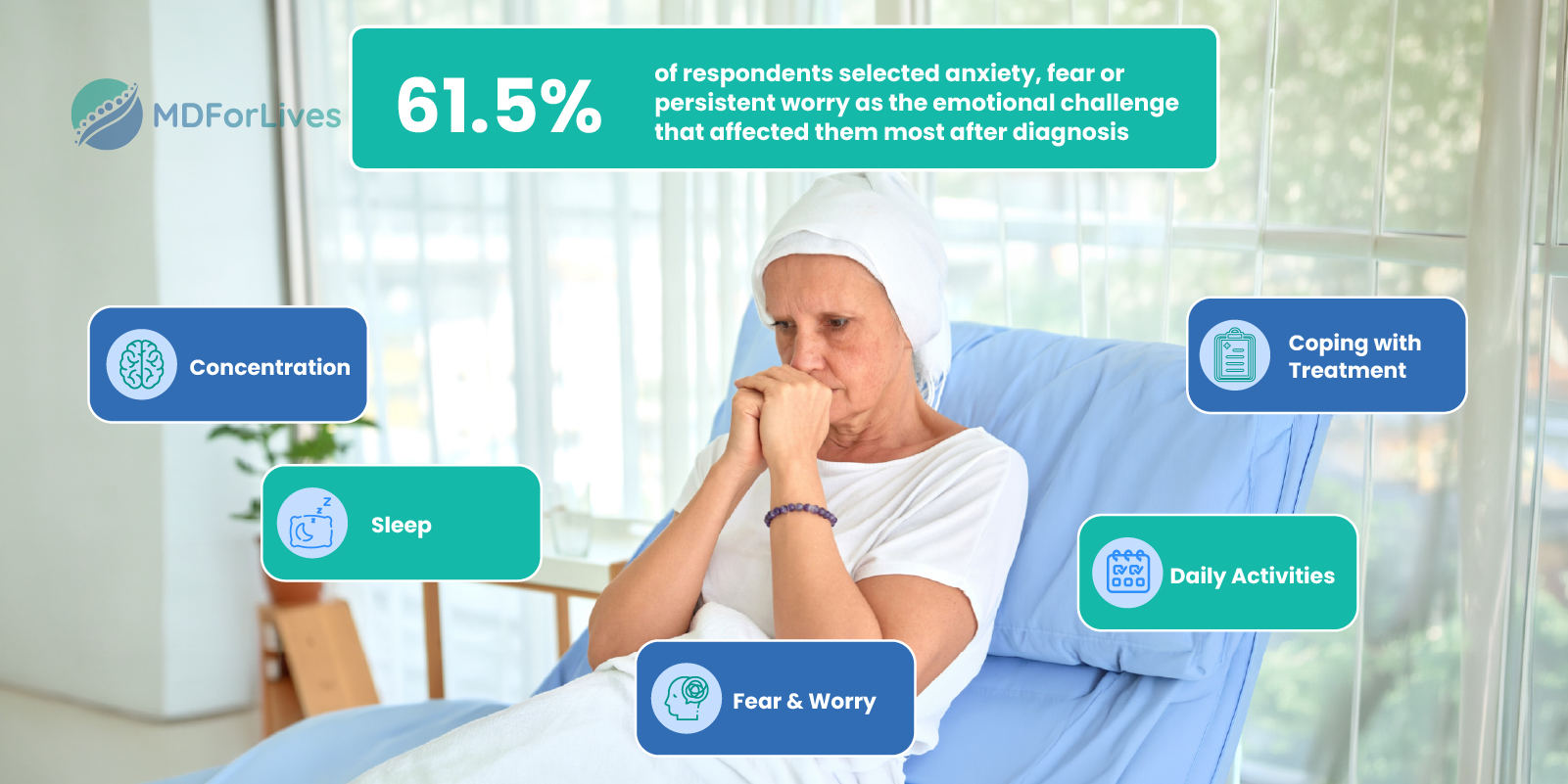
In the MDForLives survey, 61.5% of respondents selected anxiety, fear or persistent worry as the emotional challenge that affected them most after diagnosis.
The source of that worry can differ. You may be concerned about whether treatment will work, what side effects may feel like, how cancer could affect your family, or what the diagnosis means for the future.
Not every period of worry declares that you have anxiety disorder. Fear and uncertainty after cancer can be understandable. What matters is whether that worry becomes difficult to manage or begins affecting sleep, concentration, relationships, everyday activities or your ability to cope with care.
That is why mental health after cancer diagnosis deserves attention alongside physical treatment.
‘You do not have to wait until anxiety becomes severe before talking about it.’
You should not have to wait for someone else to notice
Emotional distress is not always easy for other people to see.
You may appear calm during an appointment while privately worrying about treatment, scans or what may happen next.
In the MDForLives survey, 44.6% of respondents said their emotional distress was first identified because they raised their concerns themselves. That highlights why speaking up matters.
You do not need a medical label for what you are experiencing. Saying, “I cannot stop worrying before my scans,” “I am not sleeping because I keep thinking about cancer,” or “I am finding it difficult to cope” can be enough to begin the conversation.
If anxiety is affecting daily life, mention it to someone involved in your care, such as your oncologist, oncology nurse, primary care clinician or social worker. As, emotional wellbeing is a vital part of the cancer experience and deserves a place in the consultation.
Clear communication can help patients understand their care, express their concerns and feel more supported throughout treatment. Explore what patients are told versus what they need to know in cancer care.
The right support is not the same for everyone
Recognizing anxiety in cancer patients is only the first step. The next question is what kind of support fits your needs.
Some people may benefit from clearer information, reassurance, or speaking with others who have experienced cancer. Others may need counseling, psycho-oncology, social-work support or formal mental-health assessment.
Someone feeling isolated may value peer support. On the other hand, persistent anxiety, panic, poor sleep, or low mood may require professional assessment. Also, practical concerns about work, family, or finances may need different support.
Connecting with people who understand the cancer experience can help individuals feel less isolated and supported through difficult moments. Explore how patient communities can provide emotional support.
There is no single correct approach. The important point is that you should have somewhere to start and a clear next step if the first option does not provide enough support.
Treatment can make support harder to reach
Sometimes the challenge is not whether emotional support exists. It is whether you have the time and energy to reach it.
Cancer care may already involve appointments, investigations, travel, waiting, treatment side effects and fatigue. Adding another counseling appointment or referral can feel like one more task during an already demanding period.
In the MDForLives survey, 38.5% of respondents said treatment burden made it difficult to access the emotional support they received or needed.
That adds an important dimension to mental health after cancer diagnosis.
Difficulty accessing support does not mean someone does not want help. The barrier may simply be the effort required to attend another appointment or navigate another service.
Where available, emotional support may be easier to manage when coordinated with cancer appointments or offered by telephone or virtually.
Support needs to be appropriate, but it also needs to be realistic to access.
Fear may change rather than disappear
Cancer anxiety does not always follow the same pattern from diagnosis through recovery. What worries you may change over time.
At diagnosis, the biggest concern may be treatment. During treatment, worry may shift toward side effects or whether therapy is working. During follow-up, scans, prognosis or the possibility of cancer returning may become more prominent.
In the MDForLives survey, 32.3% of respondents said recurrence or prognosis concerns were the cancer-related issue affecting their mental health most.
That means cancer anxiety should not be viewed only as an early reaction to diagnosis. Someone who coped well during active treatment may find surveillance unexpectedly difficult. Another person may struggle once regular contact with the cancer team decreases.
Your need for emotional support can therefore change. Not needing support at diagnosis does not mean you will never need it later, and the type of support that helps may also change over time.
A clearer path to help can make a difference
Recognizing anxiety matters most when there is a clear next step.
The MDForLives survey found that 35.4% of respondents selected automatic referral after distress screening as the care model that could most improve emotional support.
The larger message is not that one referral model works for everyone. It is that identifying distress without explaining what happens next may leave people unsure where to turn.
Depending on where you receive care, support may include counseling, psycho-oncology, psychiatry, social work, peer programs, support groups or digital and telephone services. If you need help, ask what services are available, who can make a referral, and what alternatives exist if the first option does not meet your needs.
For anxiety in cancer patients, the best pathway does not need to be complicated. It needs to connect distress with appropriate support.
Closing perspective: support should be part of the cancer journey
A cancer diagnosis can create uncertainty at almost every stage.
At first, the concern may be treatment. Later, it may involve side effects, scans, recovery, prognosis, or recurrence.
That is why emotional wellbeing should not be treated separately from cancer care. The MDForLives findings suggest that cancer anxiety is not only about identifying fear or worry. It is also about recognizing when it is affecting everyday life and making the next step toward support easier to find.
Not everyone will need specialist mental health care. Some people may benefit from information, reassurance, or peer support. Others may need counseling or more structured psychological or psychiatric care.
What matters is that support can change as your needs change. If anxiety begins to affect sleep, concentration, relationships, daily functioning, or your ability to cope with treatment, tell someone involved in your care.
‘Starting the conversation can be the first step toward finding the right support.’