
Ask someone to name a warning sign of breast cancer, and the first answer is often a lump.
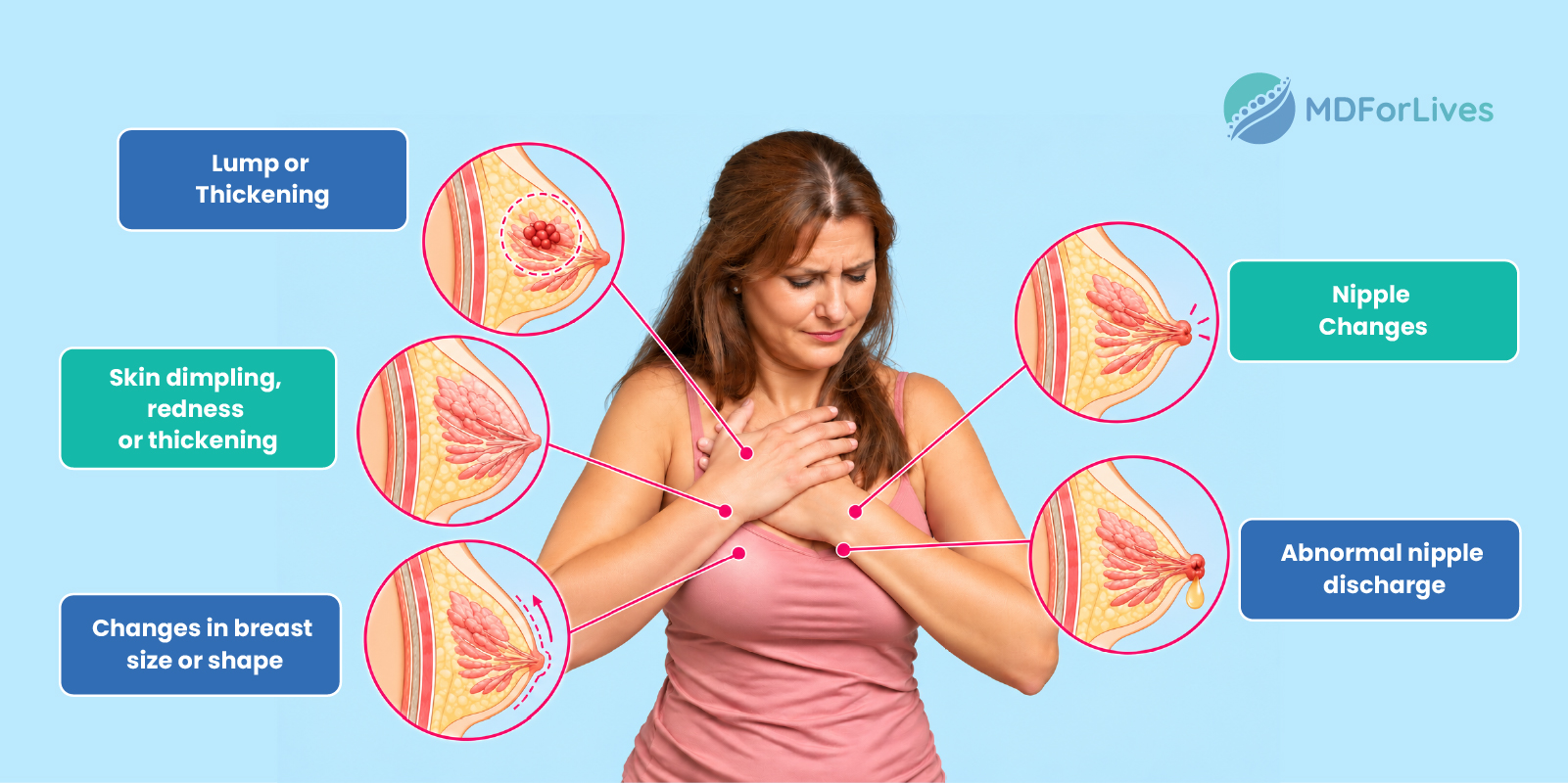
Nipple changes, skin dimpling, redness, thickening or a change in breast shape may be easier to dismiss, especially when there is no obvious lump.
Breast cancer awareness therefore needs to do more than list symptoms. People also need to know when to act, when screening is appropriate, and what happens after an abnormal result.
MDForLives explored those gaps through two breast cancer surveys across the USA, UK, Canada, Italy, France and Germany. The earlier survey was clinician-dominant; the second captured personal experiences around breast health and screening. Several mirrored questions allow a useful comparison between what professionals believe may hold people back and what people report experiencing. Because the response options were not identical, the percentages are best read as patterns rather than a direct trend.
“The lump is memorable. Other breast cancer symptoms may be easier to miss”
A lump remains one of the best-known signs of breast cancer. The problem is when awareness stops there.
In the clinician-dominant MDForLives survey, 41.5% selected skin dimpling, redness or thickening as the breast change is most likely to be overlooked or not acted on early. Another 30.8% selected nipple changes or unusual discharge.
The World Health Organization also lists changes in breast size or shape, skin dimpling or redness, nipple changes and abnormal nipple discharge among possible symptoms. A national audit of more than 2,316 women with breast cancer found that about one in six presented with symptoms other than a lump, with non-lump presentations linked to longer help-seeking delays.
So, the useful question is not only, “Can I feel a lump?” It is also, “Has something changed from what is normal for me?”
Recognizing a change is only the first decision
Spotting a possible warning sign does not automatically mean someone will seek advice.
In the clinician-dominant survey, fear or anxiety about the result was the leading expected reason for delay at 38.1%, followed by assuming the change was not serious at 31.7%.
In the personal experience survey, those two concerns were tied: 25.3% said they had considered delaying because they assumed the change might not be serious, and 25.3% cited fear or anxiety about the possible result. Encouragingly, 30.7% said they did not delay seeking advice.
The gap between noticing and acting is not only about knowing the breast cancer warning signs, but also how a person interprets the change and feels about what an assessment might reveal. A UK multicentre study similarly found that waiting to see whether a symptom would disappear was a common anticipated barrier. For early detection of breast cancer, awareness must help people act on uncertainty rather than wait for certainty.
Breast cancer screening has an emotional barrier too
The second mirrored comparison looked at barriers to breast cancer screening or further assessment.
Fear, anxiety, or anticipated discomfort was the leading identifiable barrier in both datasets; 44.4% in the clinician-dominant survey and 35.1% in the personal-experience survey. At the same time, 32.4% of respondents in the personal-experience survey said they had not experienced a significant screening barrier.
When a screening barrier exists, emotion can matter as much as information. Clear explanations of why screening is recommended, what the test involves, and what happens next can make the process easier to approach.
Screening and symptom assessment answer different questions
In the clinician-dominant survey, 38.1% identified the difference between screening and diagnostic assessment as the aspect of breast cancer screening most likely to cause confusion.
The distinction is important. Screening looks for breast cancer before recognizable symptoms develop in people who meet relevant criteria; diagnostic assessment investigates a symptom, breast change or abnormal screening finding. WHO makes the same distinction in its early-detection framework. Breast cancer screening guidelines vary by country, age and risk, but a new or persistent breast change should not simply wait for the next routine screening appointment.
After an abnormal result, the biggest concern may depend on who you ask
The strongest difference between the surveys appears after an abnormal breast finding or screening result.
In the clinician-dominant survey, 33.3% identified getting timely diagnostic follow-up as the biggest challenge. From the professional side, the priority is clear: an abnormal result needs a reliable route to further assessment.
In the personal-experience survey, however, 43.8% identified anxiety while waiting for answers as the biggest challenge.
“One perspective sees the pathway. The other experiences the wait.”
Both matter. Healthcare teams need timely follow-up, while the person waiting needs clarity. What did the finding mean? What happens next, and when? A clear next-step plan cannot remove every worry, but it can reduce avoidable uncertainty.
Better breast cancer awareness should explain what happens next
Stronger awareness is not simply about adding more breast cancer signs and symptoms to a poster. People need to know that signs other than a lump can matter, understand the difference between screening and symptom assessment, and know what happens after an abnormal result. Hence, the message becomes: know the signs, know when to act, and make the next step clear.
Recognizing breast changes remains important beyond the initial diagnosis, including when monitoring for possible recurrence. Explore breast cancer recurrence, its symptoms, risks, and treatment.
Closing perspective: beyond the lump means beyond symptom recognition
The early signs of breast cancer will not look identical for everyone. A lump may be the first change noticed. For someone else, it may be a nipple change, skin alteration, swelling, or a change in breast shape.
The two MDForLives surveys show why both perspectives matter. Professionals highlight where the pathway may break down; personal experiences show where fear, uncertainty and waiting make it harder to follow. Useful breast cancer awareness therefore helps people recognize a change, understand when to act, and know what comes next.
Because sometimes the symptoms that get missed are not the ones nobody knows about. It is the one someone notices but does not yet believe is worth acting on.