

Breast cancer recurrence remains a critical concern for survivors, with clinical evidence showing that relapse can occur months or even years after initial treatment. Understanding recurrence patterns, symptoms, and prevention strategies is essential for long-term disease management and improved outcomes.
What Is Breast Cancer Recurrence
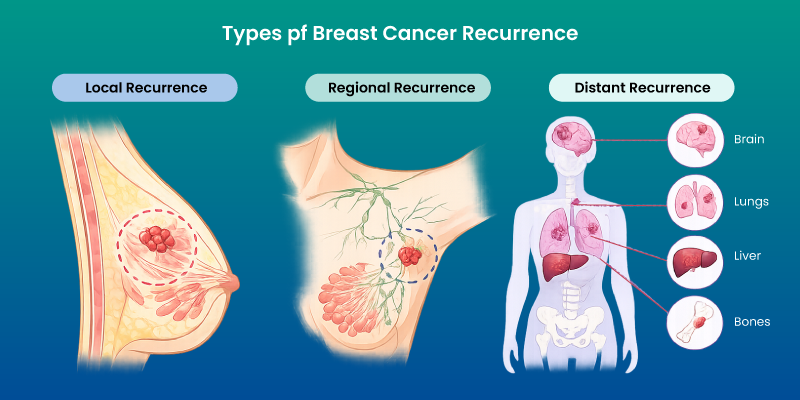
Breast cancer recurrence refers to the return of cancer after initial treatment and a period of remission. It occurs when residual cancer cells survive therapy and later proliferate. Recurrence can happen locally, regionally, or at distant sites, depending on disease progression.
Although breast cancer is more commonly discussed in women, recurrence monitoring is equally important in male breast cancer, where delayed diagnosis can influence long-term outcomes.
Types of Breast Cancer Recurrence
- Local recurrence
- Occurs in the same breast or surgical scar area.
- Regional recurrence
- Appears in nearby lymph nodes, such as underarm or chest nodes.
- Distant recurrence (metastatic)
Cancer spreads to organs such as bones, liver, lungs, or brain.
Breast Cancer Recurrence Rates
Breast cancer relapse statistics vary based on stage, tumor biology, and treatment approach.
- Early-stage cancers show lower recurrence rates, with stage 1 recurrence rates typically under 10% over 5 years.
- Hormone receptor-negative and HER2-positive cancers tend to have higher recurrence risks without targeted therapy.
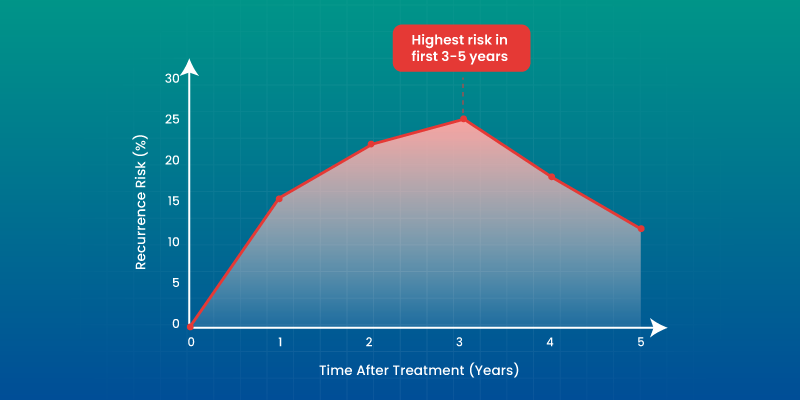
- The highest recurrence risk is generally observed within the first 3 to 5 years post-treatment.
Understanding what type of breast cancer has the highest recurrence rate is essential. Triple-negative breast cancer is associated with higher early recurrence compared to hormone receptor-positive subtypes.
In contrast, estrogen receptor-positive breast cancer often carries a longer-term recurrence risk that may extend beyond the first decade after treatment.
Symptoms of Breast Cancer Recurrence
Recognizing breast cancer recurrence symptoms early enables timely intervention.
Common symptoms include:
- New lump in breast or chest area
- Changes in breast shape or skin texture
- Persistent bone pain
- Shortness of breath
- Unexplained weight loss
- Fatigue or neurological symptoms in advanced cases
Symptoms vary depending on recurrence location, making regular follow-up critical.

Risk Factors for Breast Cancer Recurrence
Several clinical and lifestyle factors influence recurrence risk:
- Tumor size and stage at diagnosis
- Lymph node involvement
- Hormone receptor status
- Incomplete treatment adherence
- Genetic mutations such as BRCA1/2
- Obesity and physical inactivity
These variables are central to predicting breast cancer relapse probability.
Diagnosis of Recurrent Breast Cancer
Diagnosis involves a combination of imaging and laboratory assessments:
- Mammography, MRI, or CT scans
- PET scans for metastatic detection
Advanced imaging technologies continue to improve cancer monitoring, similar to the growing role of PSMA PET imaging in prostate cancer for detecting recurrent and metastatic disease.
- Biopsy to confirm recurrence
- Blood markers in select cases
Clinical evaluation is tailored based on symptoms and previous cancer history.
Treatment Options for Recurrent Breast Cancer
The treatment depends on recurrence type and prior therapies.
Common approaches include:
- Surgery for localized recurrence
- Radiation therapy if not previously administered
- Chemotherapy for systemic disease
- Hormone therapy for receptor-positive cancers
- Targeted therapies and immunotherapies
Advances in targeted therapy for cancer have expanded treatment options for recurrent breast tumors by focusing on specific molecular pathways that drive disease progression.
Emerging treatments such as targeted therapy and CAR-T approaches are expanding options for resistant cases.
Emerging treatments such as targeted therapy and CAR-T cell therapy are expanding options for resistant and hard-to-treat cancer cases, reflecting the broader shift toward personalized oncology.

Advances in Preventing Breast Cancer Recurrence
Recent studies highlight improvements in recurrence prevention:
- Extended hormone therapy beyond 5 years
- HER2-targeted therapies reducing relapse risk
- Personalized treatment guided by genomic profiling
Personalized oncology approaches are becoming increasingly important across cancer types, including osteosarcoma treatment, where research continues to explore targeted and individualized therapies.
- AI-driven monitoring for early detection
These advancements are shifting recurrence management from reactive to preventive.
Lifestyle Changes That May Reduce Recurrence Risk
Evidence suggests that lifestyle plays a measurable role in recurrence reduction:
- Maintaining a healthy body weight
- Regular physical activity
Research continues to show that the risk of physical inactivity extends beyond cardiovascular health and may also influence cancer recurrence outcomes and overall survivorship.
- Limiting alcohol intake
Evidence suggests that alcohol and cancer risk are closely linked, with research showing that alcohol can impair DNA repair mechanisms and contribute to cancer development and progression.
- Balanced, nutrient-dense diet
- Stress management and sleep optimization
These interventions complement clinical treatments and improve long-term outcomes.
Follow-Up Care for Breast Cancer Survivors
Structured follow-up protocols are critical:
- Regular clinical exams every 3 to 6 months initially
- Annual imaging based on risk profile
- Monitoring therapy adherence
- Managing long-term side effects
Follow-up care ensures early detection of recurrence and better prognosis.
Living With the Risk of Recurrence
Living with uncertainty is a documented challenge among survivors. Evidence indicates that patient education, peer support, and access to credible information improve psychological resilience and treatment adherence.
Conclusion
Breast cancer recurrence is a complex but manageable aspect of survivorship. With advancements in detection, targeted therapies, and preventive strategies, long-term outcomes continue to improve. A combination of clinical vigilance and informed lifestyle choices remains central to reducing recurrence risk.
Explore more evidence-led healthcare insights on global patient and clinician perspectives: MDForlives