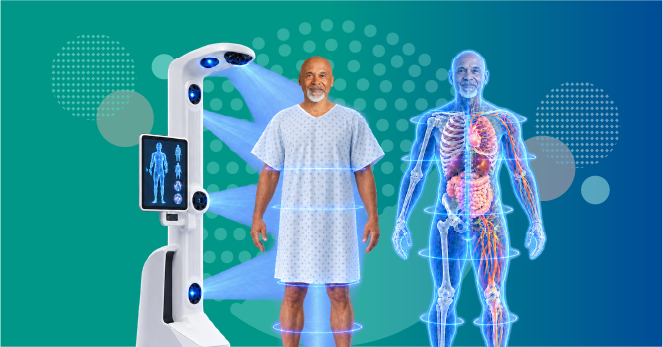
Digital twins in healthcare are redefining how healthcare systems understand, predict, and manage patient care. Originally developed for industrial engineering and manufacturing environments, digital twin technology is now entering healthcare through AI-powered patient modeling, real-time monitoring systems, predictive simulations, and precision medicine frameworks.
Across hospitals, research institutions, medical device ecosystems, and pharmaceutical development programs, healthcare organizations are increasingly exploring how virtual patient replicas can improve decision-making, personalize treatment strategies, and optimize operational efficiency. The concept is simple in theory but transformative in practice: create a continuously updated virtual model of a patient, organ, hospital system, or medical process using real-world clinical data.
As healthcare systems face growing chronic disease burden, workforce shortages, rising costs, and increasing demand for individualized care, digital twins are emerging as part of a broader transition toward predictive, connected, and data-driven healthcare delivery.
Digital twins represent a shift from reactive healthcare toward systems capable of anticipating clinical risks, modeling outcomes, and supporting more precise interventions before complications escalate.
What Are Digital Twins in Healthcare?
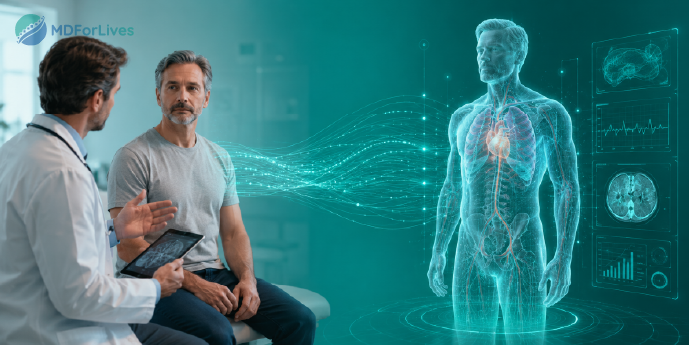
A digital twin in healthcare is a dynamic virtual representation of a physical healthcare entity created using real-time and historical data. The twin continuously evolves as new clinical information becomes available, allowing healthcare systems to simulate conditions, predict outcomes, and evaluate interventions digitally before applying them in real-world settings.
Healthcare digital twins may represent:
- individual patients,
- organs,
- hospital systems,
- medical devices,
- or even population-level health environments.
Unlike static healthcare records, digital twins are designed to behave as living models that continuously update using data from electronic health records (EHRs), imaging systems, wearable devices, genomics, laboratory data, and connected monitoring infrastructure.
Components of a Healthcare Digital Twin
A healthcare digital twin typically combines:
- patient data,
- physiological modeling,
- AI algorithms,
- predictive analytics,
- cloud infrastructure,
- and real-time monitoring systems.
These components work together to create simulations capable of reflecting changing patient conditions and forecasting potential outcomes.
Difference Between Traditional Healthcare Models and Digital Twins
Traditional healthcare models often rely on retrospective analysis and periodic assessments. Digital twins, however, function as continuously evolving systems capable of real-time adaptation.
Instead of reacting after clinical deterioration occurs, digital twins aim to predict and model risk trajectories earlier within the care pathway.
Evolution of Digital Twin Technology From Manufacturing to Medicine
Digital twin technology first gained traction in aerospace and manufacturing industries where virtual system replicas were used to predict equipment performance and operational failures.
Over time, advances in artificial intelligence, cloud computing, IoT devices, and healthcare data interoperability made similar modeling approaches possible in medicine. Today, healthcare organizations are exploring digital twins not only for engineering efficiency, but for patient-centered clinical intelligence.
Why Digital Twins Matter in Modern Healthcare?
Healthcare systems are becoming increasingly complex. Chronic diseases are rising globally, patient volumes continue expanding, and healthcare professionals are managing growing amounts of clinical and operational data.
Digital twins matter because they offer a framework for integrating these fragmented data streams into predictive and actionable healthcare intelligence.
Shift From Reactive to Predictive Care
Modern healthcare increasingly focuses on identifying deterioration earlier rather than responding after complications occur.
Digital twins support this transition by continuously analyzing patient-specific variables and identifying patterns associated with disease progression or adverse outcomes.
Rise of Personalized Medicine
Digital twins align closely with the broader movement toward personalized medicine and individualized healthcare delivery.
Rather than relying solely on generalized treatment pathways, healthcare systems are increasingly exploring patient-specific simulations that account for genetics, physiology, behavior, and treatment response variability.
Growing Need for Real-Time Patient Monitoring
Connected devices and wearable technologies now generate continuous streams of patient health data. Digital twins help transform this information into clinically usable insights through ongoing analysis and predictive modeling.
Increasing Chronic Disease Burden
Conditions such as diabetes, cardiovascular disease, respiratory illness, neurological disorders, and cancer require long-term monitoring and highly individualized care planning.
Digital twins may help healthcare providers better understand disease trajectories and optimize intervention timing.
Demand for Data-Driven Clinical Decisions
Healthcare professionals increasingly require tools capable of synthesizing large-scale clinical data into meaningful decision support systems.
Digital twins support this need by integrating AI-driven analytics with real-world patient information.
How Digital Twins Work in Healthcare Systems
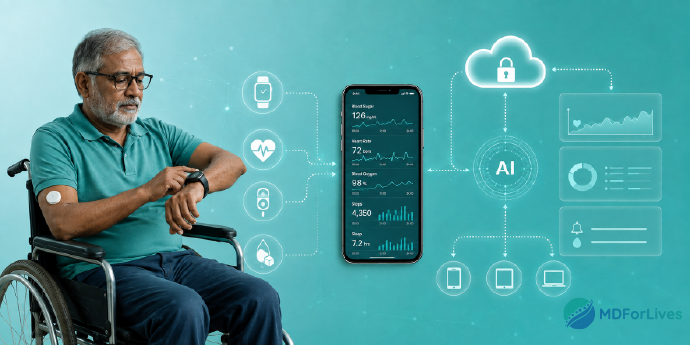
Digital twins function through continuous interaction between physical healthcare systems and digital simulation environments.
Data Collection and Integration
Digital twins rely on data collected from:
- EHR systems,
- wearable devices,
- imaging platforms,
- genomics,
- laboratory systems,
- ICU monitors,
- and connected healthcare infrastructure.
Creating a Virtual Patient Replica
The collected information is used to construct a virtual model capable of representing patient physiology, disease progression, or healthcare operations.
Continuous Real-Time Updates
Unlike static models, healthcare digital twins continuously update as new information becomes available.
This allows the system to adapt dynamically to changing patient conditions.
Predictive Modeling and Simulation
Predictive algorithms simulate potential outcomes, treatment responses, disease progression, and operational scenarios.
Healthcare providers may use these insights to evaluate intervention strategies before implementation.
AI-Driven Clinical Insights
Artificial intelligence plays a critical role by identifying patterns across complex datasets and generating predictive recommendations.
Integration With Hospital Infrastructure
Digital twins increasingly integrate with hospital systems including:
- ICU monitoring,
- operational management platforms,
- imaging systems,
- and electronic medical records.
Types of Digital Twins in Healthcare
- Patient Digital Twins: Patient digital twins simulate individualized physiological and clinical conditions using patient-specific data.
- Organ Digital Twins: Organ-level twins are increasingly explored in cardiology, neurology, pulmonology, and oncology.
- Hospital Digital Twins: Hospital twins model patient flow, staffing, operational capacity, and infrastructure performance.
- Medical Device Digital Twins: Medical device twins help manufacturers monitor device performance, maintenance requirements, and safety outcomes.
- Pharmaceutical Digital Twins: Pharmaceutical organizations are exploring digital twins for drug discovery, trial simulation, and treatment optimization.
- Population Health Digital Twins: Population-level twins model epidemiological trends, disease burden, healthcare utilization, and public health risks.
Major Applications of Digital Twins in Healthcare
- Personalized Treatment Planning: Digital twins may help clinicians simulate individualized treatment pathways before implementation.
- Precision Medicine: Healthcare systems increasingly use patient-specific biological modeling to support targeted therapeutic decisions.
- Chronic Disease Management: Digital twins may support long-term monitoring for diabetes, cardiovascular disease, and respiratory disorders.
- Surgical Simulation and Planning: Virtual simulations may help surgeons evaluate procedural approaches before operations.
- Oncology and Cancer Treatment: Digital twins in oncology are increasingly explored for tumor progression modeling, radiation planning, and individualized cancer treatment strategies.
- Drug Discovery and Clinical Trials: Pharmaceutical companies are evaluating whether virtual patient simulations can improve trial efficiency and reduce development timelines.
- ICU and Critical Care Monitoring: ICU twins may support real-time monitoring and deterioration prediction in critically ill patients.
- Remote Patient Monitoring: Digital twins combined with wearable technologies support continuous healthcare monitoring outside traditional clinical settings.
- Mental Health Monitoring: Researchers are also exploring digital behavioral modeling for psychiatric and neurological conditions. Read also about Mental Health in Digital Age
- Rehabilitation and Recovery Planning: Recovery-focused digital twins may support rehabilitation timelines and therapy optimization.
- Hospital Workflow Optimization: Healthcare organizations increasingly use operational digital twins to improve staffing, patient flow, resource allocation, and emergency response coordination.
Benefits of Digital Twins in Healthcare
Healthcare digital twins offer several potential advantages across clinical and operational environments.
Key benefits include:
- earlier risk detection,
- predictive clinical insights,
- personalized care planning,
- improved operational efficiency,
- better treatment simulation,
- and stronger continuity of care.
The long-term value of healthcare digital twins lies not only in automation, but in their ability to strengthen clinical decision-making through continuously evolving healthcare intelligence.
Benefits for Different Healthcare Stakeholders
Healthcare professionals may benefit from more precise decision support systems and predictive insights.
Patients may experience more personalized care pathways and proactive intervention strategies.
Healthcare organizations may improve operational planning, workflow coordination, and resource management.
Pharmaceutical and medical technology companies may use digital twins to accelerate development cycles and optimize product performance evaluation.
Real-World Examples of Digital Twins in Healthcare
- Digital Twin Heart Models: Researchers are developing cardiac twins capable of simulating blood flow, arrhythmias, and cardiovascular response patterns.
- AI-Powered Diabetes Twins: Some healthcare systems are exploring diabetes twins capable of modeling glucose behavior and treatment response.
- Virtual Oncology Models: Cancer-focused digital twins are being evaluated for tumor growth simulation and precision treatment planning.
- Hospital Operations Digital Twins: Hospitals increasingly use operational simulations to optimize staffing, ICU capacity, and emergency response workflows.
- Smart ICU Simulation Systems: Smart ICU environments integrate predictive analytics with real-time monitoring infrastructure.
- Companies Leading Healthcare Digital Twins: Organizations including Siemens Healthineers, GE HealthCare, Philips, and NVIDIA are increasingly investing in healthcare digital twin ecosystems.
Role of AI, IoT, and Big Data in Healthcare Digital Twins
- Artificial Intelligence and Predictive Analytics: AI enables healthcare twins to identify clinical patterns and simulate future scenarios.
- IoT Devices and Wearables: Connected devices provide continuous streams of physiological and behavioral health data.
- Cloud Computing in Healthcare Twins: Cloud infrastructure supports large-scale healthcare data integration and simulation processing.
- Big Data Integration: Healthcare twins rely on combining multiple structured and unstructured datasets.
- Edge Computing for Real-Time Monitoring: Edge computing supports faster real-time analysis in high-acuity healthcare environments.
Challenges and Limitations of Digital Twins in Healthcare
Despite growing interest, healthcare digital twins face several important limitations.
Major challenges include:
- data interoperability,
- cybersecurity risks,
- computational complexity,
- high implementation cost,
- limited clinical standardization,
- and healthcare workforce readiness.
Healthcare organizations must also evaluate the reliability and validation of predictive healthcare models before large-scale deployment.
Ethical and Legal Considerations
- Patient Consent and Data Ownership: Healthcare systems must establish transparent frameworks governing patient data usage and ownership.
- Bias in AI Models: Biased datasets may produce unequal predictive outcomes across patient populations.
- Transparency in Clinical Algorithms: Healthcare professionals increasingly require explainable AI systems capable of supporting transparent clinical reasoning.
- Healthcare Regulations and Compliance: Digital twin systems must comply with evolving healthcare regulations and data privacy standards.
- Risks of Over-Reliance on AI Simulations: Digital twins are designed to support clinical judgment, not replace healthcare professionals. Clinical expertise, contextual interpretation, and human oversight remain essential.
Future of Digital Twins in Healthcare
The future of healthcare digital twins will likely involve deeper integration with:
- genomics,
- precision medicine,
- connected wearables,
- robotics,
- and population health systems.
Healthcare organizations are increasingly moving toward predictive ecosystems capable of integrating operational, biological, behavioral, and environmental healthcare intelligence into unified models.
As healthcare technology advances, digital twins may become central to how healthcare systems simulate risk, personalize treatment, optimize operations, and support long-term preventive care strategies.
Conclusion
Digital twins are becoming one of the most important emerging technologies shaping the future of healthcare. By combining AI, real-time monitoring, predictive analytics, and connected healthcare infrastructure, digital twins offer new possibilities for personalized medicine, operational efficiency, and earlier clinical intervention.
At the same time, implementation requires careful attention to ethics, transparency, clinical validation, and healthcare equity.
The future of digital twins in healthcare will depend not only on technological sophistication, but on how effectively healthcare systems integrate predictive intelligence into safe, accountable, and human-centered care delivery.