

Telehealth in pharmacy is reshaping how pharmaceutical care is delivered by enabling remote consultations, prescription management, and patient support. It extends pharmacy services beyond physical locations, improving access and continuity of care. As digital healthcare adoption accelerates, telepharmacy is becoming a structured component of modern healthcare systems.
What Is Telehealth in Pharmacy?
Telehealth in pharmacy refers to the use of digital communication technologies to provide pharmaceutical services remotely. This includes medication counseling, prescription verification, and patient monitoring without requiring physical presence.
Telepharmacy is a subset of telehealth, focused specifically on pharmacy services. It connects pharmacists with patients and healthcare providers through secure digital platforms.
Why is Telepharmacy Important?
Telepharmacy addresses access gaps in healthcare systems, particularly in underserved or remote areas where physical pharmacy services may be limited.
It also supports continuity of care by enabling ongoing patient interaction, especially for individuals managing chronic conditions. As healthcare systems face increasing demand, telepharmacy helps distribute workload more efficiently.
How Telehealth Works in Pharmacy
Telehealth pharmacy systems rely on integrated digital platforms.
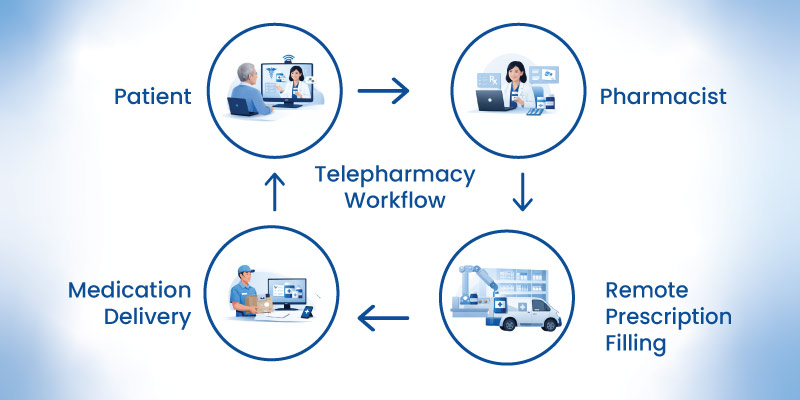
The process typically includes:
- Prescription transmission through electronic systems
- Remote verification by licensed pharmacists
- Patient consultation via video or messaging platforms
- Medication dispensing through partnered or local pharmacies
This workflow ensures that clinical oversight remains intact while improving accessibility.
Types of Telepharmacy Services
Telepharmacy services vary depending on healthcare needs.
| Service Type | Function |
|---|---|
| Remote dispensing | Medication supply without on-site pharmacist |
| Virtual consultation | Patient counseling and medication review |
| Clinical support | Monitoring therapy outcomes |
| Prescription verification | Remote validation of prescriptions |
Each service supports different aspects of patient care.
Benefits of Telehealth in Pharmacy
Telehealth introduces measurable improvements in healthcare delivery.
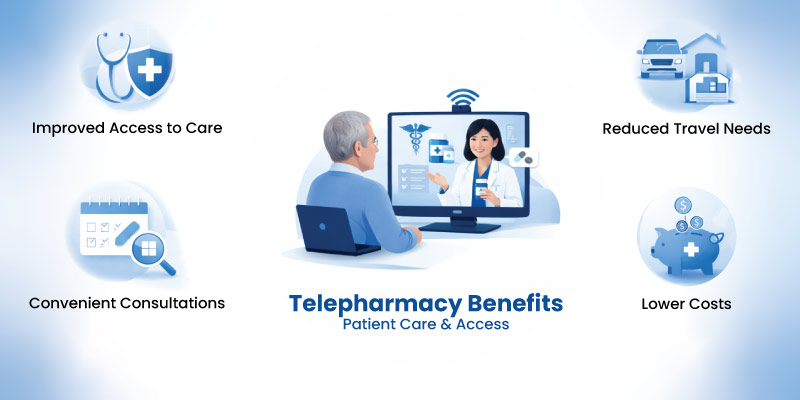
- Expands access to pharmaceutical care in remote areas
- Reduces waiting time for consultation and dispensing
- Supports medication adherence through follow-ups
- Improves coordination between healthcare providers
These benefits contribute to more efficient and patient-centered care systems.
Challenges and Limitations
Despite its advantages, telepharmacy faces several barriers.
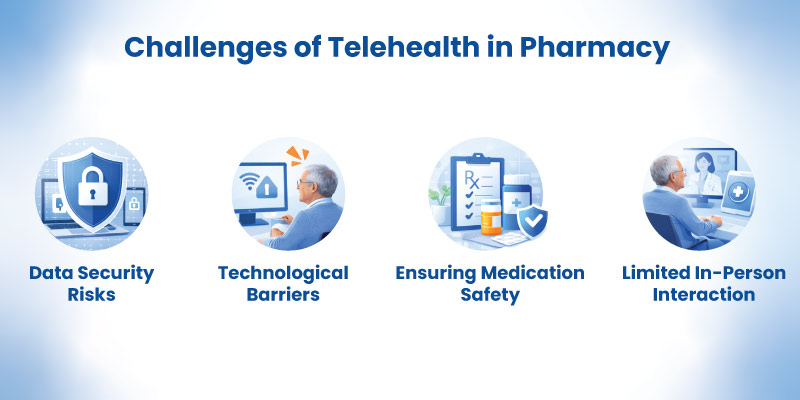
- Dependence on digital infrastructure and connectivity
- Limited access in low-resource settings
- Regulatory variations across regions
- Concerns around data security and patient privacy
Addressing these challenges is essential for broader adoption.
Read also about Pharmacovigilance
Telehealth in Different Pharmacy Settings
Telepharmacy is being implemented across multiple settings.
In hospital environments, it supports medication review and clinical decision-making. In community settings, it enables remote consultations and prescription services. In rural healthcare, it often serves as the primary access point for pharmaceutical care.
Each setting uses telehealth differently, but the core objective remains consistent.
Role of Pharmacists in Telehealth
Pharmacists remain central to telehealth systems.
Their responsibilities include:
- Reviewing and verifying prescriptions
- Providing patient counseling
- Monitoring medication adherence
- Identifying potential drug interactions
Technology supports these functions but does not replace clinical judgment.
Read also about Medication errors
Role of Telepharmacy in the Advancement of Healthcare
Telepharmacy contributes to broader healthcare transformation.
It supports integrated care models by connecting patients, pharmacists, and physicians. It also enables data-driven decision-making through digital records and monitoring tools.
As healthcare shifts toward preventive and continuous care, telepharmacy plays a key enabling role.
Patient Experience in Telepharmacy
From a patient perspective, telepharmacy improves convenience and access.
Patients can consult pharmacists without travel, receive timely guidance, and manage medications more efficiently. However, digital literacy and comfort with technology influence the overall experience.
Telehealth in Pharmacy Regulations and Guidelines
Telepharmacy operates within regulated frameworks.
Guidelines address:
- Prescription verification standards
- Controlled substance regulations
- Data protection and privacy requirements
Regulations vary by region, making compliance a critical consideration for providers.
Read also about Ethical Issues in healthcare
Future of Telehealth in Pharmacy
The future of telepharmacy is driven by integration and innovation.
Key developments include:
- AI-supported prescription review
- Integration with electronic health records
- Expansion of remote clinical services
- Improved interoperability across systems
These advancements aim to enhance both efficiency and patient outcomes.
Read in detail on Future of Pharmacy
Explore more evidence-led healthcare insights:MDForlives
Conclusion
Telehealth in pharmacy is redefining how pharmaceutical care is delivered. By combining digital access with clinical expertise, it improves efficiency, expands reach, and supports patient-centered care. While challenges remain, continued innovation and regulatory alignment will determine its long-term impact.