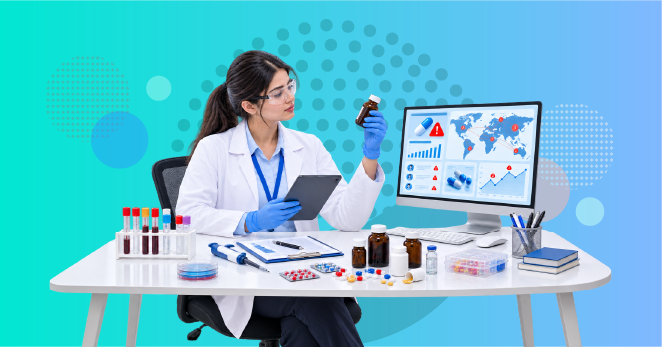
Pharmacovigilance is a core discipline within healthcare and life sciences focused on the detection, assessment, understanding, and prevention of adverse effects or any other drug-related problems. It plays a critical role in ensuring drug safety, protecting patients, and maintaining regulatory compliance throughout a product’s lifecycle. As medicines move beyond controlled clinical trials into real-world use, it becomes the primary mechanism for identifying safety risks that may not have been evident during development.
What Is Pharmacovigilance?
Pharmacovigilance definition in pharmacology refers to the science and activities related to monitoring the safety of pharmaceutical products after they are approved for use. The term originates from the need to continuously evaluate medicines even after regulatory authorization.
In simpler terms, it answers three essential questions:
- Is the drug safe in real-world populations?
- Are there previously unknown adverse effects?
- Do the benefits continue to outweigh the risks?
Why Pharmacovigilance is Important?
- Protects patient safety
- Ensures regulatory compliance
- Prevents large-scale drug safety failures
- Supports evidence-based risk management decisions
History of Pharmacovigilance
It gained global attention following major drug safety crises, most notably the thalidomide tragedy of the 1960s. These events highlighted the need for systematic safety monitoring.
This led to the establishment of global frameworks under organizations such as World Health Organization and the creation of international drug safety databases managed by Uppsala Monitoring Centre.
Role of Pharmacovigilance in Drug Safety
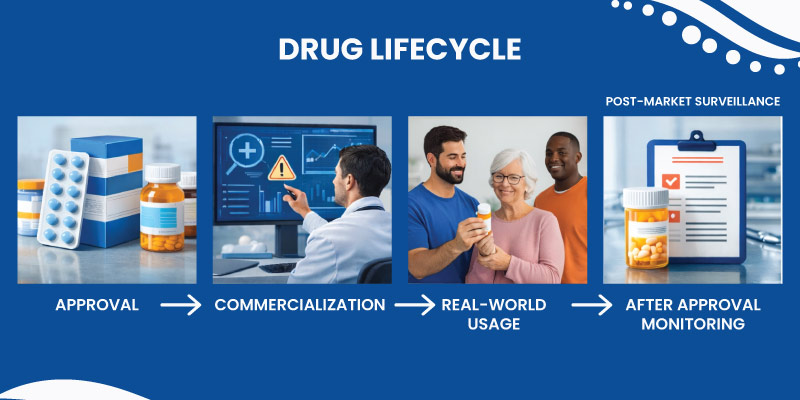
It extends across the entire product lifecycle:
- Clinical development
- Regulatory submission
- Post-marketing surveillance
- Risk management and labeling updates
Modern drug safety is no longer reactive. It is predictive, data-driven, and integrated into strategic decision-making across pharmaceutical organizations.
Types of Pharmacovigilance
Understanding the types helps clarify how safety monitoring is structured.
- Passive
Relies on spontaneous adverse event reporting by healthcare professionals and patients.
- Active
Involves proactive monitoring through registries, post-authorization safety studies, and targeted surveillance programs.
- Comparative
Compares safety profiles across drugs within the same therapeutic class.
Pharmacovigilance in Clinical Trials
It ensures participant safety and regulatory compliance during drug development. Activities include:
- Adverse event (AE) tracking
- Serious adverse event (SAE) reporting
- Development Safety Update Reports (DSURs)
These processes form the foundation for post-marketing systems.
Pharmacovigilance Workflow Explained
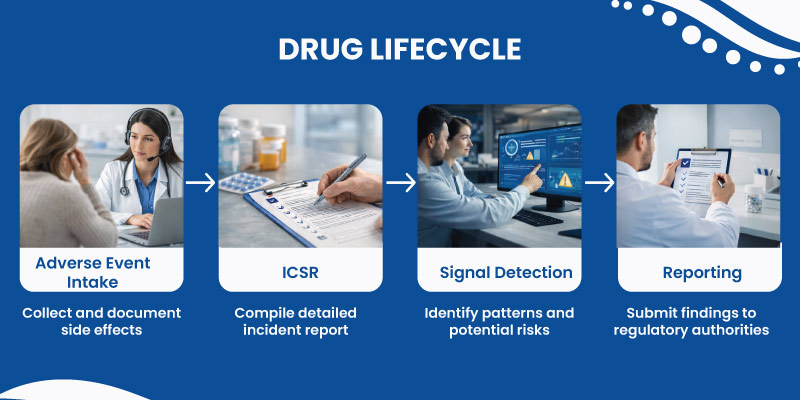
It includes:
- Adverse Event Intake
- ICSR Processing
- Medical Review
- Signal Detection
- Risk Assessment
- Regulatory Reporting
What Is ICSR in Pharmacovigilance?
An ICSR (Individual Case Safety Report) is a structured report containing information about a suspected adverse drug reaction. ICSRs are the building blocks of safety databases.
Pharmacovigilance Signal Detection
It involves identifying new or changing safety concerns using:
- Statistical data mining
- Disproportionality analysis
- Clinical review of case clusters
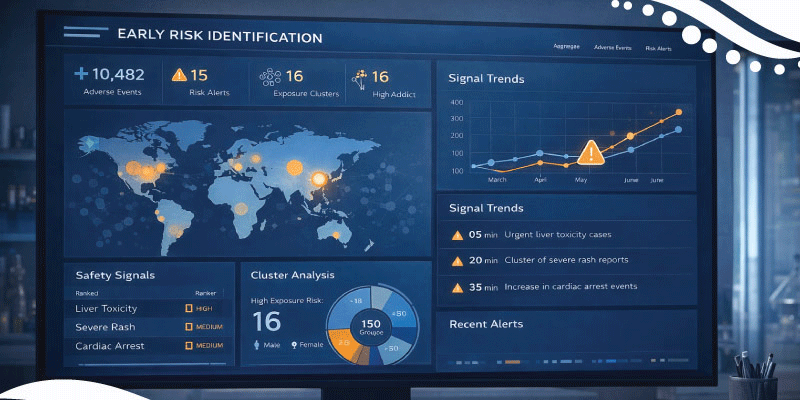
Signal detection is critical for early identification of safety risks and regulatory action.
Pharmacovigilance Safety Databases
It stores and manages adverse event reports. Common databases support:
- Case processing
- Regulatory submissions
- Global safety surveillance
These systems are central to large-scale reporting and compliance.
Good Pharmacovigilance Practices (GVP)
They are international standards that govern how safety data is collected, evaluated, and reported. They ensure consistency, transparency, and scientific rigor across regions.
Global guidelines are aligned with frameworks from organizations such as International Council for Harmonisation.
Pharmacovigilance Guidelines and Regulations
It defines legal and ethical responsibilities for marketing authorization holders. Regulatory authorities such as the U.S. Food and Drug Administration and the European Medicines Agency enforce compliance through inspections and audits.
Pharmacovigilance Tools and Technology
Modern tools leverage:
- Automation and AI for case triage
- Signal detection algorithms
- Integrated safety analytics platforms
These technologies improve efficiency and support proactive risk management.
Pharmacovigilance Scientist and Career Path
They play a central role in drug safety evaluation, signal detection, and regulatory communication.
Career Path Options
- Drug Safety Associate
- Scientist
- Signal Management Lead
- Risk Management Specialist
- Safety Physician
Growing regulatory scrutiny has also increased hiring across global pharmaceutical and biotech companies.
Pharmacovigilance Certification and Training
Professionals often pursue certification or training online to strengthen regulatory knowledge and technical expertise. These programs cover:
- Case processing
- Safety databases
- Signal management
- Global reporting requirements
Pharmacovigilance News and Global Awareness
Events such as pharmacovigilance week promote awareness about adverse drug reaction reporting and patient safety worldwide. Ongoing news continues to shape regulatory expectations and safety practices.
Pharmacovigilance in Pharmacology and Healthcare
It bridges science, medicine, and regulation. It ensures that therapeutic innovation does not compromise patient safety and that medicines continue to deliver real-world benefit.
Read also about Future of Pharmacy
Conclusion
Pharmacovigilance is not merely a regulatory requirement. It is a critical patient safety function, a strategic asset for pharmaceutical companies, and a growing career domain within healthcare. As drug development becomes more complex and data-driven, the role of it will continue to expand, ensuring safer medicines for global populations.