
How to become a pharmacist is a common question among students interested in healthcare careers that combine science, patient care, and medication expertise. Pharmacists play a critical role in ensuring safe and effective use of medicines while supporting patient outcomes. This guide outlines the education, training, and licensing steps required to enter the profession across different countries.
What is a Pharmacist? Exploring the Pharmacy Profession
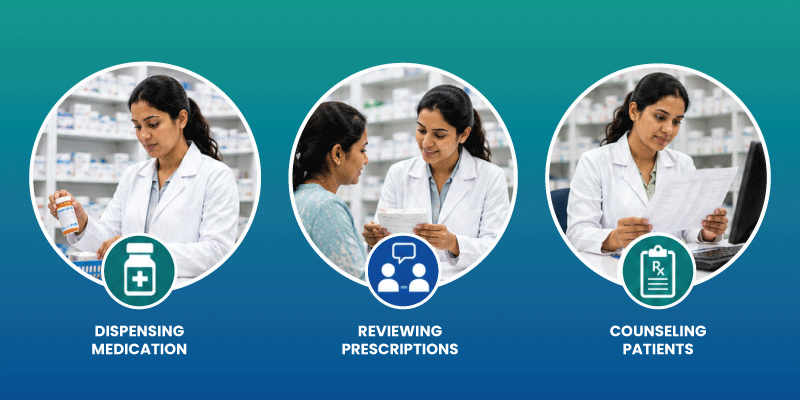
A pharmacist is a healthcare professional responsible for preparing, dispensing, and advising on medications.
Core Responsibilities
- Reviewing prescriptions for accuracy
- Advising patients on medication use
- Monitoring drug interactions
- Supporting chronic disease management
Pharmacists work across hospitals, retail settings, research, and public health.
Why Become a Pharmacist?
Career Advantages
- Strong demand in healthcare systems
- Diverse career paths
- Opportunities in clinical and research roles
- Competitive salary potential
Impact on Healthcare
Pharmacists contribute to patient safety, medication adherence, and improved treatment outcomes.
How to Become a Pharmacist
In the United States
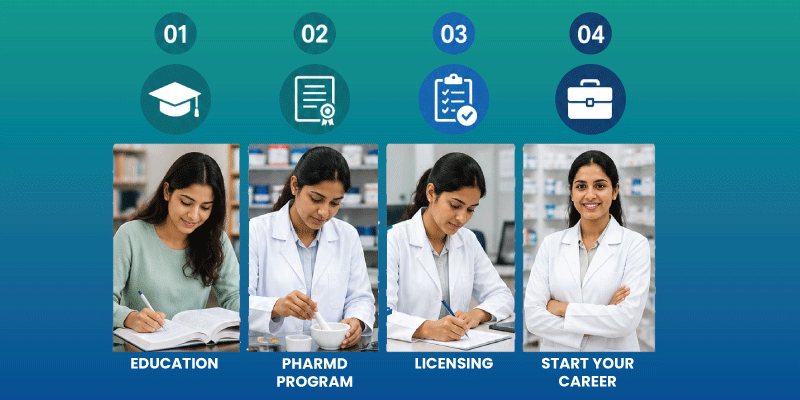
Step 1: Earn a Bachelor’s Degree and Complete Prerequisites
Students typically complete pre-pharmacy coursework in:
- Biology
- Chemistry
- Physics
- Mathematics
Some programs allow direct entry after high school.
Step 2: Choose the Right PharmD Program
Select an accredited Doctor of Pharmacy program based on:
- Curriculum
- Clinical training opportunities
- Accreditation status
Step 3: Apply to a PharmD Program
Applications are submitted through centralized systems, often requiring:
- Academic transcripts
- Entrance exam scores
- Personal statements
Step 4: Complete a PharmD
This program typically takes four years and includes:
- Classroom learning
- Laboratory training
- Clinical rotations
Step 5: Pass Exams and Earn State Licensure
Graduates must pass licensing exams such as:
- NAPLEX
- MPJE
Step 6: Apply for Pharmacist Jobs
Opportunities include:
- Hospital pharmacist
- Retail pharmacist
- Clinical specialist
In the UK
- Complete a Master of Pharmacy degree
- Undertake foundation training
- Register with the General Pharmaceutical Council
In France
- Complete pharmacy studies at a university
- Choose specialization
- Register with national authorities
In Germany
- Complete pharmacy degree
- Pass state examinations
- Undertake practical training
In Canada
- Complete a pharmacy degree
- Pass licensing exams
- Register with provincial authorities
In Italy
- Complete a pharmacy degree
- Pass national licensing exams
In India
- Complete D.Pharm, B.Pharm, or PharmD
- Register with State Pharmacy Council
What to Study to Become a Pharmacist
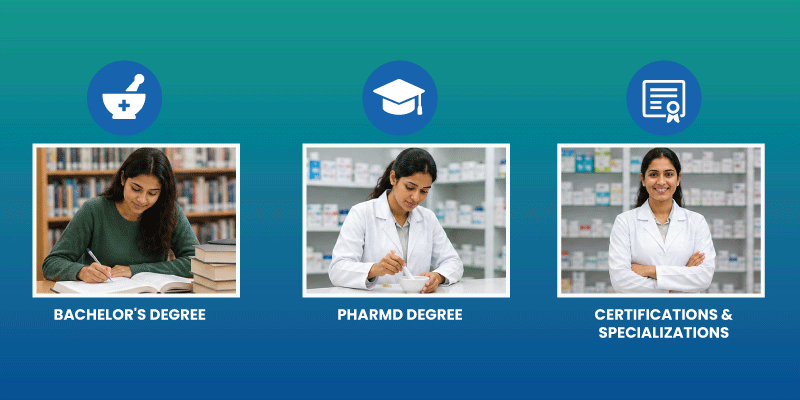
What Degrees Do You Need to Be a Pharmacist?
Associate Degree
Entry-level qualification for support roles.
Bachelor’s Degree
Prepares students for advanced pharmacy programs.
Doctor of Pharmacy (PharmD)
Required for becoming a licensed pharmacist in many countries.
Best Undergraduate Degrees
- Biology
- Chemistry
- Pharmaceutical sciences
Education Requirements for Pharmacists
Different Entry Paths
- Healthcare-related graduates
- Science graduates
- High school students entering integrated programs
Read also about Pharmacovigilance
Other Helpful Subjects and Courses
- Pharmacology
- Biochemistry
- Clinical research
- Ethics in healthcare
Read also about Telehealth in Pharmacy
Continuing Education and Professional Development
Pharmacists must stay updated through:
- Continuing education programs
- Certification courses
- Professional workshops
What Licenses Do Pharmacists Need?
Licensing requirements vary by country but typically include:
- Completion of accredited degree
- Passing national or regional exams
- Registration with regulatory bodies
Career Paths in Pharmacy
| Role | Description |
| Clinical pharmacist | Works in hospitals |
| Retail pharmacist | Works in pharmacies |
| Research pharmacist | Involved in drug development |
| Industrial pharmacist | Works in pharmaceutical companies |
How Long Does It Take to Become a Pharmacist?
The timeline varies:
- US: 6 to 8 years
- UK: 5 years
- India: 4 to 6 years
How Hard Is It to Become a Pharmacist?
The path requires:
- Strong science background
- Consistent academic performance
- Clinical training
While challenging, structured learning and preparation make it achievable.
Cost of Becoming a Pharmacist
Costs vary depending on country and institution.
- Tuition fees
- Licensing exams
- Study materials
Planning financially is essential.
Read also about Future of Pharmacy
Conclusion
Becoming a pharmacist requires a structured combination of education, training, and licensing. While the path can be demanding, it offers stable career opportunities and the ability to contribute meaningfully to healthcare. With evolving roles in clinical care and digital health, the profession continues to expand in scope and impact.
Sign up to participate in global healthcare research