
It often starts with difficulty seeing in low light. Over time, it can affect immunity, skin health, and overall recovery from illness.
Vitamin A deficiency develops gradually and is frequently overlooked until symptoms become noticeable. While it is commonly associated with vision problems, its impact extends far beyond the eyes.
Understanding early signs, underlying causes, and effective treatment is essential for preventing long-term complications.
What Are Telomeres?
Vitamin A deficiency is a condition where the body does not have enough vitamin A to support normal vision, immune function, and cellular health.
It occurs due to inadequate intake, poor absorption, or increased physiological demand. If left untreated, it can lead to progressive health issues, including visual impairment and increased susceptibility to infections.
Vitamin A Deficiency Symptoms
Symptoms often appear gradually and may vary in severity.
Early Signs
- Difficulty seeing in dim light
- Dry eyes or irritation
- Fatigue or reduced immunity
- Dry or rough skin
Advanced Symptoms
- Night blindness
- Bitot spots on the conjunctiva
- Corneal damage
- Increased frequency of infections
These symptoms indicate progressive depletion and require timely intervention.
What Causes Vitamin A Deficiency?
Several factors contribute to this condition.
Dietary Causes
- Low intake of vitamin A-rich foods
- Diets lacking animal products or fortified foods
Absorption Issues
- Conditions such as celiac disease or chronic pancreatitis
- Disorders affecting fat absorption
Liver-Related Causes
- Impaired storage due to liver disease
Increased Demand
- Pregnancy and lactation
- Chronic infections
In many cases, multiple factors are involved.
Who is at Risk?
Vitamin A deficiency is more common in:
- Children in low-resource settings
- Pregnant and breastfeeding women
- Individuals with restrictive diets
- Patients with gastrointestinal disorders
- Older adults with malnutrition
According to global estimates, millions of children are affected, making it a major public health concern.
How Vitamin A Deficiency Affects the Body
Vitamin A plays a central role in several physiological processes.
- Supports vision through retinal function
- Maintains epithelial tissue integrity
- Regulates immune responses
- Contributes to cellular growth and development
When levels decline:
- Visual adaptation to darkness is impaired
- Barrier protection weakens, increasing infection risk
- Skin and mucosal surfaces become dry and fragile
Emerging research also links vitamin A to metabolic regulation and cellular resilience.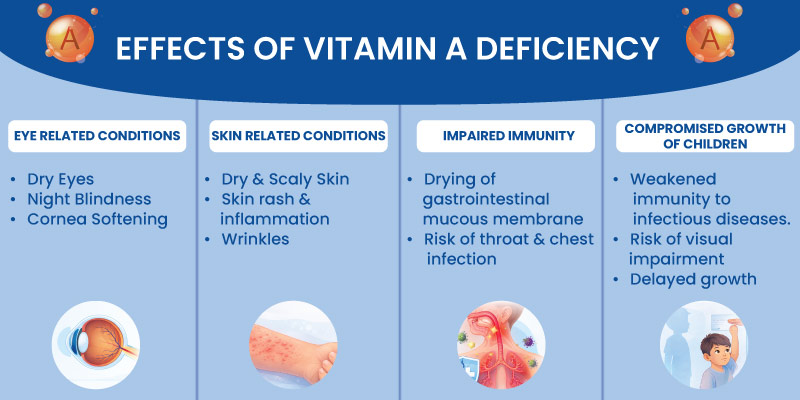
How Is Vitamin A Deficiency Diagnosed?
Diagnosis combines clinical evaluation with laboratory testing.
Clinical Assessment
- Dietary history
- Visual symptoms
- Signs of malnutrition
Laboratory Tests
- Serum retinol levels
- Assessment of underlying conditions
Levels below standard thresholds indicate deficiency, though results must be interpreted alongside clinical context.
Vitamin A Deficiency Treatment
Treatment focuses on restoring levels and addressing underlying causes.
Medical Treatment
- Oral supplementation under supervision
- High-dose therapy in severe cases
Dietary Correction
- Inclusion of vitamin A-rich foods
- Long-term nutritional adjustments
Managing Underlying Conditions
- Treating malabsorption disorders
- Supporting liver function
Excess intake should be avoided, as it may lead to toxicity.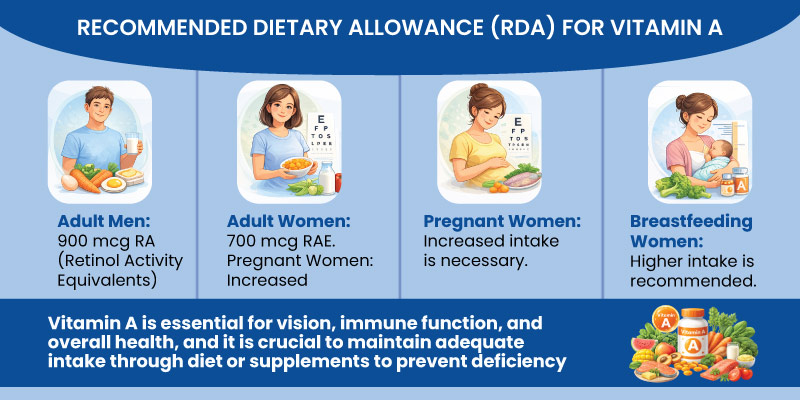
Epidemiology – Who Gets Vitamin A Deficiency, Where, and How Often?
Vitamin A deficiency is one of the most prevalent micronutrient deficiencies globally.
According to data from the World Health Organization:
- Over 190 million preschool children worldwide are affected
- Pregnant women in low- and middle-income countries are at high risk
- Subclinical deficiency is increasingly recognized in adults
In higher-income regions, vitamin A deficiency is less common but still observed in:
- Individuals with restrictive diets
- Patients with inflammatory bowel disease
- Older adults with malnutrition
Read also about Irritable Bowel Syndrome.
What to Eat for Vitamin A Deficiency
Diet plays a central role in prevention and recovery.
Animal Sources (High Bioavailability)
| Food | Benefit |
|---|---|
| Liver | Richest natural source |
| Eggs | Easily absorbed |
| Dairy products | Consistent intake support |
Plant Sources (Provitamin A)
| Food | Benefit |
|---|---|
| Carrots | High beta-carotene |
| Sweet potatoes | Strong antioxidant source |
| Spinach | Supports overall nutrition |
| Pumpkin | Easily incorporated in meals |
Including a mix of these foods improves absorption and long-term balance.
Complications of Vitamin A Deficiency
If untreated, the condition can lead to serious outcomes.
- Progressive vision loss
- Increased risk of infections
- Delayed growth in children
- Higher maternal and infant health risks
These complications highlight the importance of early detection.
Prevention Strategies
Preventive measures focus on nutrition and awareness.
- Balanced diet with diverse food sources
- Food fortification programs
- Supplementation in high-risk populations
- Public health education
Preventive approaches are more effective than corrective treatment.
Read also about Eating Disorders.
Recent Research and Insights
Recent studies highlight broader roles of vitamin A.
- Regulation of immune responses
- Influence on inflammatory pathways
- Potential role in metabolic health
These findings reinforce its importance beyond traditional functions.
Conclusion
Vitamin A deficiency is a preventable condition with significant health implications. While often associated with vision problems, its impact extends to immunity, skin health, and overall physiological function.
Early recognition, appropriate treatment, and consistent dietary intake are essential for maintaining optimal health and preventing long-term complications.
Take Part in Nutrition and Health Research: MDForLives