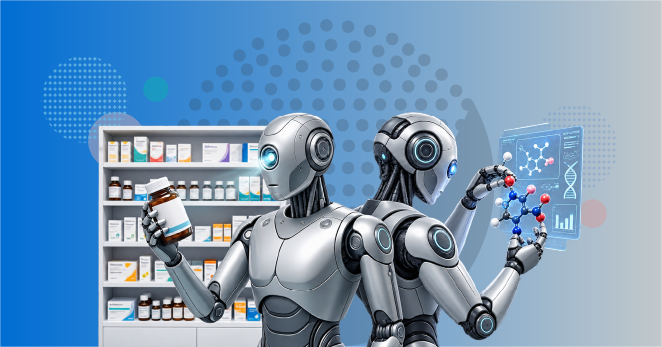
AI in drug development is rapidly moving from experimental research environments into practical pharmaceutical workflows. Across discovery, clinical development, manufacturing, and post-market monitoring, artificial intelligence is increasingly influencing how pharmaceutical decisions are generated, evaluated, and optimized. What was once considered a future-focused innovation is now becoming part of everyday operational and clinical processes across the pharmaceutical ecosystem.
For pharmacists, this shift is highly consequential. AI is beginning to influence areas directly connected to formulation strategy, medication safety, dosing decisions, manufacturing consistency, pharmacovigilance, and regulatory oversight. As organizations adopt more data-driven development models, pharmacists are expected not only to understand how these systems function but also to evaluate whether AI-generated recommendations remain clinically appropriate, operationally reliable, and compliant with regulatory standards.
The growing use of AI does not eliminate the need for professional judgment. Instead, it expands the pharmacist’s role as a validator, interpreter, and risk manager within increasingly technology-enabled pharmaceutical environments.
Where AI Fits Across the Drug Development Lifecycle
Artificial intelligence is now embedded across multiple stages of pharmaceutical development, supporting both operational efficiency and scientific decision-making.
In the discovery phase, AI systems are used to analyze large biological datasets, identify potential therapeutic targets, and accelerate compound screening processes. Traditional discovery workflows that once required extensive manual analysis can now be supported by predictive models capable of narrowing candidate selection faster and with greater computational scale.
During preclinical and clinical development, AI supports predictive toxicity modeling, dose-response simulations, patient stratification, and protocol optimization. These systems help researchers evaluate potential safety concerns earlier while improving trial efficiency and participant selection strategies.
AI is also influencing manufacturing and quality assurance functions. Pharmaceutical companies increasingly use predictive analytics to monitor batch consistency, identify process deviations, reduce variability, and optimize production workflows in real time.
Following product approval, AI contributes to pharmacovigilance, real-world evidence analysis, and lifecycle management activities by identifying emerging safety patterns and supporting post-market surveillance efforts.
Across all these stages, pharmacists remain essential in validating outputs, interpreting clinical relevance, and ensuring that AI-supported processes align with safety expectations, therapeutic objectives, and regulatory requirements.
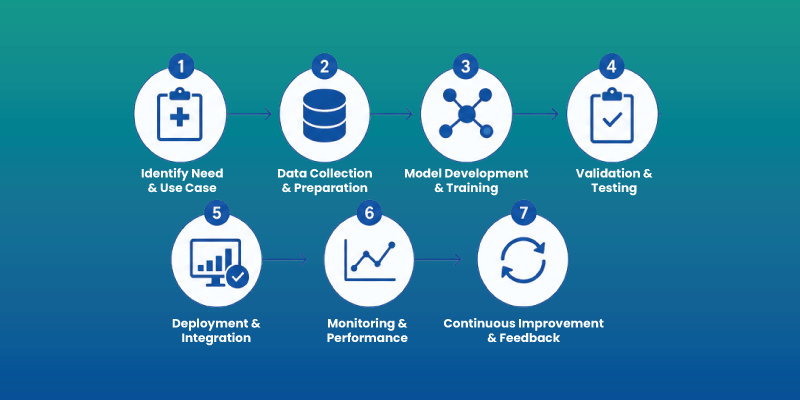
AI in Drug Discovery: What Pharmacists Need to Understand
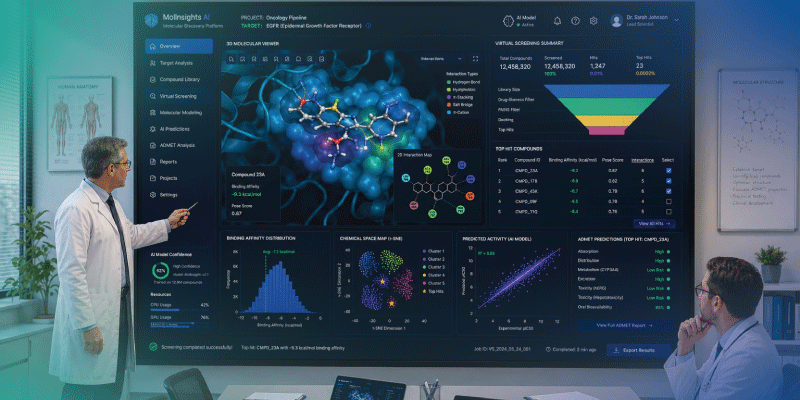
One of the most visible applications of AI in pharmaceutical development is drug discovery. AI systems can process enormous volumes of biological, chemical, and clinical data to identify patterns that may accelerate target identification and lead optimization.
For pharmacists, these developments influence far more than discovery timelines alone. Earlier target identification affects downstream formulation strategies, excipient compatibility considerations, bioavailability assessments, and stability planning. Decisions made during early development stages can significantly shape later manufacturing, dosing, and therapeutic performance outcomes.
AI models are also increasingly used to predict how compounds may behave within biological systems before clinical testing begins. These predictive capabilities support evaluations related to absorption, toxicity, metabolic interactions, and formulation compatibility. By identifying potential concerns earlier in development, organizations may reduce costly downstream failures during later trial phases.
However, predictive efficiency does not eliminate uncertainty. AI-generated outputs still require clinical interpretation and scientific validation. Pharmacists play a critical role in evaluating whether computational predictions translate meaningfully into safe and effective therapeutic applications.
Practical Applications of AI in Drug Development
AI applications in pharmaceutical development continue expanding beyond discovery workflows into more practical operational and clinical functions.
Predictive modeling tools are increasingly used to guide compound selection, optimize formulation decisions, and assess excipient compatibility during development. These systems help organizations prioritize candidates with stronger probabilities of success while reducing unnecessary experimental iterations.
AI-supported PK/PD modeling is also contributing to dose optimization strategies. By analyzing pharmacokinetic and pharmacodynamic relationships across patient populations, organizations can improve individualized dosing approaches and better understand therapeutic response variability.
Another important area is toxicity prediction. AI models can identify potential safety concerns earlier in development by recognizing patterns associated with adverse effects, instability, or poor therapeutic performance. Early detection allows development teams to modify formulations, adjust strategies, or discontinue unsuitable candidates before costly escalation occurs.
For pharmacists, the value of these tools lies in their ability to support decision-making rather than automate it entirely. Clinical interpretation remains necessary to determine whether outputs are scientifically valid, therapeutically appropriate, and operationally practical.
AI in Clinical Development and Trial Optimization
Clinical development remains one of the most resource-intensive stages of pharmaceutical innovation, making it a major focus area for AI adoption.
AI systems are increasingly used to improve protocol design, optimize inclusion criteria, and identify patient populations more likely to respond positively during clinical trials. These capabilities may improve recruitment efficiency, reduce delays, and strengthen the quality of trial data.
Patient stratification models are particularly important in complex therapeutic areas where treatment responses vary significantly across populations. AI can help identify subgroups with distinct efficacy profiles or elevated safety risks, allowing researchers to design more targeted and efficient studies.
Despite these advantages, pharmacist oversight remains essential throughout clinical development. AI-generated recommendations related to dosing, interactions, or patient selection still require clinical verification and regulatory scrutiny. Pharmacists contribute by assessing medication safety, validating therapeutic rationale, and ensuring that recommendations align with both scientific evidence and patient protection standards.
AI in Drug Manufacturing and Quality Assurance
AI is also transforming pharmaceutical manufacturing and operational quality management.
Predictive analytics systems can monitor production processes continuously, helping manufacturers identify variability, anticipate deviations, and improve operational efficiency. These systems support more proactive quality assurance strategies by detecting inconsistencies before they escalate into larger compliance or safety issues.
In highly regulated pharmaceutical environments, maintaining manufacturing consistency is critical. AI-supported quality control systems help organizations improve process reliability while supporting compliance with evolving GMP and GxP standards.
Supply chain management is another growing application area. AI models can forecast demand fluctuations, optimize inventory management, and identify potential supply disruptions earlier. These capabilities became particularly important following global supply chain instability experienced across healthcare industries in recent years.
For pharmacists involved in manufacturing oversight, these systems provide operational support while reinforcing the importance of regulatory accountability and process validation.
Read also about Telehealth in Pharmacy
Advanced AI Applications in Drug Development with Direct Pharmacist Impact
More advanced forms of AI are beginning to influence pharmaceutical innovation in increasingly sophisticated ways.
Generative AI models are now being explored for molecular design and formulation innovation. These systems can generate potential compound structures and identify combinations that may accelerate therapeutic exploration.
Digital twin technologies are also gaining attention. These virtual models simulate manufacturing environments or biological systems, allowing organizations to test scenarios, optimize processes, and improve validation workflows before implementing real-world changes.
Real-world data integration represents another significant development. AI systems can analyze post-market datasets, patient outcomes, and pharmacovigilance reports to identify emerging trends, safety concerns, or therapeutic performance insights that may not appear during controlled clinical trials.
While these technologies offer promising opportunities, they also increase the complexity of oversight, validation, and governance responsibilities across pharmaceutical operations.
Are you a Pharmacist, who wants to be part of Pharmacist Community – Join & take part inPharmacist Surveys
Adoption Challenges and Operational Reality
Although AI adoption is accelerating across the pharmaceutical industry, implementation remains uneven.
Large pharmaceutical organizations often have greater access to infrastructure, technical expertise, and investment capacity required to integrate advanced AI systems into development pipelines. Smaller organizations may face limitations related to cost, data access, internal capabilities, and governance maturity.
Many companies also face strategic decisions regarding whether to build internal AI capabilities or partner with specialized technology providers. Each approach introduces different operational, regulatory, and risk management considerations.
Capability gaps remain another major challenge. Many pharmaceutical teams still lack sufficient expertise in data interpretation, AI validation methodologies, governance structures, and cross-functional collaboration between technical and clinical teams.
As AI systems become more integrated into pharmaceutical decision-making, pharmacists will increasingly require broader familiarity with data-driven workflows, validation standards, and AI governance principles.
Read also about Pharmacovigilance
Why Human Oversight Still Matters
Despite growing excitement surrounding AI, expectations around full automation often exceed current practical reality.
AI can significantly improve discovery speed, trial efficiency, manufacturing optimization, and analytical scalability. However, it cannot independently replace clinical judgment, regulatory accountability, or therapeutic reasoning.
Pharmaceutical development remains highly dependent on contextual interpretation, ethical oversight, patient safety considerations, and scientific validation. AI systems may identify patterns and generate recommendations, but professionals are still responsible for evaluating whether those recommendations are safe, reliable, clinically meaningful, and operationally appropriate.
For pharmacists, this reinforces an evolving role that combines traditional clinical expertise with technology oversight and risk management responsibilities.
Read also about How to become a Pharmacist
Conclusion
AI is reshaping pharmaceutical development across discovery, clinical trials, manufacturing, and post-market surveillance. Its value lies in improving efficiency, accelerating analysis, and supporting more informed decision-making across increasingly complex healthcare environments.
However, successful adoption depends not only on technological capability but also on how effectively organizations integrate AI into validated, ethical, and clinically responsible workflows.
For pharmacists, the future will likely involve greater participation in AI oversight, interpretation, governance, and risk management. As pharmaceutical systems become more data-driven, human expertise will remain essential for ensuring that innovation continues to align with safety, compliance, and patient-centered care. Read more on Future of Pharmacy
Explore more healthcare insights and research perspectives at MDForLives